

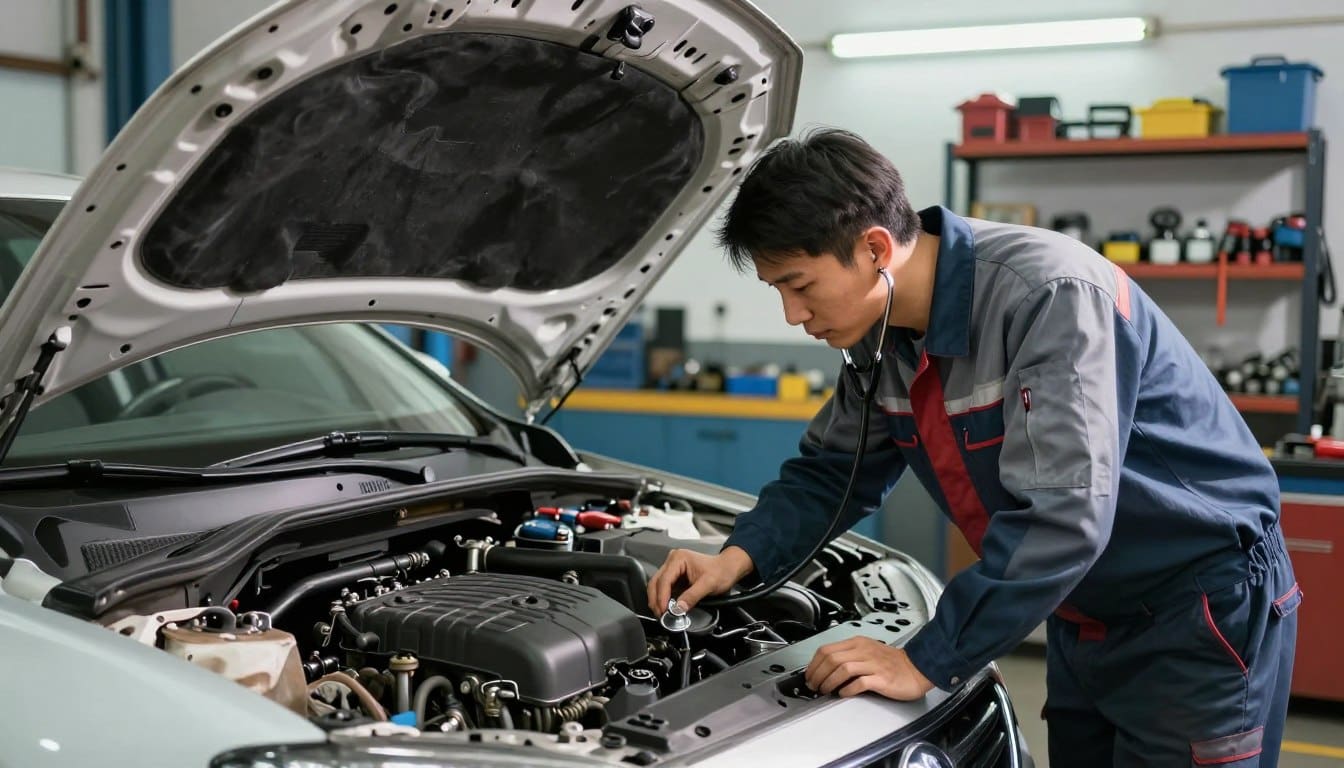
Hearing a strange sound from your car can be really stressful. It might be a clicking or a screeching noise. Finding out where it’s coming from is the first step to fixing it.
At Heaven Automotive, we’re experts in figuring out car noises. We want to keep you safe on the road. You can find us at 6645 Poss Rd. San Antonio, TX 78238.
If you’re worried about a new sound, call our team at (210) 682-3898. We’ll do a detailed check. This article is here to help you spot common car problems early.
Key Takeaways
- Unusual vehicle sounds often indicate underlying mechanical wear.
- Early detection prevents expensive repairs and ensures driver safety.
- Heaven Automotive provides expert inspections in San Antonio.
- Professional assessment is vital for accurate troubleshooting.
- Regular maintenance helps avoid unexpected road hazards.
Understanding the Importance of Timely Car Noise Diagnosis
Modern cars are complex and need everything to work together perfectly. When your car makes strange noises, it’s a sign something needs fixing. Getting a car making noise diagnosis early can stop small problems from getting bigger and more costly.
Not paying attention to these sounds can make your car less reliable. It can also put your safety at risk when driving. By acting fast, you keep your car safe and reliable for a long time.
We want to help you understand these sounds so you know when to get help. A regular car making noise diagnosis helps you tell the difference between normal sounds and serious problems. Here’s a table to show how different sounds relate to how urgent they are.
| Noise Type | Potential Severity | Recommended Action |
|---|---|---|
| High-pitched squeal | Moderate | Inspect brake pads soon |
| Deep metal grinding | High | Seek immediate repair |
| Constant clicking | Moderate | Check drivetrain components |
| Loud engine knocking | Critical | Stop driving immediately |
Acting quickly when you notice something wrong is key. Don’t wait for a small noise to become a big problem. If you hear something odd, get a professional to check it out. This keeps your car running well and you feeling calm.
The Mechanics of Sound: Why Your Vehicle Communicates Through Noise
Every sound your vehicle makes is a clue about its health. It’s a complex machine that talks to you through sounds. By understanding these sounds, you can do a basic car making noise diagnosis yourself.
Knowing why your car makes noise is key for car owners. Most sounds come from moving parts not working right. Paying attention to these sounds can stop small problems from getting big and expensive.
Mechanical sounds fall into a few main categories. Knowing these patterns helps you diagnose your car’s issues:
- Friction: High-pitched squeals mean metal-on-metal contact or worn parts.
- Vibration: Rattling or buzzing sounds usually mean loose parts or failing heat shields.
- Fluid Dynamics: Hissing or whining noises often point to pressure leaks or pump strain.
- Impact: Heavy clunking or thumping sounds usually relate to suspension or tire issues.
Listening closely to your vehicle helps you spot changes. Whether it’s a small tick or a loud clunk, each sound has a reason. By staying alert, you keep your car safe, reliable, and efficient.
Squealing Brakes: Identifying Friction and Wear
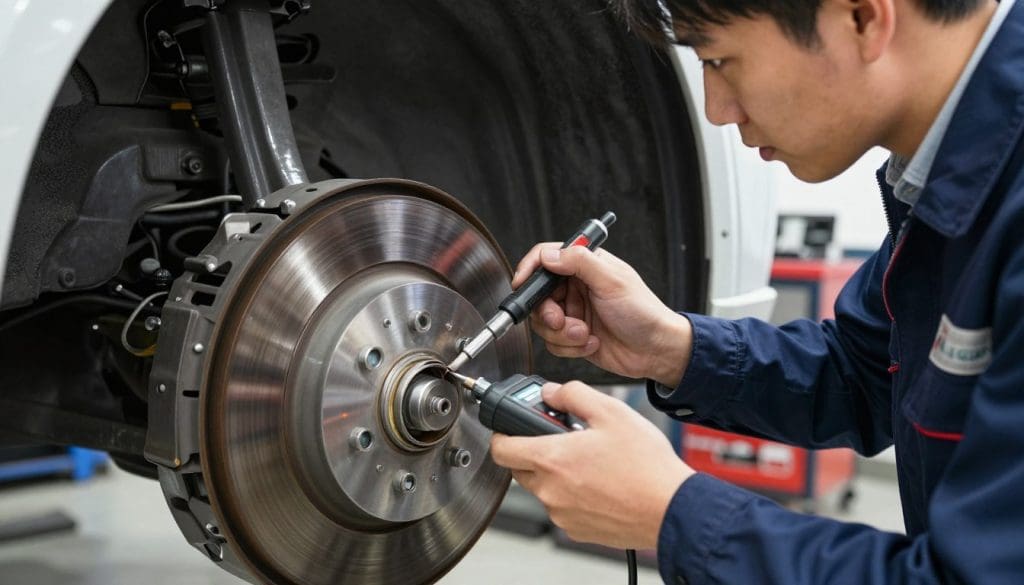
The sound of sharp, metallic screeching from the wheels during a stop is jarring. It’s not random; it’s a warning from your brakes. Early car noise diagnosis can prevent costly repairs.
Common Causes of High-Pitched Brake Squeal
Modern brake pads have a small metal tab called a wear indicator. When the pads wear thin, this tab touches the rotor, making a high-pitched sound. It’s meant to be annoying to alert you before the pads are gone.
Moisture or light rust on the rotors can also cause squealing. Sometimes, the brake pad material vibrates, leading to squealing. If the noise doesn’t stop after a few stops, it’s time to check your brakes.
When Squealing Indicates a Safety Hazard
Ignoring these warnings is risky. When the wear indicator does its job, the pads wear down to the metal backing plate. At this point, the sound changes to a deep, grinding noise, showing metal-on-metal contact.
This wear reduces your stopping power and can damage your rotors and calipers. A professional car noise diagnosis ensures pads are replaced before they harm your braking system. Being proactive keeps your vehicle safe and reliable.
| Noise Type | Likely Cause | Urgency Level |
|---|---|---|
| High-pitched squeal | Wear indicator contact | Moderate |
| Deep grinding | Metal-on-metal contact | Critical |
| Light chirping | Surface rust or dust | Low |
Grinding Noise: Metal-on-Metal Warnings
If you hear a grinding noise while driving, get a car noise diagnosis right away. This sound means metal parts are rubbing together without oil. Ignoring these warnings can cause costly repairs or even make your car unsafe.
Transmission and Drivetrain Grinding
Grinding in the transmission means it’s wearing out or not shifting right. The sound happens when you shift gears, showing you need to fix the clutch or shift linkage fast. Acting quickly helps avoid damage to the gears inside your transmission.
Wheel Bearing Failure Symptoms
A grinding sound near the wheels means a wheel bearing is failing. These bearings let your wheels spin smoothly. If you ignore this car noise diagnosis, the bearing could seize, making the wheel lock up while driving.
| Source of Noise | Primary Symptom | Potential Risk |
|---|---|---|
| Transmission | Grinding during shifting | Clutch or linkage failure |
| Wheel Bearing | Constant grinding at speed | Wheel seizure |
| Brake System | Grinding during stops | Total loss of braking power |
Knocking Engine Sounds: Internal Combustion Concerns
Engine knocking is a scary sound for drivers. It means your engine is under a lot of stress. Getting a car noise diagnosis quickly is key to avoiding serious damage.
Rod Knock and Low Oil Pressure
Rod knock is a serious cause of engine noise. It happens when the bearings between pistons and crankshaft wear out or lose oil. Low or dirty oil makes these parts rub against each other too much.
You might hear a loud tapping or knocking sound that gets louder when you speed up. Not fixing this can cause your engine to fail completely. Always check your oil to keep your engine safe.
Detonation and Fuel Quality Issues
Detonation, or “pinging,” is another common noise. It’s when the fuel in your engine burns too early or unevenly. Using the wrong fuel can cause this.
If you hear a rattling or pinging sound when you accelerate hard, your engine might have a problem. A car noise diagnosis can find out if changing to premium fuel or adjusting sensors will fix it. Fixing these issues early helps keep your car running well and saves you money.
Clunking Suspension: Identifying Worn Components
A clunking suspension means your car’s parts are wearing out. These parts absorb road shocks but wear down over time. A grinding noise or clunking sound means your car needs help.
Ball Joints and Control Arm Bushings
Ball joints help your car turn and move up and down. They wear out as their grease dries up. This makes a clunking sound, mainly on bumps.
Control arm bushings act as shock absorbers between metal parts. When they crack, your car’s steering feels loose. You’ll hear clunking when you speed up or slow down.
Strut and Shock Absorber Degradation
Struts and shock absorbers keep your tires on the road. As they age, they leak fluid and lose their ability to dampen. Your car will bounce a lot after hitting a bump.
Ignoring these problems can cause uneven tire wear and a grinding noise. This noise means metal parts are rubbing together. Keeping these parts in good shape is key for your safety and your car’s performance. See the table below for signs of suspension failure.
| Component | Primary Symptom | Driving Impact |
|---|---|---|
| Ball Joints | Sharp clunking | Poor steering precision |
| Control Arm Bushings | Vibration/Clunking | Unstable alignment |
| Struts/Shocks | Excessive bouncing | Reduced braking control |
Hissing Under the Hood: Cooling and Vacuum Leaks
If you hear a sharp hissing noise while your car is idling, act fast. This sound means there’s a pressure-related issue in your engine bay. Unlike a grinding noise from wear, a hiss usually means air or pressurized fluids are leaking.
Radiator Hose and Coolant System Failures
A hissing sound often comes from the cooling system when coolant leaks. If you see this, your engine might overheat. Don’t drive until you find the leak.
Look for bulges, cracks, or wet spots on your radiator hoses. Even a small leak can make a lot of steam. Replacing damaged hoses quickly stops a cooling system failure that could leave you stranded.
Vacuum Line Leaks and Engine Performance
Vacuum leaks also cause hissing sounds. These lines help your engine run right, but a leak can make it run poorly. It’s different from the grinding noise of a failing bearing, but it’s just as important to fix.
When a vacuum line cracks, your engine can’t mix air and fuel right. This makes your car use more fuel and might cause engine misfires. Check your rubber vacuum hoses for signs of wear or disconnection to fix this.
Clicking Noises During Turns: CV Joint Troubles
Driving should be smooth, but a clicking sound can be a worry. A rhythmic click while turning at low speeds often means a failing CV joint. This sound is different from a grinding noise, which might point to brake or bearing problems. Instead, it usually means something is wrong with the axle assembly.
The Role of Constant Velocity Joints
Constant Velocity joints are essential components that connect your transmission to the drive wheels. They let the wheels turn and move with the suspension while keeping speed constant. Without them, your car can’t handle corners well while moving.
These joints are covered by rubber boots filled with grease to reduce friction and wear. Over time, these boots can crack or tear, letting grease out and dirt in. Without lubrication, the joints wear down fast, causing the clicking sound you hear during sharp turns.
Risks of Ignoring Clicking Sounds
It’s easy to put off repairs when the car seems fine, but ignoring these signs is risky. A clicking joint can fail suddenly, leaving you stuck in traffic. If it breaks completely, you might not be able to move the car forward.
- Total Drivetrain Failure: The joint can separate, causing the axle to lose its connection to the wheel.
- Increased Repair Costs: A simple joint replacement is far cheaper than fixing damage from a broken axle.
- Safety Hazards: Losing power while driving can lead to dangerous situations on busy roads.
If you notice these signs, don’t wait for a grinding noise to appear. That would mean even more serious damage. A professional check is the best way to see if your CV axle needs to be replaced. Acting early keeps your car reliable and safe for your daily drive.
Whining Sounds: Power Steering and Alternator Issues
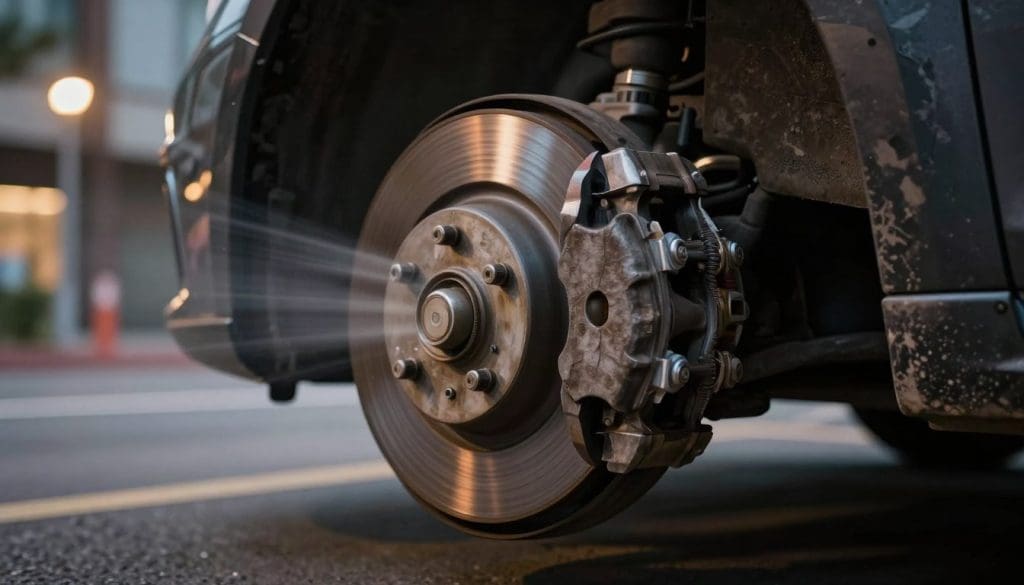
When you hear a whining noise from your engine bay, don’t ignore it. Many think it’s about squealing brakes, but it’s often something else. These sounds usually mean a part is having trouble working right.
Power Steering Pump Fluid Levels
A whining sound can also mean your power steering fluid is low. Without enough fluid, air bubbles form in the system. This makes a distinctive whining or grinding noise when you turn the wheel.
Check your reservoir if you hear this sound. Keeping the fluid level right is key to avoid damage. If you ignore it, you might lose power steering while driving.
Alternator Bearing Wear and Electrical Load
Another reason for a whine is worn-out alternator bearings. As they wear, they make a high-pitched noise that gets louder with engine speed. This is a clear warning sign that your alternator is almost done.
Too much electrical load can also make a failing alternator whine more. If the bearings fail, you might lose all electrical power. This can cause a dead battery or engine stall. Fixing these sounds early can save you from being stuck on the side of the road.
| Noise Type | Likely Component | Primary Cause |
|---|---|---|
| High-Pitched Whine | Power Steering Pump | Low fluid or air in lines |
| Metallic Whine | Alternator | Worn internal bearings |
| Sharp Squeal | Brake System | Friction material wear |
| Deep Grinding | Transmission | Internal gear damage |
Rattling Under the Chassis: Exhaust and Heat Shield Problems
If you hear a strange vibration or metallic clatter under your car, don’t wait to check it out. Sounds coming from under your car are often due to loose exhaust parts or damaged heat shields. These noises might seem small, but they can mean a part is about to fail.
It’s key to tell these rattles apart from other car sounds, like squealing brakes. Unlike the high-pitched sound of worn brake pads, a rattle usually means something is loose or broken in the exhaust system. Fixing these issues early can stop more damage and save you money.
Loose Exhaust Hangers and Clamps
Your exhaust system relies on rubber hangers and metal clamps to stay in place. These parts face constant heat and road vibrations. Over time, they can wear out, crack, or snap, causing the exhaust pipes to bang against your car’s frame.
This creates a distinct, rhythmic clatter that gets worse when you speed up or hit a bump. Replacing a broken hanger or tightening a loose clamp is usually an easy and cheap fix. Ignoring these issues can lead to more serious and expensive repairs later on.
Catalytic Converter Heat Shield Vibrations
The catalytic converter has a thin metal heat shield to protect it from high temperatures. If the mounting points rust or break, the metal will vibrate against the converter housing. This makes a sharp, metallic rattling sound, most noticeable when the engine is idling.
At times, the internal ceramic honeycomb structure of the catalytic converter can break down. This creates a persistent metallic rattle. It’s important to have a professional check this right away, as a failing converter can harm your engine’s performance and emissions.
| Noise Type | Primary Location | Common Cause |
|---|---|---|
| Metallic Rattle | Under-chassis | Loose heat shield |
| Deep Clunk | Suspension | Worn bushings |
| High-pitched Squeal | Wheel assembly | Worn brake pads |
| Constant Whine | Engine bay | Power steering pump |
Thumping Sounds: Tire and Wheel Irregularities
A thumping noise from your wheels is not just annoying; it’s a critical signal of danger. These sounds change with speed, unlike the metallic rattle of a clunking suspension. If you notice this, your car is telling you something is wrong with the tire or wheel.
Tire Separation and Tread Issues
Slapping sounds that get louder with speed often mean tire separation or tread problems. Over time, tires can wear out, causing bulges or flat spots. Ignoring these signs can lead to a tire blowout, losing control of your car.
If you hear thumping, stop in a safe place right away. Look for bubbles, uneven wear, or debris in the tread. Finding these problems early can save your wheels and keep you safe.
Wheel Lug Nut Security
Loose or wrong lug nuts can also cause rhythmic noise. If they’re not tight, the wheel can move, causing a dangerous vibration. This is more serious than a clunking suspension and needs quick attention.
Make sure lug nuts are tightened to the right torque. If you think they’re loose, check them with a lug wrench before driving. Driving on loose wheels is risky, so this simple check is very important.
The Dangers of Procrastinating on Vehicle Repairs
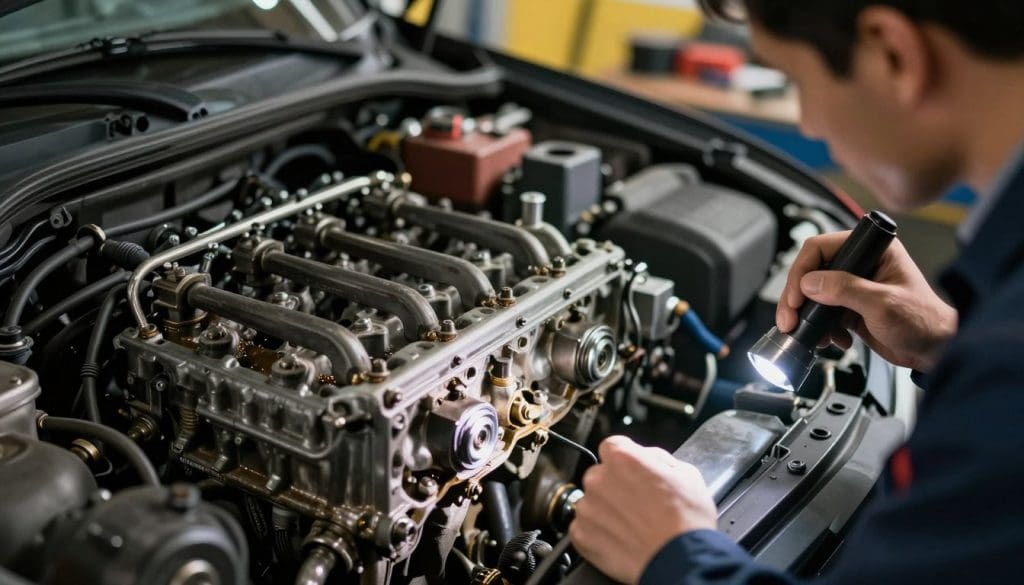
Putting off car maintenance is risky for your money and safety. Many think a small noise is no big deal and can wait. But, delaying professional help can turn a small issue into a big problem.
Escalation of Repair Costs
Ignoring your car’s early signs means you’ll pay more later. A cheap part can damage other parts if it fails. For instance, a broken belt can harm your cooling system, making a simple fix very expensive.
Waiting can lead to big financial losses. Here are some risks:
- Increased labor hours for big repairs.
- Secondary damage to good parts by a failing part.
- Loss of vehicle value from poor maintenance.
- Emergency towing fees when your car breaks down.
Compromised Road Safety and Reliability
Your safety is the biggest concern. A neglected car can break down suddenly, putting you in danger. Ignoring a knocking engine can cause a major failure while driving, risking your life and others.
Reliability is not just about convenience; it is about peace of mind. Fixing noises right away keeps your car’s systems working well. Don’t wait for a complete breakdown. Taking care of your car now keeps it reliable for years.
Professional Diagnostic Tools Used by Experts
Ever wondered how a tech finds a hidden rattle or a knocking engine sound? It’s not just guesswork anymore. Today, skilled mechanics use advanced tech to fix your car right.
Electronic Stethoscopes and Chassis Ears
Experts use electronic stethoscopes or “chassis ears” for tricky noises. These tools have sensitive microphones that attach to the car’s frame or engine. A tech can listen through headphones and find specific vibrations while driving.
This method helps find the exact sound source, even with road noise. It’s great for spotting problems in suspension or engine parts. This way, repairs are quicker and parts are saved.
Computerized Diagnostic Scanners
Your car’s computer is a treasure trove of info. Technicians plug in scanners to the OBD-II port to read error codes. These tools show sensor health and can find knocking engine causes by checking ignition and fuel.
By looking at real-time data, experts can see how systems work together. This digital info makes repairs accurate and fast. Here’s how these tools stack up in their abilities.
| Diagnostic Tool | Primary Function | Best Used For |
|---|---|---|
| Electronic Stethoscope | Sound Isolation | Mechanical rattles and clicks |
| Chassis Ears | Vibration Detection | Suspension and drivetrain issues |
| Diagnostic Scanner | Data Analysis | Engine codes and sensor health |
Conclusion
Your car is a key part of your daily life. Paying attention to unusual sounds helps keep it valuable and safe. Taking care of it early can prevent big problems later.
A knocking engine is a sign of trouble inside that needs quick help from a pro. If you ignore these signs, you risk your safety while driving. You should have a car that works well all the time.
Heaven Automotive has the skills to find and fix complex sounds in your car. Our team uses the latest tools to find the problem fast. We aim for quality repairs to make you feel safe on the road again.
Stop by at 6645 Poss Rd. San Antonio, TX 78238 to talk about your car. Or call (210) 682-3898 to book a check-up today. Let our experts make sure your car runs smoothly for years.