

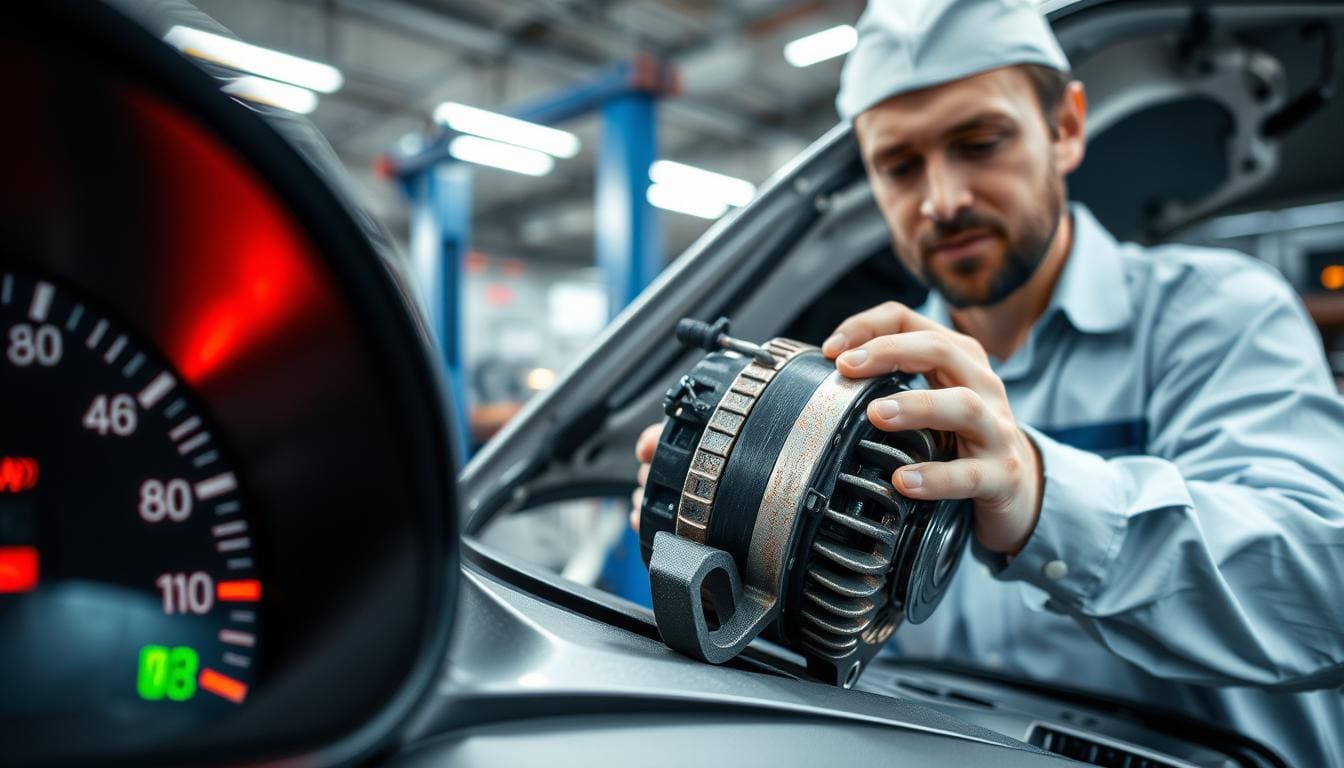
Your car’s charging system keeps the battery and engine working together so your vehicle runs smoothly. When that bridge starts to slip, you may notice subtle changes while you drive.
Catch issues early to avoid a breakdown on the road. A bad alternator can drain the battery and leave you stranded, so timely service matters.
Look for symptoms like dim lights, slow starts, or odd dashboard warnings. These are basic clues that your power system is struggling and needs attention.
If your car struggles to start or the battery won’t hold a charge, schedule an inspection right away. A quick check can save time and costly engine repairs later.
Key Takeaways
- Watch for dim lights and slow engine starts as early indicators.
- A car that won’t hold a charge often points to the charging system.
- Address dashboard warning lights promptly to avoid a breakdown.
- Early service can prevent major electrical or engine repairs.
- Regular checks during daily commutes help keep your vehicle safe.
Understanding the Role of Your Alternator
A single rotating unit converts engine motion into the electricity your car needs. When the engine running smoothly, this part produces a steady voltage—usually between 13 and 14.5 volts—to keep the battery charged.
The drive belt links the engine to the unit so the rotor can spin. That rotation creates the electricity that powers headlights, infotainment and other accessories.
Keeping the car battery charged is the main job. If this component stops producing enough output, the car battery will drain and you may face a no-start condition.
- The unit converts mechanical energy from the engine into electrical energy.
- It maintains steady voltage to support key components while the engine running.
- If necessary, a timely replacement restores reliable charging to your car battery.
Regular checks of the charging system and belt tension help ensure your vehicle stays reliable on every trip.
Common Alternator Failure Signs You Should Monitor
Watch your dashboard closely. Small alerts and changing light output often reveal issues with your car’s charging circuit before a full breakdown. A glowing indicator can mean the electrical system is under strain and needs attention.
Dashboard Warning Indicators
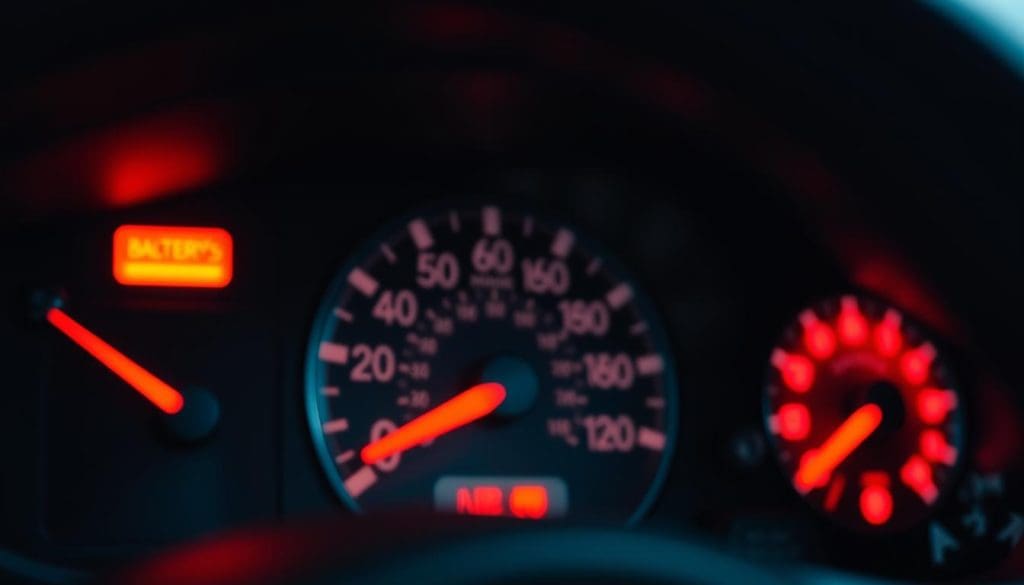
If you see a battery warning light on your dash, treat it as a serious warning. That light often means the alternator is struggling to keep voltage at the proper load. Professional technicians use that cue to decide whether the battery or the charging unit is the root problem.
Dimming or Flickering Lights
Dimming headlights or flickering cabin lamps are common symptoms of a bad alternator that can’t provide steady power to accessories. Brightness may change with engine rpm or when you add electrical load, like the air conditioning or stereo.
- Battery warning light usually signals a charging system problem.
- Fluctuating lights often precede complete charging loss.
- Technicians check voltage and load to pinpoint the issue.
Distinguishing Between Battery and Alternator Issues
A few simple tests will help you know if the battery or the charging system is the real problem. Start with a jump-start and observe how the car behaves after cables are removed.
If the vehicle dies right away, the charging unit is likely not supplying enough power to the engine. That outcome points away from a dead battery as the sole cause.
Testing Your Charging System
Do this quick check:
- Jump-start the car and leave the engine running; remove the cables. If the car stalls immediately, the charging component is the issue.
- Watch the battery warning light; it can signal problems with the battery alternator connection rather than the battery alone.
- When starting troubles happen often, get a professional charging system test to avoid an unnecessary battery replacement.
Proper diagnostics save you money and time. For more detailed guidance on how a charging unit shows problems, see this short guide: top alternator indicators.
Why Electrical Glitches Indicate Charging System Trouble
If cabin screens blink or headlights waver while you drive, your charging circuit may be struggling to supply steady power. Modern cars route electricity to critical systems first, so nonessential accessories often glitch before the engine loses power.
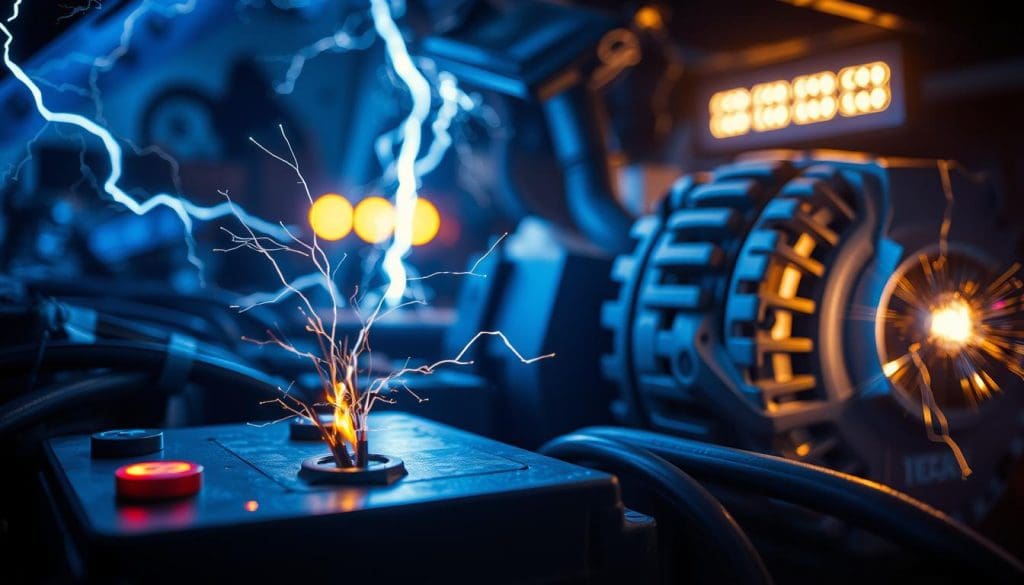
These glitches happen when a weak alternator cannot meet the vehicle’s electrical load. That forces the battery to make up the difference, which leads to erratic behavior and a battery that won’t stay charged.
Watch for:
- Headlights dimming or changing with rpm.
- Dashboard screens or infotainment flickering while the engine running.
- Accessory outages when you add more electrical load.
Ignore recurring electrical issues and you could need a full charging system replacement instead of a simple repair. Treat these glitches as a clear warning to get a professional check so your car stays reliable on the road.
Addressing Unusual Noises and Odors Under the Hood
Strange noises or a hot, rubbery smell under the hood are clear prompts to inspect your vehicle right away. These cues often point to worn bearings or slipping belts that affect the charging system and can lead to a dead battery.
Identifying Mechanical Grinding
If you hear a grinding noise while the engine runs, trust your ears. A grinding sound usually means internal bearings are worn and the unit is struggling to spin.
That noise may also coincide with flickering headlights or dipping voltage as the component fails to supply steady power.
Detecting Burning Rubber Smells
The smell of burning rubber signals a slipping drive belt or overheating wires. Melted insulation on wires is dangerous and can cause shorts or a dead battery.
- Grinding noise often means bearings inside the unit are damaged and may also cause a dead battery.
- Burning rubber smell usually means the drive belt is slipping or wires are overheating.
- When you notice these problems, seek professional service or a replacement to protect your car and its components.
Conclusion
Quick action can keep a small electrical issue from becoming a roadside emergency.
If you notice a warning light or flickering lights, take it as a cue to inspect the battery and alternator now. These early cues are the best way to avoid a sudden loss of power while driving.
Bring your car in for professional service so a technician can test the battery alternator system and other components. Timely checks save you time and money and may prevent a full replacement of the charging module or battery later on.
Miracle Body and Paint Collision Center can help repair collision damage and inspect electrical systems at two San Antonio locations. Visit 6217 Grissom Rd., Leon Valley (North West San Antonio) or call (210) 680-1987.
You can also reach our North East San Antonio shop at 4650 Walzem Rd., or call (210) 858-3630 for fast, expert service to keep your vehicle and engine running safely.