


You rely on your car every day, and small maintenance choices can save you time and money. Many people wonder if they should change transmission fluid themselves to avoid paying up to $250 at a dealer or shop.
While engine oil keeps the motor running, the gearbox lubricant helps automatic transmissions and steering parts work smoothly. You can check the dipstick and watch the level, and many owners handle a fluid change on their own.
Be careful to use the right type of oil. Using the wrong product can cause damage and lead to costly repairs later. If you want a thorough explanation of when a full flush is worth the cost, see this guide on a complete flush and timing when and why to get a transmission.
Key Takeaways
- Checking the dipstick helps you monitor level and condition.
- Professionals can charge up to $250, so DIY can cut costs.
- Use the manufacturer-recommended oil to avoid damage.
- Regular attention prevents larger repairs down the road.
- High-mileage cars may need a full flush rather than a basic change.
Understanding the Importance of Transmission Fluid Service
Proper lubrication is the unsung hero that prevents heat buildup and keeps your vehicle shifting with ease. A targeted transmission fluid service helps cool, clean, and protect the gears inside your gearbox. It supports smooth shifts and can improve fuel economy when done correctly.
The Role of Lubrication
Lubricant circulates to reduce friction, carry off heat, and suspend tiny metal particles. This keeps automatic transmissions working without grinding or slipping.
Preventing Internal Component Damage
- Match the right product: Never substitute engine oil for transmission lubricant; use the maker’s specified type for your transmissions.
- Professional checks: A proper service maximizes shift quality and helps reduce fuel draw during normal driving.
- Regular maintenance: Scheduled flush and inspections lower wear, stop debris buildup, and reduce the chance of costly repairs.
- Watch for changes: When the lubricant darkens or smells burned, it has lost protective strength and must be addressed.
Recognizing Signs of Degraded Transmission Fluid
You can spot a degrading lubricant by watching color, smell, and how your car shifts. Start by checking the dipstick to inspect the color. Good transmission fluid is clear or pink; old fluid turns dark red or brown.
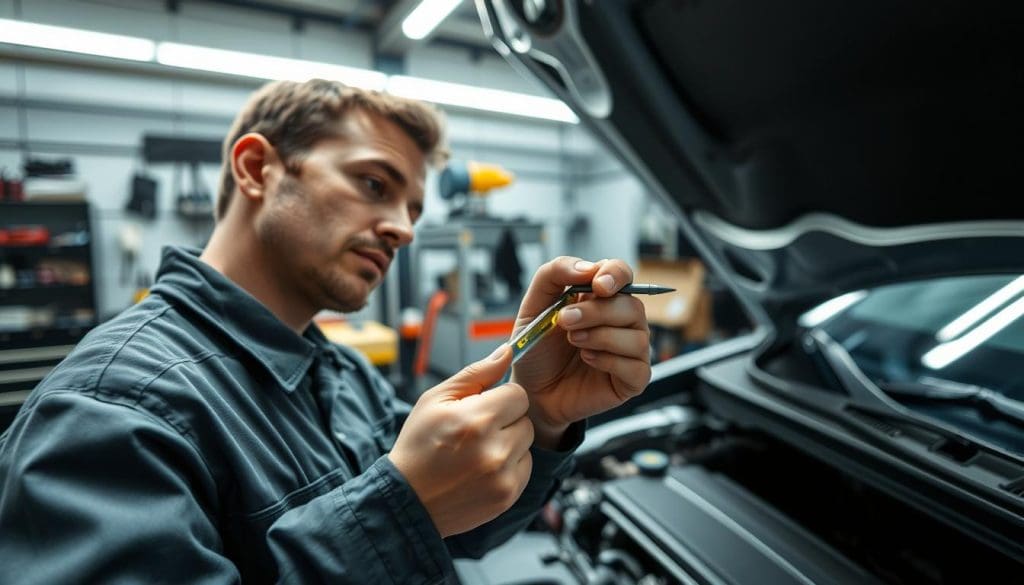
If you smell burning or hear strange noises, act quickly. Difficulty shifting, RPM spikes, or failure to engage reverse often means it is time to check fluid level and look for leaks.
- Use the dipstick to check transmission fluid color and level.
- Look for metal shavings in the old oil — this can indicate internal wear in your transmissions.
- A full flush may be needed if symptoms point to heavy contamination or failing parts.
Maintain proper fluid level. Low oil can make the engine run hot and cause severe damage. Regular checks help you decide when to change transmission components or schedule a professional flush.
Determining the Ideal Maintenance Schedule for Your Vehicle
A predictable care plan helps your car shift well and can prevent costly repairs later. Start by checking your owner manual for exact guidance tailored to your model.
Manufacturer schedules beat guesswork. For manual gearboxes, most guides say to change fluid every 30,000 to 60,000 miles. Follow the owner manual for the correct interval and product type.
For automatic transmissions, plan to change transmission fluid between 60,000 miles and 100,000 miles for many vehicles. When you hit the 60,000 miles mark, perform a full inspection.
- Consult the owner manual: it lists recommended intervals and exact specs for your vehicle.
- Watch the miles: manual cars often need attention at 30,000–60,000 miles; automatics often at 60,000–100,000 miles.
- Preventive checks: a timely change transmission or top-up can avoid larger repairs down the road.
Follow the owner’s schedule and document each check. That simple discipline keeps your car reliable and extends the life of key components.
Essential Steps for a Successful Transmission Fluid Change
Doing the job right takes planning, the right tools, and about an hour of focused work. Follow these steps to keep your car shifting well and avoid surprises.
Gathering Necessary Tools
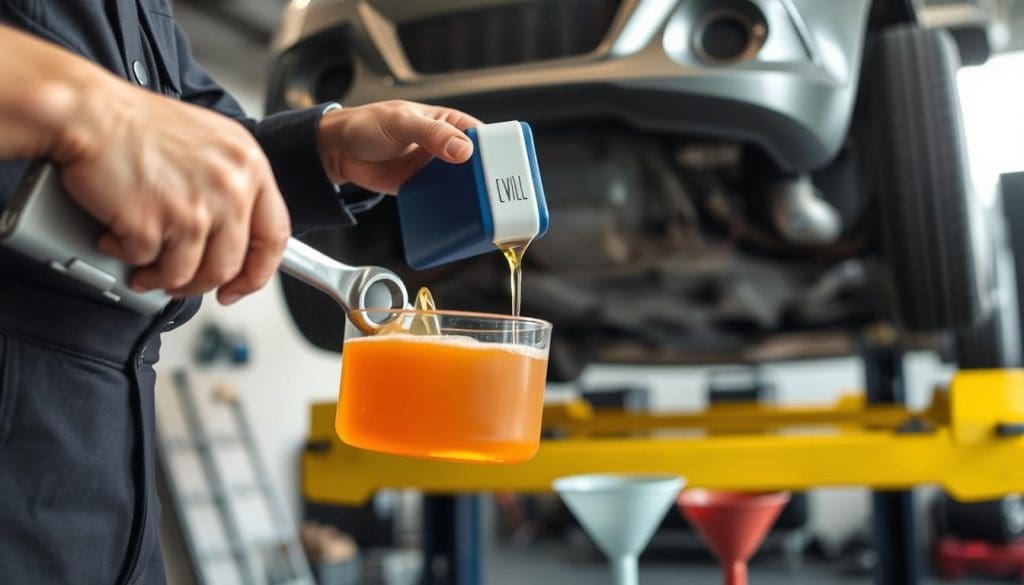
Make sure you have jack stands, a pan, a funnel, the correct replacement, and a new filter. Most transmission pans use 6–8 bolts, so include the right socket set.
Draining the Old Fluid
Raise the vehicle safely and drain the old fluid into a catch pan. When you remove the pan, inspect the filter for debris or metal shards — metal bits can signal internal wear.
Refilling and Inspecting Levels
Reinstall the pan with the 6–8 bolts and tighten to spec. Use a funnel to add new fluid, then start the engine and let it reach operating temperature.
- Make sure to check fluid level with the dipstick and adjust to the correct level.
- Make sure there are no leaks and that the engine and gearbox run smoothly.
- After a short drive, recheck the dipstick one more time to confirm the proper fluid level.
Professional Assistance for Complex Collision and Mechanical Repairs
Major mechanical failures and crash repairs require specialized equipment and trained technicians. When damage runs deep, your best option is a reputable shop that can diagnose and repair both bodywork and driveline issues.
If you need help beyond basic checks, hire a team that handles complex restorations. Miracle Body and Paint Collision Center offers comprehensive repair solutions and can handle tasks from a full flush to major rebuilds.
- Two convenient locations: North West San Antonio – Leon Valley at 6217 Grissom Rd. Call (210) 680-1987.
- North East San Antonio: 4650 Walzem Rd. Call (210) 858-3630 for more information on our repair options.
- Miracle Body and Paint Collision Center restores your vehicle to its pre-accident condition. Hire us to fix collision damage or complex mechanical repair needs.
For precise work like a transmission flush or to change transmission fluid correctly, bring your car to a trusted team. Our technicians provide clear information and guaranteed workmanship at both San Antonio locations.
Conclusion
Keep routine checks and timely changes to avoid costly repairs and keep your car reliable.
Regular maintenance protects your vehicle and extends parts life. If you’re unsure when to change or need expert help, read about how often to change transmission fluid for guidance.
Many owners handle a fluid change themselves, but complex repairs call for professionals. Hire Miracle Body and Paint Collision Center to fix collision damage and keep your car safe.
Two locations to serve you: Leon Valley — 6217 Grissom Rd, (210) 680-1987; North East — 4650 Walzem Rd, (210) 858-3630.