

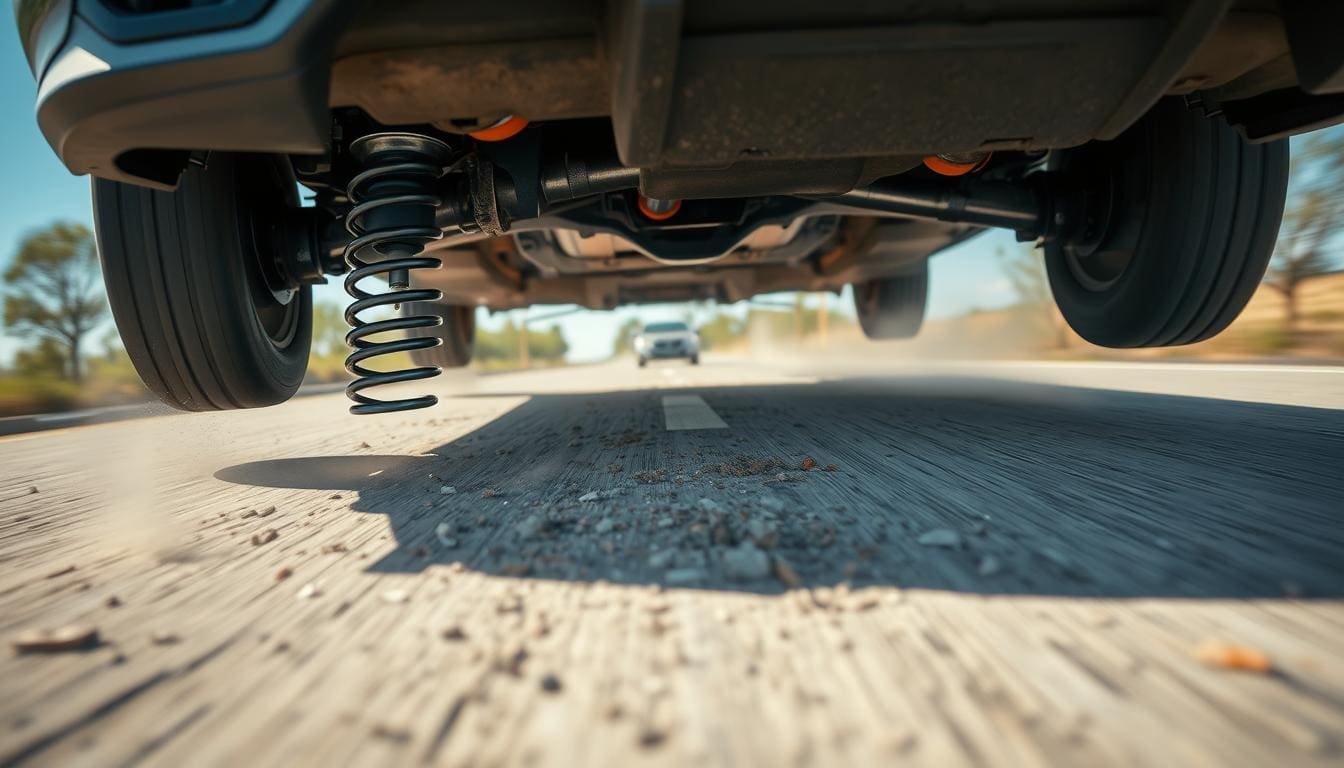
If you hear a sudden clunk when you roll over bumps, it often signals a problem with your vehicle’s suspension. This sound can come from worn mounts, loose components, or damaged undercarriage parts that let parts shift under load.
Addressing the issue quickly protects your safety and prevents more costly repairs later. Ignoring persistent sounds can lead to uneven handling and faster wear on steering parts.
Scan for obvious wear or breakage, but remember that some faults hide under the chassis. If you want a focused guide on similar transmission-related symptoms, see a detailed diagnostic overview at identifying unusual transmission noises.
Our team at Miracle Body and Paint Collision Center recommends a prompt professional inspection when these symptoms appear. A quick check can identify worn shocks, loose linkages, or mounts that need replacement.
Key Takeaways
- Clunking over bumps often points to worn suspension parts or loose mounts.
- Ignoring persistent sounds can reduce stability and raise repair costs.
- Perform a visual check, but get a professional diagnosis for hidden faults.
- Timely repairs return safe handling and reduce undercarriage damage.
- Follow a trusted shop’s guidance to prioritize replacement parts.
Understanding Why Your Car Is Making a Clunking Noise
When your vehicle emits a hard thump driving over uneven pavement, internal components may be loose or failing. These sounds often come from the suspension, loose mounts, or drivetrain parts that shift under load.
A clunking noise at start-up can point to the transmission system or a loose starter motor engine component. Transmission fluid should be red or pink; other colors may mean fluid is old or burnt and the system is at risk.
Failing lubrication inside gearboxes and mounts leads to metal-on-metal contact. A broken flex plate — the metal disc that links the engine output to the torque converter in automatics — can create rhythmic knocks while driving.
- If the sound appears during braking, inspect rotors, misaligned calipers, or loose brake fasteners.
- Miracle Body and Paint Collision Center can diagnose complex problems and restore safe operation.
Need help? Call our North West San Antonio – Leon Valley shop at (210) 680-1987 for a professional inspection.
Common Suspension Components Behind the Sound
A loose or worn suspension part often reveals itself as a distinct thud when your wheels hit an uneven patch. Identifying the specific component helps you prioritize repairs and avoid further wear.
Sway Bar Links and Bushings
Worn sway bar links or deteriorated bushings allow extra movement in the bar assembly. This movement can produce clunking sounds over bumps and reduce steering control.
Quick check: look for cracked rubber or play at the link ends. Replacement is usually straightforward and affordable.
Ball Joints and Control Arms
Ball joints and the control arm assembly guide wheel motion. Over many years, these joints wear and let the wheel shift, which can cause harsh bumps and odd steering feedback.
AAA notes that failing suspension components also accelerate tire wear, affecting handling and safety.
Strut Mounts and Shock Absorbers
Strut mounts or shock absorbers that fail allow excessive movement of the suspension system. This movement creates loud, sudden sounds and a rough ride that signals a repair is needed.
Strutmasters has 25 years of experience testing parts for durability. Typical repair costs average around £169.98 through professional networks like FixMyCar, though prices vary by region.
- Worn bushings, ball joints, or shocks often cause clunking sounds over bumps.
- Visit Miracle Body and Paint Collision Center at 4650 Walzem Rd for a suspension inspection.
Other Mechanical Issues That Cause Clunking
When hardware under the chassis comes free, you may notice abrupt knocks as the part contacts the frame on uneven surfaces. These sounds can mimic suspension failure, so it helps to widen the inspection beyond struts and control arms.
Loose Exhaust Systems
A loose exhaust is one of the most common mechanical issues that causes clunking. If hangers or brackets fail, the pipe or muffler can hit the underside and produce loud sounds, especially over bumps or during turns.
Why this matters: a loose exhaust can wear mounting points, damage the undercarriage, and let exhaust gases enter the cabin. FixMyCar lists average repair costs near £134.12 for a standard service, though local rates vary.
- Steering components and brake parts may also cause similar sounds if they are worn or loose.
- Identify the source early to prevent further undercarriage damage and avoid higher repair bills.
- Miracle Body and Paint Collision Center can secure exhausts and repair other faulty components quickly.
For a focused guide on related turning issues, see why your car makes noise when. Call our North West San Antonio – Leon Valley shop at (210) 680-1987 to schedule an inspection.
How to Properly Diagnose Your Vehicle
If you feel a heavy jolt over small bumps, inspect suspension pivots and steering linkages for excess play.
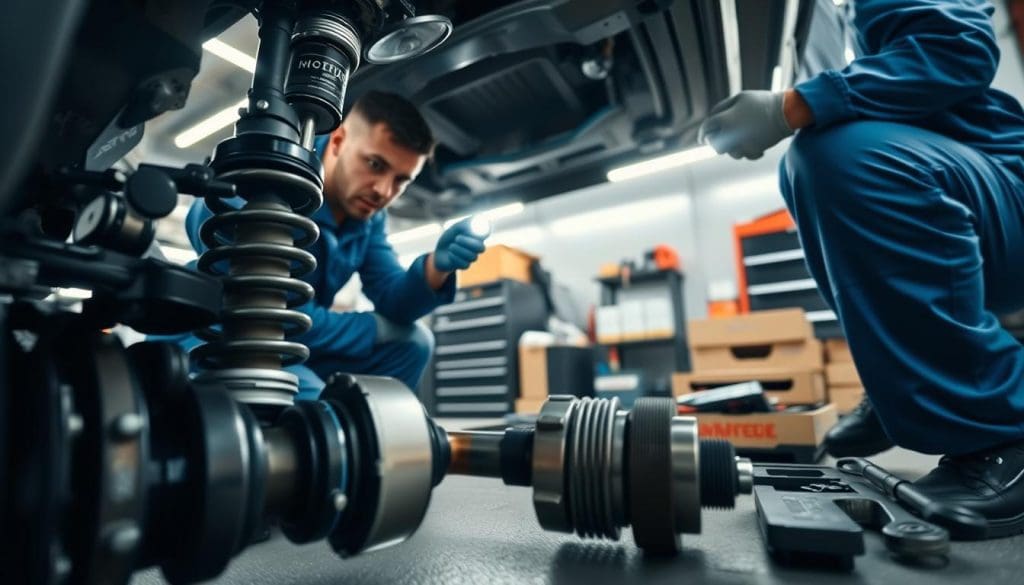
Visual Inspection Techniques
Start with a slow walk-around and look for torn bushings, leaking shocks, or broken mounts. Check for loose fasteners and obvious wear at ball joints and control arm connections.
Raise the vehicle safely and test for movement at pivot points by hand. Excess play at joints or worn rubber will often reveal the source of a clunking sound.
When to Seek Professional Help
Get help if the car pulls to one side, shows uneven tire wear, or if you cannot safely verify torque specs. These signs mean the problem may affect steering or brakes.
Professional shops use specialized tools to confirm torque values and to perform an alignment after major suspension repair. Miracle Body and Paint Collision Center can diagnose parts, verify safe operation, and recommend replacement where needed.
- Check ball joints and bushings for excessive movement.
- Verify torque and alignment after any major repair or replacement.
- Contact our North East San Antonio shop at 4650 Walzem Rd or call (210) 858-3630 for expert service.
The Importance of Professional Suspension Repairs
Correct installation of suspension components protects steering response and wheel alignment. When you trust experienced technicians, you reduce the risk of premature wear and further damage to your vehicle.
Attempting DIY fixes on steering or suspension systems can cause misalignment and unsafe handling. A misinstalled part or incorrect torque can shift load to other components and wear tires unevenly.
- Professional repairs ensure replacement parts meet manufacturer standards and fit correctly.
- Our team brings many years of experience diagnosing complex suspension components.
- Using quality parts restores performance and helps eliminate persistent clunking in the ride.
- Regular service at our shop prevents premature wear on wheels, tires, and linked systems.
Trust Miracle Body and Paint Collision Center for thorough inspection and trusted repair at our two San Antonio locations. Proper service today saves you time and cost tomorrow.
Why You Should Not Ignore Unusual Road Noises
Unusual thuds from your wheels are an early sign that components under your vehicle need attention.
You should never ignore these sounds. A single clunking incident can mean worn suspension parts or a loose control arm. If left unchecked, wear can move to steering and brake systems and cause dangerous failures while you drive.
Timely service catches the problem before it grows. Regular inspections spot worn ball joints, failing shock mounts, or a damaged anti‑roll bar. Fixing small faults saves time and prevents costly replacement of linked parts later.
Miracle Body and Paint Collision Center can identify the source of any odd sound and recommend repairs. Visit our North West San Antonio – Leon Valley shop at 6217 Grissom Rd or call (210) 680-1987 for an expert inspection.
- Do not delay if you hear a repeat thump over bumps.
- Prompt repair protects steering response and wheel wear.
- Routine maintenance keeps your vehicle safe and reliable over time.
Conclusion
Conclusion
Small, sharp impacts on rough roads usually point to failing mounts, bushings, or exhaust hangers. Addressing a persistent clunking early is the best way to protect your safety and avoid costly future repairs.
By knowing common causes, you can decide when to see a professional. Our team is dedicated to high-quality service to restore your vehicle to optimal condition after any collision damage.
Hire Miracle Body and Paint Collision Center to fix your collision repair damage and get precise results. We have two locations to serve you: North West San Antonio – Leon Valley at 6217 Grissom Rd, (210) 680-1987, and North East San Antonio at 4650 Walzem Rd, (210) 858-3630.