

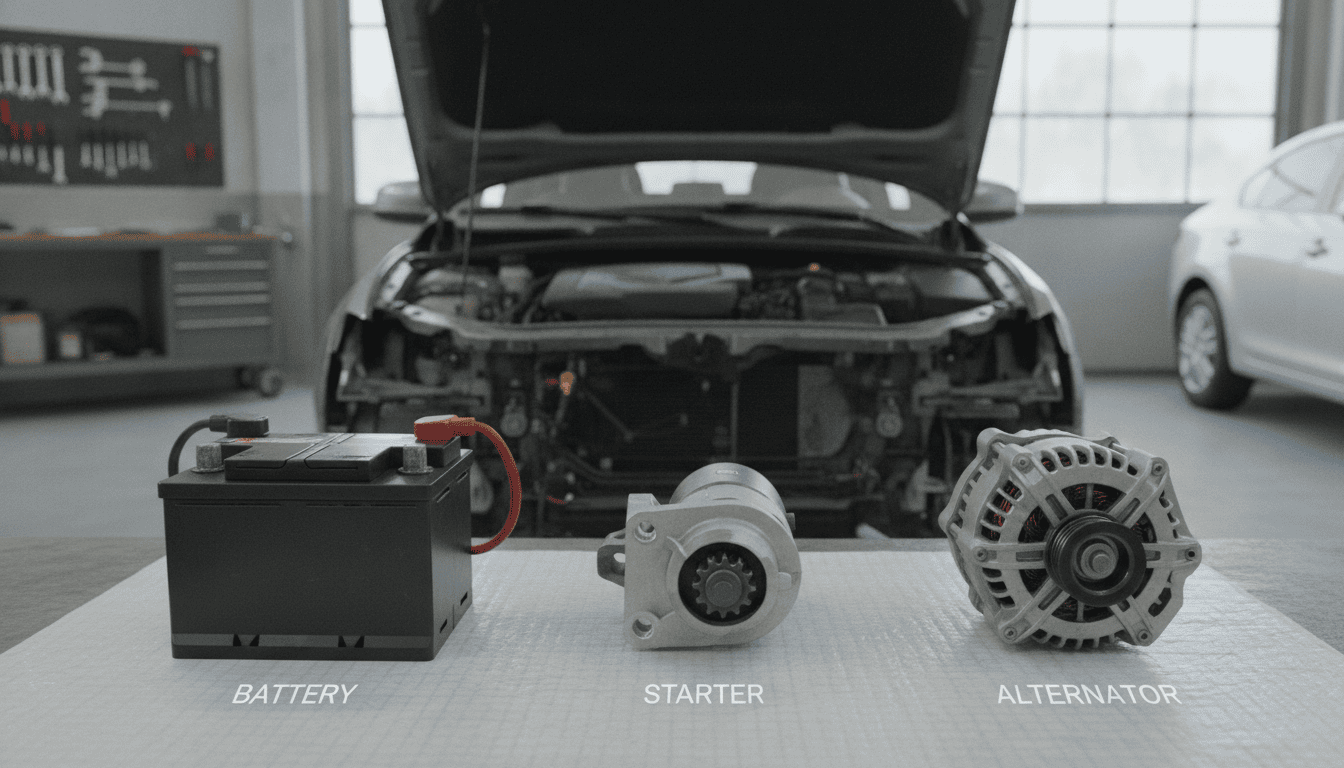
Few things feel as frustrating as turning your key and hearing silence. When a car won’t start, the cause often lies in its electrical system. Knowing the battery vs starter vs alternator roles is essential for every driver.
The battery gives the first power surge, and the starter turns the engine. After the engine runs, the alternator keeps the system charged. If you are stranded in San Antonio, Heaven Automotive is ready to help.
At 6645 Poss Rd, San Antonio, TX 78238, we diagnose complex electrical problems. For questions about your vehicle’s performance, call (210) 682-3898 for expert guidance.
Key Takeaways
- The battery provides the initial power needed to engage the engine.
- A faulty starter often produces a clicking sound when you turn the key.
- The alternator is responsible for recharging the system while the engine runs.
- Electrical connection issues can mimic major component failures.
- Professional diagnostics at Heaven Automotive ensure accurate repairs for San Antonio drivers.
Common Symptoms of a Car That Won’t Start
Your car shows its health through sounds and electrical changes when you try to start it. These warning signs can separate a simple fix from a serious mechanical failure. If stuck in San Antonio, experts at Heaven Automotive, 6645 Poss Rd., can assist you at (210) 682-3898.
Engine Cranks Slowly
Slow, labored engine rotation signals trouble. You may notice the engine cranks but won’t start, often because the starter motor receives too little power. This low energy keeps the engine from reaching the speed needed to ignite the fuel mixture.
Clicking Noises
A rapid or single clicking sound when starting can signal an electrical connection problem. Fast clicks usually mean the battery lacks amperage to engage the starter solenoid. One loud click may mean the starter motor is failing or stuck.
Dashboard Lights Behavior
Your instrument cluster offers clues about the electrical system. Dim or flickering dashboard lights are common dead battery symptoms and show low voltage. Bright, steady lights with a silent engine point to the starter or ignition circuit, not the battery.
| Symptom | Likely Cause | Electrical Status |
|---|---|---|
| Slow Cranking | Weak Battery | Low Voltage |
| Rapid Clicking | Low Amperage | Insufficient Power |
| No Sound/Lights | Dead Battery | No Power |
| Bright Lights/No Crank | Starter Failure | Normal Voltage |
Checking the Battery: First Steps to Take
A quick battery check can save time and money when your car stays silent in the driveway. Before fearing costly engine repairs, inspect your vehicle’s power system. In San Antonio, Heaven Automotive at 6645 Poss Rd. can help; call (210) 682-3898.
Inspecting Battery Terminals
A simple problem often keeps a car from starting. Check your battery terminals for white or blue powdery corrosion. This buildup blocks electrical current from reaching the starter motor.
Make sure cable connections are tight and free of debris. If cables wiggle when touched, they may not keep a solid connection. Cleaning these terminals with a wire brush can often restore power immediately.
Testing Battery Voltage
If connections look clean and tight, measure the battery’s power. Use a multimeter to see if it holds enough charge to crank the engine. A healthy battery usually reads about 12.6 volts when the engine is off.
If the reading is well below 12 volts, the battery may be discharged or failing. Consistent low voltage shows the battery may need replacement or a deep charge.
Jump Starting Your Vehicle
A jump-start test can help find the problem. If the engine starts after a jump, the battery likely caused the issue. If you hear a rapid clicking sound when starting after jumping, the starter or connection may be at fault.
If the car dies soon after you remove the jumper cables, the alternator may not hold the charge. This test helps separate a dead battery from a failing charging system. For safety, always connect jumper cables in the correct order.
Diagnosing the Starter Issue
A vehicle that will not start despite a healthy battery may have a starter system failure. After confirming the battery holds a charge and terminals are clean, check the parts that turn the engine.
Signs of a Faulty Starter
Recognizing bad starter signs early can prevent being stranded. The most common sign is a no crank no start condition: you turn the key, but hear nothing.
You might hear a single, loud click when you try to start the car. This often means the starter solenoid engages, but the motor cannot turn the engine flywheel.
Intermittent starting is another hallmark of a faulty starter. If your car starts one day but fails the next, worn brushes or solenoid contacts may cause poor connections.
Tapping the Starter
Sometimes, gently tap the starter housing with a heavy tool while someone else turns the key. This technique can jar internal parts into making a temporary connection.
However, use extreme caution with this method. Repeated strikes can damage the casing or wiring, turning a minor repair into a complete replacement.
If you must tap the starter to get your car moving, the unit is clearly failing. Schedule a professional inspection at Heaven Automotive, a trusted shop at 6645 Poss Rd. in San Antonio, TX. Call (210) 682-3898.
Testing the Starter Motor
Performing a formal starter motor test requires a multimeter to check voltage drops and proper electrical flow. Ensure the starter solenoid receives the ignition switch signal when you turn the key.
If the solenoid clicks but the motor does not spin, the issue is likely inside the starter. The following table shows common signs and helps identify different failure points.
| Symptom | Likely Cause | Recommended Action |
|---|---|---|
| Single loud click | Bad solenoid | Replace starter |
| Rapid clicking | Low voltage | Check battery |
| No sound at all | Ignition switch | Test circuit |
| Grinding noise | Worn gear | Inspect flywheel |
Understanding the Alternator’s Role
A dead battery can stop your car from starting. But alternator failure often appears after the engine starts. The alternator is your vehicle’s charging system heart, turning mechanical energy into electricity for electronics and battery charging.
If your vehicle struggles, visit Heaven Automotive at 6645 Poss Rd. San Antonio, TX 78238. Call (210) 682-3898 for a diagnostic check.
Symptoms of a Failing Alternator
Spotting failing alternator symptoms early can help prevent a roadside breakdown. Signs include flickering dashboard lights, dim headlights, or sudden power loss while driving.
You may hear unusual whining or grinding from the engine bay. These sounds can mean worn internal bearings or a worn alternator drive belt.
Importance of Battery Charge
A defective alternator can drain or damage a healthy battery. Since it recharges the battery while the engine runs, a faulty unit makes the battery power everything.
The battery will eventually lose its ability to hold any charge. You may replace it, but it can die again because the root cause remains.
Testing the Alternator Output
To test your charging system, use a multimeter for a basic voltage check. With the engine running, a healthy alternator should produce between 13.5 and 14.5 volts.
A much lower reading shows the alternator is not supplying enough power. The table below lists signs that help separate common electrical faults.
| Symptom | Likely Cause | Action Required |
|---|---|---|
| Engine won’t crank | Dead Battery | Jump start or replace |
| Lights dim while driving | Alternator failure | Test output voltage |
| Clicking sound at start | Starter motor | Inspect starter relay |
| Stalling while idling | Charging system | Check drive belt |
How to Perform a Battery Test
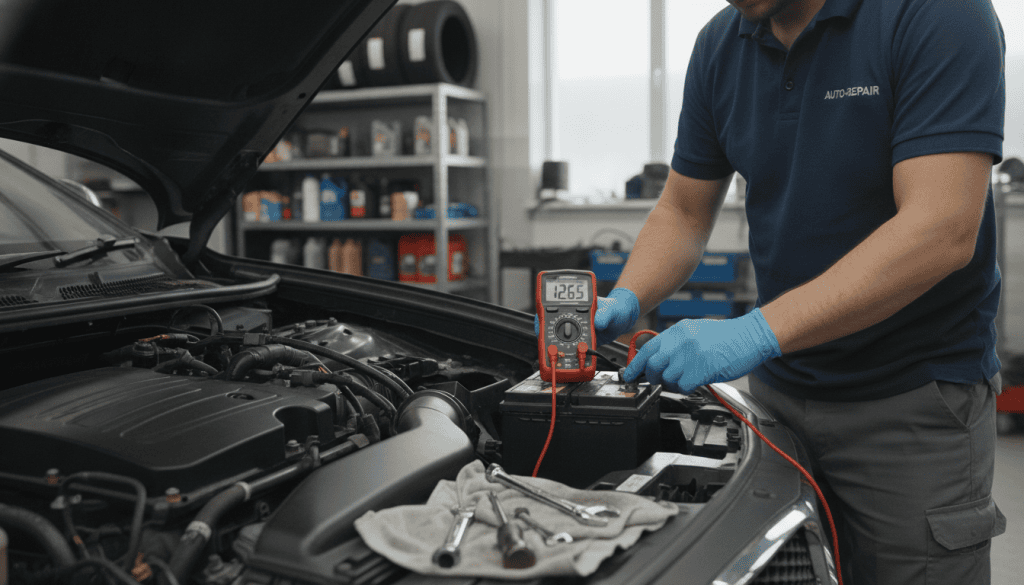
If you notice dead battery symptoms, use your multimeter. A basic inspection can reveal the cause of starting trouble. For help, contact the team at Heaven Automotive at 6645 Poss Rd. San Antonio, TX 78238. Call (210) 682-3898.
Using a Multimeter
A battery voltage test shows whether your battery holds a charge. Set your multimeter to DC voltage and touch the probes to the terminals. A healthy battery usually reads about 12.6 volts when the engine is off.
- Ensure the multimeter is set to 20V DC.
- Connect the red probe to the positive terminal.
- Connect the black probe to the negative terminal.
Checking for Corrosion
Before calling the battery dead, check for physical damage. Corrosion often looks like white or blue powder on the terminals. This buildup blocks electricity from reaching the starter motor.
Check for swelling or a strong sulfur odor. These signs show internal failure. A bloated casing means the battery likely needs immediate replacement, so wear gloves when cleaning terminals.
Interpreting the Results
Sometimes, your engine cranks but won’t start, although voltage seems acceptable. A battery may show surface voltage yet lack the Cold Cranking Amps (CCA) needed to turn the engine over. Voltage is only one part of total power.
If your multimeter shows low voltage, charge the battery or jump-start the vehicle. If the car still fails to start after a full charge, it may have a bad cell. Professional testing at a shop like Heaven Automotive is safest for confirming whether you need a new unit.
Diagnosing Starter Problems
When your vehicle fails to turn over, the problem often hides in the electrical path. Many drivers see bad starter signs when the engine stays silent, but a faulty control circuit may cause it. Before buying a new motor, inspect the entire starting system in a logical way.
Checking Ignition Switch
The ignition switch controls your vehicle’s starting sequence. When you turn the key or press the start button, it sends a signal through the system. If its contacts are worn or corroded, the signal cannot reach the starter, leaving you stranded.
Starter Relay Inspection
A starter relay is a small but vital part that handles the high current needed to engage the motor. If you hear one click but the engine does not crank, the relay may be stuck or burnt out. Swap it with an identical relay from your fuse box; a start rules out a simple electrical failure.
Reading Error Codes
Modern vehicles often store diagnostic trouble codes when a starting component fails. An OBD-II scanner can help find issues with the immobilizer system or neutral safety switch.
If you cannot identify the fault, contact the experts at Heaven Automotive. They are at 6645 Poss Rd. San Antonio, TX 78238, and can help at (210) 682-3898.
| Component | Primary Function | Common Failure Symptom |
|---|---|---|
| Ignition Switch | Initiates start signal | No response when turning key |
| Starter Relay | Closes high-current circuit | Single click, no crank |
| Starter Motor | Cranks the engine | Grinding noise or total silence |
| Safety Switch | Prevents start in gear | Engine only starts in Neutral |
Alternator Testing: DIY Methods
You can perform basic checks at home to see if your alternator causes your vehicle’s starting troubles. When you notice dim headlights, a battery that will not hold charge, or whining noises, you may face alternator failure. These signs are common, but careful testing helps you avoid replacing the wrong part.
Using a Voltmeter
An alternator output test reliably shows whether your charging system works correctly. With the engine running, set your multimeter to DC voltage, then touch the probes to the battery terminals. A healthy system should usually read between 13.5 and 14.5 volts.
A reading below 13 volts often means the alternator is not charging the battery. A reading above 15 volts signals overcharging, which can damage electrical parts. Always exercise caution near moving engine parts during this test.
Checking Drive Belt Condition
A thorough drive belt inspection matters because a loose or worn belt keeps the alternator from spinning fast enough. Check for fraying, cracks, or glazing on the belt’s surface. If it feels loose when pressed, it may slip and transfer power poorly.
Listen for squealing during startup or acceleration; this often means the belt needs adjustment or replacement. Proper belt tension is simple but critical for preventing early charging problems.
Assessing Electrical Connections
The problem may be wiring, not the alternator itself. Check the main power cable and smaller signal wires for corrosion, melting, or loose fittings. A poor connection creates high resistance, causing uneven voltage readings and alternator failure.
If DIY tests remain unclear or live electrical work feels unsafe, seek expert help. You can visit the professionals at Heaven Automotive, located at 6645 Poss Rd. San Antonio, TX 78238, or call them at (210) 682-3898. They can provide a complete alternator output test and professional drive belt inspection. They use specialized equipment to safely find complex electrical faults.
When to Call for Professional Help
If you face a lasting no crank no start problem, know your limits. Basic checks may fix small issues, but some need special tools and skills from a professional auto repair shop.
Evaluating DIY vs. Professional Repair
Most drivers can clean battery terminals or check for loose cables. Leave high-voltage parts, starter motor removal, and complex charging-system tests to experts.
Stop at once if you smell burning, see smoke, or find exposed wiring. These signs show a problem beyond a simple battery charge.
| Task Type | DIY Friendly | Professional Required |
|---|---|---|
| Terminal Cleaning | Yes | No |
| Starter Replacement | No | Yes |
| Alternator Testing | Basic | Advanced |
Safety Precautions
Your vehicle safety matters most when you work under the hood. Never touch moving belts or hot engine parts while the vehicle runs. If electrical currents concern you, do not bypass safety protocols.
For reliable help in the San Antonio area, contact Heaven Automotive. They are at 6645 Poss Rd, San Antonio, TX 78238, or you can call (210) 682-3898.
Impact of Delaying Repairs
Warning signs can lead to serious mechanical failures when ignored. A delayed alternator repair may fully drain your battery and leave you stranded somewhere unsafe.
A faulty charging system can also damage other sensitive electronic modules. Addressing these issues early prevents costly secondary repairs and keeps your car dependable on the road.
Best Practices for Car Maintenance
Proactive care helps prevent roadside breakdowns. Early repairs help keep your vehicle reliable all year. For expert guidance, visit Heaven Automotive at 6645 Poss Rd. San Antonio, TX 78238. Call (210) 682-3898 for professional assistance.
Regular Battery Maintenance
Good battery maintenance starts with clean, secure connections. Corrosion can build on terminals and block electrical flow. Use a wire brush with baking soda and water periodically for a solid connection.
Check that battery cables stay tight and free from fraying. Extreme temperatures in places like San Antonio can speed wear, making a clean tray and secure hold-down bracket essential.
Importance of Routine Checks
A routine vehicle inspection should cover more than oil levels. Check drive belts because loose or cracked belts can stop the alternator from charging the battery. Ignoring these details can cause complete system failure.
Have your entire electrical system tested at least once a year. Professionals can find hidden issues, such as parasitic drains, before they stop your engine from starting. Regular checks save money and stress over time.
Understanding Warning Signs
Recognizing dead battery symptoms early can prevent an unexpected breakdown. Slow engine cranking or dim headlights while idling signal a problem. Act before the car stops starting completely.
Watch for flickering dashboard lights or unusual clicking when you turn the key. These subtle cues are your car’s way of asking for help. Perform a routine vehicle inspection when you notice dead battery symptoms to find the cause and preserve peak performance.
FAQs About Car Starting Issues
Understanding your vehicle helps you handle breakdowns with confidence. These car won’t start FAQs cover common concerns when an engine fails to turn over.
What to do if the Battery is Dead?
A dead battery often needs a jump-start to get you moving again. If the problem continues, replace it when it no longer holds a charge.
Can I drive with a faulty alternator?
Driving with a faulty alternator is risky because it powers your car’s electrical systems while the engine runs. Your vehicle might stall once the battery drains, leaving you stranded in traffic.
How to extend the life of my car battery?
To extend battery life, keep the terminals clean and check that the charging system works correctly. Regular inspections can stop small issues from becoming costly repairs.
Expert technicians at Heaven Automotive provide the precision care your vehicle deserves. Visit us at 6645 Poss Rd. San Antonio, TX 78238 to fix your starting problems. Call (210) 682-3898 to schedule your appointment and fix your vehicle today.