

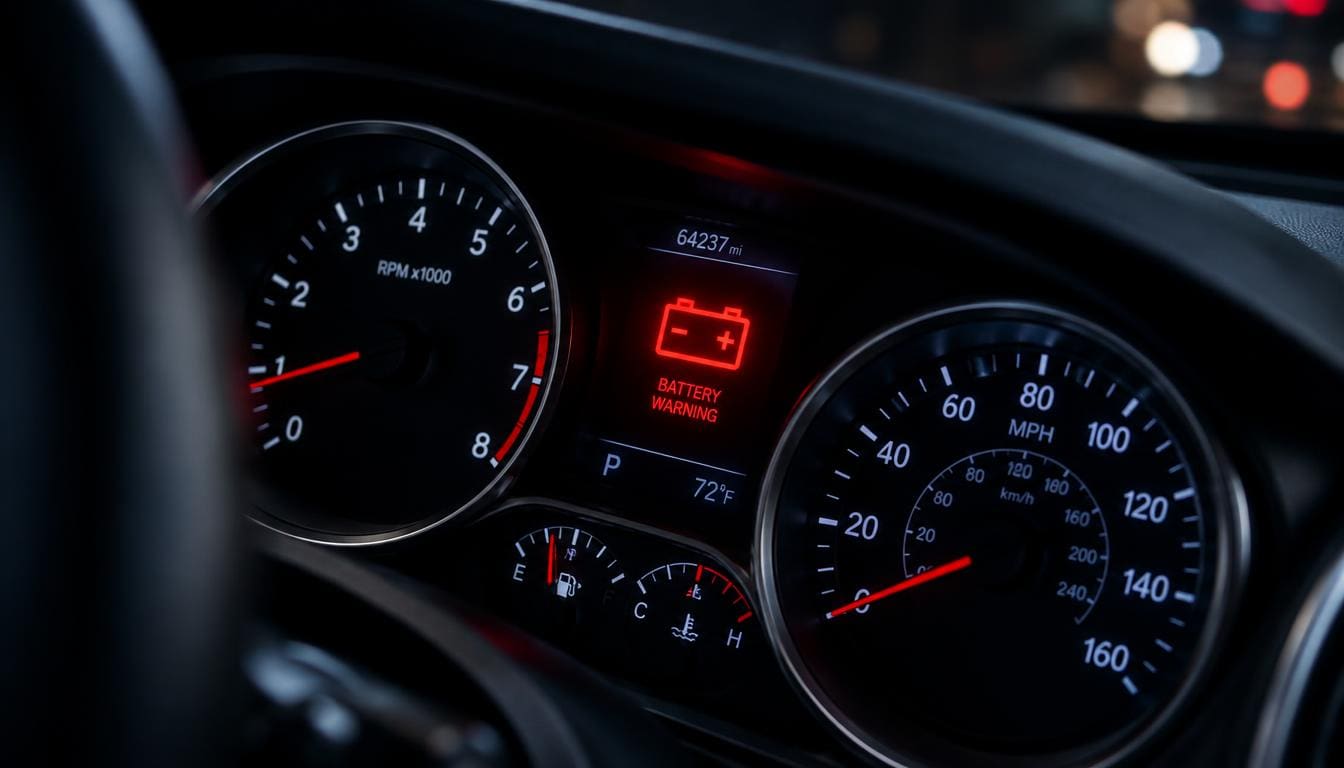
A battery-shaped warning light on your dashboard does not always mean the battery itself is the problem. It can point to a charging-system issue, including a fault with the alternator or another part. The warning deserves attention, especially if other electrical changes appear while you drive.
The signs of a bad alternator can range from dim headlights and slow accessories to new noises or odors. A single symptom cannot confirm which component has failed, though. Knowing what changed, and when, can help you explain the problem when you arrange an inspection.
Key Takeaways
- A battery warning light can signal a charging-system problem, not just a weak battery.
- Changing headlights and erratic accessories may point to inconsistent electrical power.
- A battery that repeatedly goes flat needs a battery and charging-system check.
- One symptom alone does not identify the failed part.
- New noises or burning odors call for prompt inspection.
Treat a sudden change in how your vehicle’s electrical systems behave as a reason to arrange an inspection.
How Does a Car Alternator Work?
Your battery starts the engine, and the alternator helps supply power once the engine is running. The engine’s rotation turns the alternator pulley, which lets the alternator generate electricity for the car’s electrical systems and recharge the battery. Both parts support the charging system, but they work at different times.
The alternator produces alternating current, or AC. A rectifier is the component that converts the alternator’s alternating current into the direct current a car battery uses. The battery cannot power a running vehicle’s electrical needs indefinitely, so the alternator must keep supplying power as you drive.
| Component | Role | When It Works |
|---|---|---|
| Battery | Supplies starting power | Engine starting |
| Alternator | Generates electricity and recharges the battery | Engine running |
| Rectifier | Converts alternating current to direct current | Alternator charging |
If the alternator has a problem, it may not keep the battery charged or supply steady power to electrical equipment. You could notice trouble in more than one system because the same power supply serves them all. A weak battery can then make starting harder, even if the first fault began elsewhere.
The alternator’s output matters because the battery cannot power the running vehicle’s electrical needs indefinitely.
What Are the Signs of a Bad Alternator?
A warning light, flickering headlights or a battery that repeatedly goes flat can be signs of a charging-system problem. These clues can come from a failing alternator, but they can also point to other faults. Look for patterns rather than treating one change as a final diagnosis.
The seven signs below show how a bad alternator may affect a car. The usual warning signs on a Chevy are the same types of symptoms, though diagnosis depends on the vehicle and its systems.
Battery Warning Light on the Dashboard
A battery warning light that stays on while you drive can signal trouble in the charging system. The alternator may not be making enough power, or another part may be stopping power from reaching the battery. The light points to the charging system, not necessarily the battery alone.
Some dashboards use a battery-shaped icon, while others show a message. Either way, the warning does not name the failed part. Note when it appears, such as at startup, at idle or during a drive, since those details can help a technician reproduce the issue.
Dim, Bright or Flickering Headlights
Headlights that dim, brighten or flicker can reflect inconsistent electrical output. A failing alternator or voltage regulator may cause the lights to shift between bright and dim, rather than staying steady. Changes may stand out more when you use other electrical equipment.
Headlight changes do not prove the alternator is bad. A wiring issue or another electrical fault can also affect the lights. If the headlights vary along with dashboard lights or other electrical changes, tell the technician that both appeared together.
A Battery That Keeps Going Flat
A battery can go flat when the alternator does not recharge it enough as you drive. The battery may still start the car after a charge, then lose power again because the charging problem remains. Repeated drain deserves a check of both the battery and the charging system.
A battery that will not hold a charge can also be worn or damaged. Replacing it without finding the cause may leave you with the same trouble. The timing matters: note whether the battery goes flat after a drive, after the car sits, or both.
Slow or Erratic Electrical Accessories
Low alternator output can make power windows move slowly or stop working as expected. Seat warmers may also weaken, and instrument readings can behave erratically. These changes may come and go as the electrical supply shifts.
One slow window does not establish an alternator fault. Several accessories acting strangely at once offer a stronger reason to check the charging system. Mention which controls changed and whether the problem happens with the engine running.
Trouble Starting or Frequent Stalling
An alternator that cannot supply enough power can leave the battery too depleted to start the car. In some cases, the engine may stall while running because engine control modules need power to keep the engine operating. Starting trouble with other electrical symptoms is more concerning than a single click.
Clicking at startup alone does not establish alternator failure. A slow crank or stalling alongside changing lights or erratic accessories is a more useful warning pattern. Tell a technician whether the engine stalled while moving, at idle or during startup.
Growling or Whining Near the Alternator Pulley
A growling or whining noise under the hood may come from a misaligned alternator drive belt rubbing against the pulley. Failing bearings in the alternator’s rotor shaft can make similar noises. The sound may change with engine speed, which is worth noting.
Noise near the pulley does not identify the exact fault by itself. Other drive-belt parts can also make noise, so a technician needs to inspect the belt path and nearby components. Avoid reaching near moving parts to check the sound yourself.
Burning-Rubber or Electrical Odors
A worn alternator drive belt can create a burning-rubber smell as it rubs or slips. An overworked alternator or damaged wiring can produce a burning electrical odor. Either smell is a reason to take the change seriously, especially if it appears with charging problems.
Try to note where the odor seems strongest, but do not touch hot or moving parts. A burning odor or a new growl from under the hood warrants prompt inspection rather than continued driving.
Is It a Bad Alternator or a Bad Battery?
A car that dies soon after a jump-start is more likely to have a charging problem than one that continues running. That response offers a clue, not a sure answer. Have both the battery and charging system tested before replacing either part.
Battery age can help you weigh the signs of a bad alternator vs. a bad battery. Car batteries generally last about three to five years, but age alone cannot show whether the battery or alternator has failed.
Clues That Point More Toward the Battery
An older battery that struggles to start the car may be weak, especially if the charging system works as expected. If the car keeps running after a correctly performed jump-start, the battery may be the likely issue. Testing is still needed before choosing a replacement.
Clues That Point More Toward the Alternator
If the car stalls soon after the jump-start cables are disconnected, the alternator may not be charging adequately. The same signs can occur on a Chevy Silverado, so model-specific testing still matters. Dim headlights, slow cranking, a battery warning light and struggling accessories can fit either fault.
| Clue | More consistent with a weak battery | More consistent with an alternator problem |
|---|---|---|
| Battery age | Older than about three to five years | Relatively new battery still repeatedly depleted |
| After a jump-start | Keeps running | Stalls soon after cables are disconnected |
| Shared electrical symptoms | May occur | May occur |
| Best way to confirm | Test battery | Test battery and charging system |
These clues help you explain what happened, but they do not replace a charging-system test. A technician can check the battery and charging output to find the part causing the trouble.
Have both the battery and charging system tested before replacing either part.
How Can You Test the Charging System?
A multimeter reading at the battery can provide a useful first check, but it does not identify every charging-system fault. A healthy battery measures about 12.6 volts with the engine off. With the engine running, a typical alternator operates between 13 and 14.5 volts.
Those readings are typical, not a verdict for every vehicle. A belt, wiring or connection problem can affect charging even when the alternator itself is working. Use the checks below as clues, not as a reason to replace a part without diagnosis.
| Check | Typical finding | What a concern may suggest |
|---|---|---|
| Battery voltage with engine off | About 12.6 volts | A weak or depleted battery |
| Charging voltage with engine running | Typically 13 to 14.5 volts | Inadequate or inconsistent charging |
| Belt and connections | Belt tracks correctly and wiring connections are secure | Belt, wiring or connection trouble |
These simple observations can help you describe the problem before a charging-system test. Do not put your hands near the alternator pulley or alternator drive belt while the engine runs.
- Observe whether the battery warning light stays on.
- Note whether voltage readings fluctuate.
- Look for obvious belt misalignment or damaged wiring without reaching near moving parts.
Alternator pulley trouble may show up as noise, belt movement or charging irregularities. A technician should distinguish it from other drive-belt faults, since several parts can affect belt movement. A loose or damaged connection can also change the reading.
Compare readings with the vehicle manufacturer’s specifications, especially if your car uses computer-controlled charging.
Can You Drive With a Failing Alternator?
You may be able to keep driving briefly, but a failing alternator can leave your car running only on the battery’s remaining charge. That reserve is limited, and the engine can stall once it runs out. A stalled car may not restart.
There is no dependable distance or drive time to count on. A conventional passenger-car electrical system is generally 12 volts, but the battery’s remaining charge and the car’s electrical demand differ. Headlights, climate controls and other equipment draw power while you drive.
If the alternator cannot supply enough power, the car depends on whatever charge remains in the battery. How long that lasts cannot be predicted from the warning light alone. Traffic, vehicle condition and electrical use can all change the demand.
A vehicle that loses power can become difficult to control, especially if the engine stops in traffic. A warning light paired with other changes is a reason to take the risk seriously, not a sign that you can finish a planned trip.
Do not plan a trip around an assumed distance before the engine loses power.
How Much Does Alternator Replacement Cost?
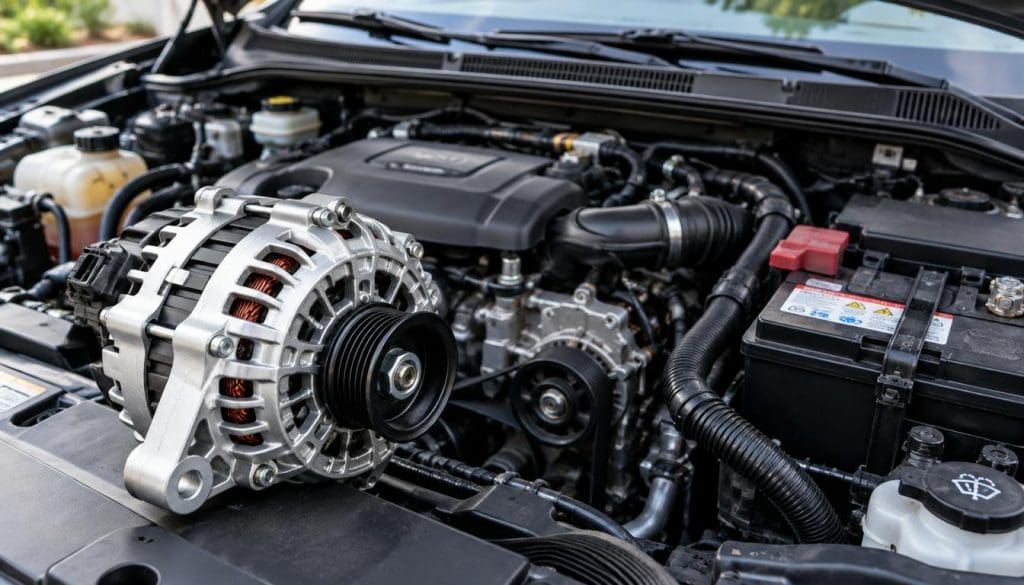
Alternator replacement is listed at $750-$1,100 installed in 2026, with the vehicle and repair scope affecting the estimate. This is a general estimate, not a quote from Heaven Automotive. Get a diagnosis before buying a replacement part.
A vehicle-specific estimate can change with the job’s access needs and the parts required. Similar symptoms can come from the battery or other charging-system components, so diagnosis should come first. An alternator replacement will not fix a separate wiring or battery problem.
- Vehicle make and model
- How easily a technician can reach the alternator
- Choice of replacement part
- Related belt or wiring repairs
The part choice and the time needed to reach it can change the final estimate. Related work may add to the repair if the belt or wiring also needs attention. Ask what the quoted repair includes before approving the work.
Ask for an itemized estimate that separates the alternator, labor and any related repairs.
How Long Do Alternators Usually Last?
Many alternators last about seven to 10 years, but that is an estimate rather than a required replacement interval. Use and vehicle condition affect service life. The alternator’s condition and charging performance matter more than a fixed calendar schedule.
Driving conditions, electrical demand and climate can all affect how long an alternator lasts. Frequent use of electrical equipment adds demand, while harsh conditions can place extra strain on parts. Maintenance also matters because related faults can affect charging performance.
A worn alternator drive belt can keep the pulley from turning as it should. Weak batteries, faulty wiring and corroded connections can also affect how well the system charges. Those issues may need attention even if the alternator itself has more service life left.
Have unusual charging behavior checked instead of replacing an alternator only because it has reached a certain age.
Is Replacing an Alternator a Big Job?
Alternator replacement is often a moderate repair, but tight access can make the job more involved. The alternator must be reached, disconnected and reinstalled, with its belt and electrical connections handled correctly. A general labor estimate is about one to three hours.
Vehicle layout and access affect the time needed. Some engine bays leave room to reach the alternator, while others require more parts to be moved or removed. That can make the same repair simpler on one vehicle than another.
The drive belt must sit correctly on its pulleys after installation. Electrical connections also need to be secure, since a loose connection can affect charging. A professional can check the work and confirm that the charging system functions after the new part goes in.
Ask whether the estimate includes belt inspection and verification that the charging system works after installation.
Can a Bad Alternator Drain the Battery?
Yes, an alternator can contribute to battery drain, including when the engine is off if a rectifier diode is faulty. In normal operation, the rectifier converts alternating current to direct current and restricts current flow to one direction. A faulty diode can let current flow back toward the alternator.
While the engine runs, inadequate charging can slowly deplete the battery. The battery may then lack enough power for the next start, even if it was recently charged. That is one way a bad alternator can affect both driving and starting.
A parked car’s battery can drain for other reasons, too. A faulty electrical accessory or another wiring issue may draw power while the engine is off. A rectifier diode is one possible alternator fault, not the only cause of a flat battery.
Ask for the battery and charging system to be tested together if a charged battery repeatedly goes flat.
Is There a Temporary Fix for a Bad Alternator?
A jump-start may get a car with a bad alternator running, but it will not fix the charging problem. There is no dependable temporary repair that restores a failing alternator. If it cannot recharge the battery, the car can stall when its remaining charge is used.
A jump-start only helps start the car for a short time. It cannot promise how long the engine will keep running or prevent another stall. Reducing electrical use may ease demand, but it cannot restore alternator function.
- Pull over safely if the vehicle begins losing power.
- Switch off nonessential electrical accessories while arranging help.
- Arrange a tow or professional assistance instead of relying on repeated jump-starts.
Repeatedly starting the car does not repair a faulty charging system. If the engine begins to lose power, focus on getting help rather than trying to stretch the remaining battery charge.
Do not keep driving once the car shows signs of losing power.
When Should You Get Professional Charging-System Service?
Arrange a professional check if electrical problems persist or the car stalls after a jump-start. A battery warning light that stays on, repeated battery drain or erratic electrical behavior also calls for service. A technician can test the battery and charging system before parts are replaced.
A charging-system test can help distinguish an alternator fault from a battery, belt or connection problem. Report what happened and when, so the technician can check the conditions linked to the symptoms. Specific details can make the first inspection more useful.
- When the warning light appears
- Whether the vehicle stalls after a jump-start
- Which electrical accessories behave unusually
Heaven Automotive is at 6645 Poss Rd. San Antonio, TX 78238. Call (210) 682-3898 to arrange service or discuss a charging-system check.
Give the technician the symptoms and the conditions under which they occur.
Conclusion
A warning light or repeated electrical problem is a reason to have your charging system checked before a small issue leaves you stranded. A symptom can point to trouble, but it does not prove that the alternator, battery or another part has failed. Testing can help identify the cause before you replace parts.
Arrange a professional diagnosis if the electrical behavior changes or the battery keeps going flat. The right repair starts with finding the part at fault. Hire Heaven Automotive to fix your vehicle.