

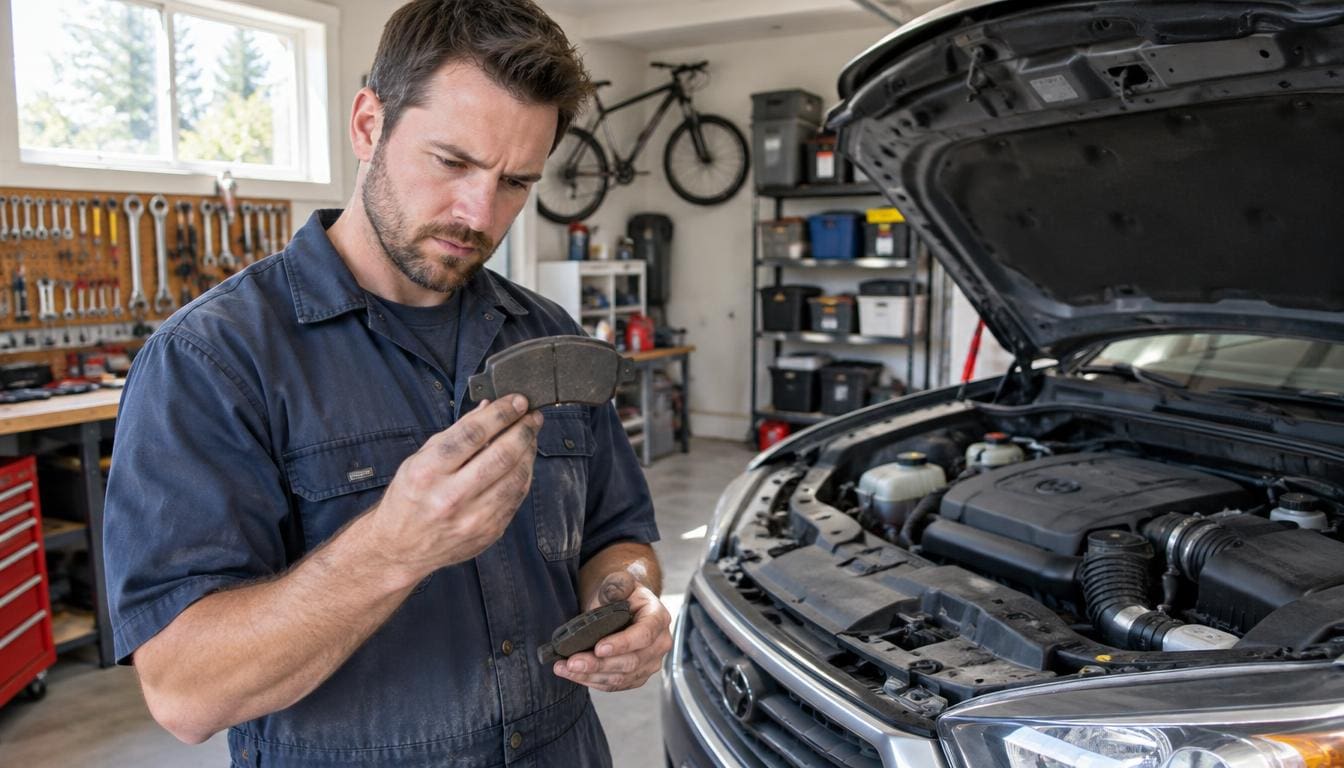
A brake grinding noise usually signals worn pads or another hard-contact problem and calls for prompt inspection. The pad friction material is the layer of a brake pad that presses against the rotor to create friction and slow the vehicle. Worn pads are common, but trapped debris or another brake part can make a similar sound. A quick inspection can separate a simple obstruction from worn or damaged parts. If the noise starts on the road, take note of when it happens and any change in braking. Those signs can help a technician find the problem. A brake issue can affect safety even when the vehicle still seems to stop. A prompt diagnosis can limit further wear and help protect your ability to stop.
Key Takeaways
- Grinding can come from worn pads, trapped debris, or another brake part.
- A brief coarse sound after a damp night may come from surface rust.
- Persistent grinding needs a prompt inspection.
- Vibration, pulling, or weak braking adds concern.
- There is no safe mileage to rely on with persistent grinding.
Brake Grinding Noise: What the Sound Tells You
A harsh, low scrape is more concerning than a brief rough sound that disappears after a damp overnight sit. Grinding brakes often make a coarse scraping or grinding sound that changes with wheel speed. A harsh grind that keeps returning needs inspection, even at low speed.
What do brakes sound like when they’re grinding? They can make a rough, metal-on-metal scrape, rather than the thin, high-pitched squeak linked with possible early wear. A squeak may also come from a surface film. Note whether it repeats and whether the sound changes when you press the pedal.
Light surface rust can form on rotors overnight, especially when the air is damp. A few normal braking cycles usually clear it. A brief coarse sound that fades differs from a persistent harsh scrape, which can point to a brake problem.
A scraping noise when braking at low speed still deserves attention if it continues. Brakes making a grinding noise when stopping and reversing also need inspection when the sound persists in both directions. The direction or speed alone cannot confirm which part is making contact.
| Sound or situation | Likely clue | What to note |
|---|---|---|
| High-pitched squeak | Possible early wear or surface film | Whether it repeats |
| Harsh grinding | Possible hard contact | Whether it continues |
| Brief coarse sound after an overnight sit | Possible surface rust | Whether it clears after a few normal braking cycles |
A sound that occurs only while braking points to a different pattern than one heard as the vehicle rolls freely. Describe when it starts, how long it lasts, and whether it changes after several stops. Those details help narrow the problem without replacing a hands-on check.
Do not judge the condition by volume alone. A faint scrape can persist under light pedal pressure, while a louder brief sound may clear as rust wears away. Note whether the noise happens only during braking or also while the vehicle rolls.
Worn Pads and Damaged Rotors
Once the pad friction material is gone, its backing plate can scrape directly against the rotor. That metal contact creates a harsh grinding sound and can damage both parts. Continuing to use worn brake pads can turn a pad repair into rotor work.
Brake pads grinding noise does not prove that the pads alone need replacement. A worn brake pad may leave deep marks on the rotor, and that damage can remain after new pads go on. A technician needs to check both friction surfaces.
When Pad Friction Material Is Gone
The pad friction material wears down each time the brakes slow the vehicle. Once too little remains, the backing plate may touch the rotor instead of the friction layer. The resulting metal contact can score the rotor and leave grooves.
A pad may wear faster on one side or along one edge. That pattern can point to uneven movement or contact, rather than simple even wear. The visible pad may not tell the whole story if the inner pad is harder to see.
Driving with worn brake pads allows more rubbing and heat at the contact point. The backing plate is not designed to act as a braking surface. Its contact can quickly make an otherwise usable rotor rough or damaged.
Rotor Damage and Thickness Variation
Grooves are not the only sign of rotor damage. Cracks or heat spots can form when a rotor becomes too hot, while an uneven rotor surface can cause noise or vibration. Severe damage can affect how smoothly the brakes work.
Disc thickness variation means the rotor has small differences in thickness around its surface. As the rotor turns, those differences can create a pulsing pedal or vibration during braking. The condition cannot be confirmed by sound alone.
People often call a rotor “warped” when they feel vibration, but the sound does not establish that diagnosis. A technician must inspect and measure the rotor to identify the cause. A fresh set of pads cannot correct a rotor surface that is already deeply scored or below its service limit.
Other Parts That Can Make a Grinding Sound
Pads that still have friction material can grind if a stone, loose hardware or dragging caliper keeps another part in contact. Other components can make a grinding noise when braking but the pads are fine. The sound alone cannot identify which part is rubbing.
A brake grinding noise while driving may point to constant brake drag or a non-brake issue, such as a wheel bearing. Grinding noise when braking on one side can come from uneven wear or a sticking caliper. An inspection is needed to find the cause.
Debris, Rust and Brake Hardware
A small stone or bit of grit can get trapped near the rotor and backing plate. It may scrape as the wheel turns, even if the pads appear usable. Sometimes the debris shifts and the sound changes or stops.
A bent backing plate, also called a dust shield, can touch the rotor. Rust can also change how parts fit or move. Worn or misplaced brake hardware, including clips and shims, may let a pad sit poorly or rattle against nearby parts.
These common causes need a close look because the rubbing point may sit behind the wheel. A quick glance at the outer pad may miss a stone, a bent shield, or a loose clip. The inspection should include the parts around the rotor, not just the pad surface.
A Sticking Caliper
A sticking caliper can keep a pad pressed against the rotor after you release the pedal. That drag may create steady noise and uneven wear. It can also make the vehicle pull, produce a burning odor, or leave one wheel unusually hot.
Caliper movement can be limited by a binding piston or slide point. A pad that stays in contact may wear faster than the one across from it. The noise can persist even when the visible pad still has friction material.
Wheel Bearings and Nearby Components
A wheel-bearing noise can change with vehicle speed, even when you are not braking. Nearby parts can also rub or vibrate as the wheel turns. Those patterns matter because a sound heard while driving does not always come from the brake system.
If the grinding noise when braking on one side continues, uneven wear or caliper drag are possible clues, not a final diagnosis. Tell the technician which side seems louder and whether the noise changes while turning or rolling. A noise that changes with vehicle speed even when you are not braking deserves a check beyond the pads.
Warning Signs That Point to a Brake Problem
Pulsation in the brake pedal or vibration through the steering wheel while braking can point to rotor trouble. These signs can include disc thickness variation, but they do not prove a specific fault. A change in stopping feel or brake performance needs prompt attention.
What are signs that your rotors are bad? Look for pedal pulsation, steering-wheel vibration while braking, visible deep grooves or cracks, and an uneven stopping feel. Excessively worn rotors can develop heat-related cracks or deform, causing noise or vibration.
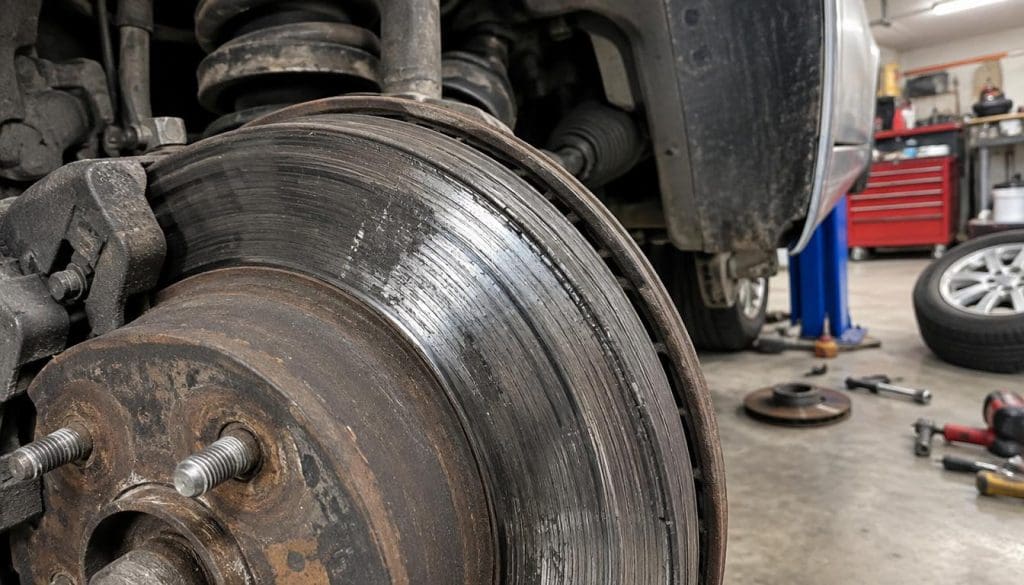
A worn brake part may also make the vehicle pull or take longer to slow. A burning smell or an unusually hot wheel can point to a dragging or unevenly worn component. Share each sign during the inspection, even if it comes and goes.
- Pedal pulsation during a stop
- Steering-wheel vibration while braking
- Deep grooves or cracks visible on a rotor
- Uneven stopping feel or a pull to one side
- Burning smell or unusual wheel heat
Note when the symptom appears and how it feels. A shake through the steering wheel may be easier to notice at one speed, while pedal pulsation may stand out during a stop. Tell the technician whether the vibration occurs only while braking or also during ordinary driving.
How Rotor Thickness Affects Brake Safety
A rotor is serviceable only when its measured thickness meets the minimum specified for that vehicle. That limit is marked “MIN TH” on the rotor or listed in service information. Compare the lowest of at least four gauge readings with the marked MIN TH value.
A rotor below its minimum thickness has less capacity to shed heat and less mechanical strength. That raises the risk of cracking or brake failure under use. A visual check cannot replace a thickness measurement.
Find the Rotor’s Minimum Thickness
Rotor minimum thickness is set for the vehicle, so the correct limit can vary by model. Look for the “MIN TH” marking on the rotor. If the marking is hard to read, the service information for that vehicle gives the required value.
Do not compare a rotor with a general number from another vehicle. Rotor size and design differ, so a value that fits one brake system may be wrong for another. The marked limit is the threshold that matters.
Measure at Several Points
A technician uses a rotor gauge to measure the disc at several spots around its surface. Take at least four readings, spaced around the rotor. The lowest reading is the one to compare with MIN TH.
Several readings can reveal a thin area that one measurement would miss. The rotor may also show grooves or wear that affect whether it can be resurfaced. The gauge helps establish thickness, while the surface check adds another part of the assessment.
When Replacement Is Required
A rotor below its MIN TH value must be replaced. Replace both rotors on the same axle even if only one falls below the limit. This keeps the pair matched for braking on that axle.
Resurfacing removes a small amount of material, so the rotor must remain within its service limit afterward. If a rotor below minimum thickness cannot be resurfaced safely, replace it. Check rotor thickness whenever brake pads are checked and every 10,000 miles.
Do not reuse a rotor just because it looks smooth or has no obvious cracks. Its remaining thickness affects heat control and strength during braking. Never treat a measurement below the marked MIN TH value as safe to reuse.
What a Brake Inspection Checks
A useful inspection checks the parts that rub, the parts that move, and anything trapped between them. A wheel-off check lets a technician examine parts hidden behind the wheel. A sound should guide the inspection, not decide which parts get replaced.
The technician can assess pad thickness, rotor condition, caliper operation, and brake hardware. Vibration, pulling, or unusual heat can help focus the check, but each component still needs direct review.
Brake Friction Surfaces and Hardware
The technician checks both pads for uneven or tapered wear, including the inner pad that may be hard to see through the wheel. The rotor surface gets checked for scoring and other damage. This can show whether wear is even across the brake system.
Brake hardware includes the clips and shims that help hold and guide the pads. The technician checks for missing, worn, or misplaced pieces. A bent backing plate and trapped debris can also affect clearance near the rotor.
The table shows what each inspection area can reveal. These findings guide the next step, but a single clue may not explain every sound or symptom.
| Inspection area | What is checked | What the finding may indicate |
|---|---|---|
| Pads and rotor surfaces | Wear and scoring | Surface damage or uneven wear |
| Hardware and backing plate | Clips and clearance | Loose parts or trapped debris |
| Caliper and slide points | Free movement and signs of drag | Persistent contact or uneven wear |
Caliper Operation and Possible Drag
The technician checks whether the caliper piston and slide points move without binding. A caliper that does not release can keep a pad against the rotor. That can cause persistent contact and uneven pad wear.
Ask for a clear account of the finding, not just a list of parts. A wheel-off inspection can uncover issues that a view through the rim misses, including debris and shield clearance. Use these checks to discuss the noise:
- Pad condition
- Rotor surface
- Hardware fit
- Caliper movement
- Debris or shield clearance
A technician should connect the inspection result to the sound you described. Ask which finding accounts for the noise before authorizing work.
Repairs and What Determines the Cost
The repair depends on what is making contact and whether the rotor or other hardware has already been damaged. The right repair follows the inspection finding, not the sound by itself. The estimate depends on the affected parts and the labor required.
A repair may involve replacing worn pads, removing trapped debris, or replacing worn brake hardware. Rotors may be resurfaced or replaced when their condition and thickness allow. A sticking caliper may need service or replacement if its piston or slides are compromised.
Matching the Repair to the Cause
When damage is limited to pads, replacing them may address the wear. A rotor with damage may need resurfacing if it remains within its service limit. A rotor that cannot be resurfaced within that limit needs replacement.
Debris removal may resolve a scrape when a stone or grit has become trapped. Worn or misplaced hardware may need replacement so the pads sit and move correctly. A caliper with a binding piston or slides may need service or a new unit.
Grinding brakes do not always need the same work. A repair plan should account for the actual contact point and any damage it caused. Replacing only the part that first made noise may leave related damage in place.
What Changes the Estimate
The cost to replace grinding brakes depends on whether the damage affects pads alone or also involves rotors, hardware, or a caliper. Labor needs also change the estimate. The work is different when several parts need attention.
Ask for an itemized estimate that lists parts and labor separately. It should also distinguish safety-critical work from additional recommended repairs. That makes it easier to understand why each repair appears on the estimate.
Ask the technician to connect each recommended part to an inspection finding. If the estimate includes rotor work, ask what condition requires it. Compare the recommended work with the technician’s inspection findings, not the noise alone.
What to Do Now and Prevent More Wear
There is no safe number of miles to rely on once persistent grinding begins. Do not continue a trip with a persistent grind; stop safely and arrange an inspection. Consider a tow if braking feels weak, the vehicle pulls severely, a wheel is extremely hot, or the pedal feels spongy.
How long you can drive with grinding brakes has no dependable mileage or time answer. Moving only far enough to reach a safe stopping place is different from carrying on with a trip. Your next step depends on how the vehicle brakes and whether you can stop safely.
Use these steps to limit risk while you get to a safe place:
- Ease off and find a safe place to stop.
- Avoid hard braking while moving only as needed to reach safety.
- Leave extra following distance from other vehicles.
- Arrange a prompt inspection, or a tow if symptoms are severe.
A routine check can catch wear before the friction material is gone. Heed early wear sounds and have the brakes checked during routine service. Follow the vehicle maker’s maintenance guidance for your model.
Do not treat a quiet period as proof that the problem has cleared. A shifting piece of debris or intermittent contact can change the sound without fixing the cause. If braking feels reduced or the vehicle pulls sharply, stop in a safe place and arrange help rather than driving on.
Conclusion
Persistent grinding is a reason to arrange a brake inspection instead of waiting for the noise to worsen. A timely check can identify the problem before more parts wear or braking performance changes. Avoid guessing from the sound alone.
Heaven Automotive can inspect and repair your brakes at 6645 Poss Rd. San Antonio, TX 78238. Call (210) 682-3898 to discuss service for your vehicle.
Hire Heaven Automotive to fix your vehicle.