

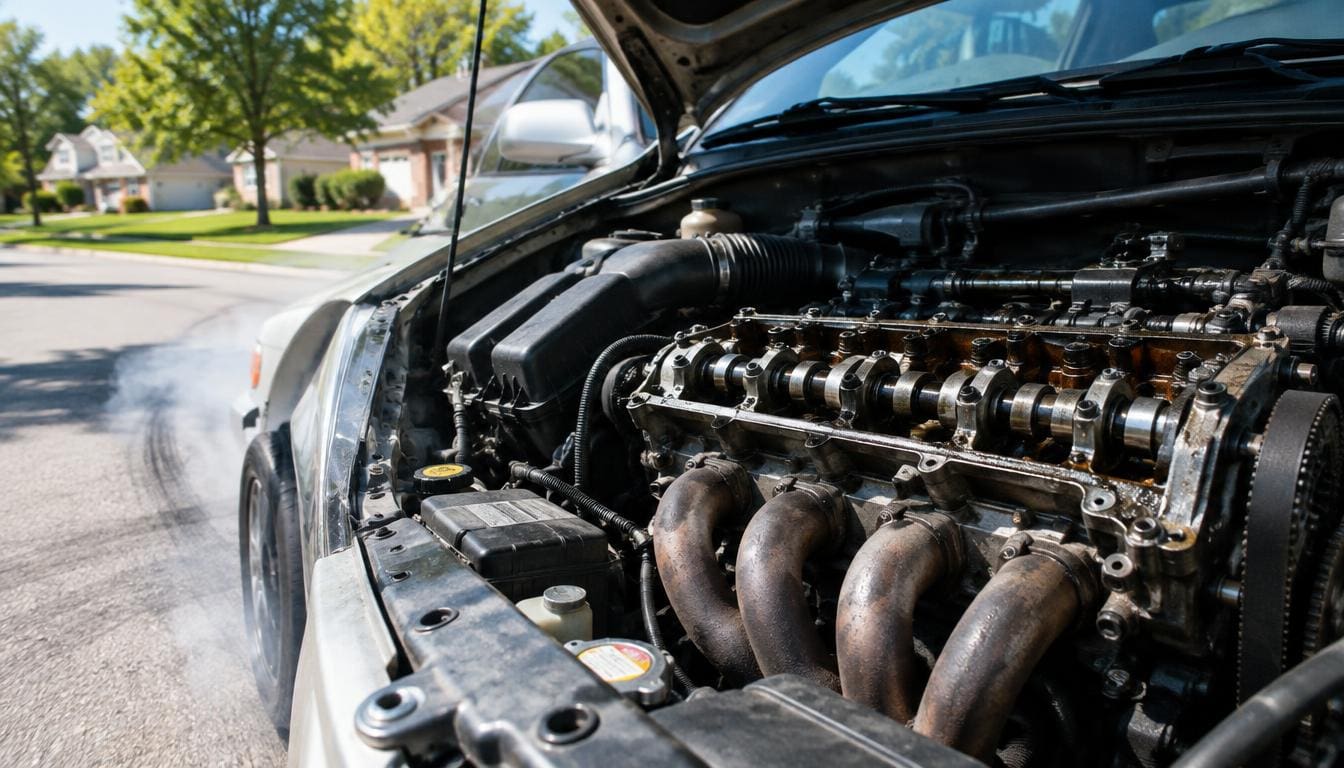
The clearest warning is your engine revving higher while your vehicle fails to gain speed at the same rate. These transmission slipping symptoms can appear in an automatic, manual, or CVT, a continuously variable transmission. An early check may find a smaller issue before continued slipping adds more wear.
Automatic transmission slipping is a condition in which the transmission fails to hold or engage the gear needed to transfer engine power to the wheels. You may notice a change on a familiar road, even during an ordinary trip. One clue alone does not confirm a failure, but a change in how the car moves deserves attention.
Look for patterns rather than guessing at the cause. Your notes about when a change happens can help a mechanic understand the problem. Pay attention to changes in how your vehicle accelerates, shifts, sounds, and smells.
Key Takeaways
- Rising RPM without matching speed can signal slipping.
- Delayed engagement and rough shifts are other warning signs.
- A burning smell or loss of drive calls for caution.
- One symptom alone does not prove transmission failure.
- A prompt diagnosis can help limit added wear.
What Are the 7 Transmission Slipping Symptoms?
A transmission may be slipping when engine speed rises but the vehicle’s acceleration does not keep pace. The clearest clues are changes in power, response, gear changes, smell, sound, or dashboard lights. One symptom alone does not prove the transmission is failing.
A slipping transmission can feel like a brief loss of connection between the engine and the road. The same kind of change can have more than one cause, so note what happens and when.
What Transmission Slipping Means in an Automatic
Automatic transmission slipping is a condition in which the transmission fails to hold or engage the gear needed to transfer engine power to the wheels. Your engine may keep running while the car responds weakly or unexpectedly. That gap can feel brief, but it may return during the same drive.
Automatic, manual, and CVT transmissions use gears to transfer power, though their designs differ. Automatic transmission slipping symptoms may show up as lost pull, a pause, or a gear change that does not match your speed. These early signs of transmission problems deserve attention when they repeat.
RPM Rises Without Matching Acceleration
RPM is the engine speed shown on the tachometer. If RPM climbs but your car does not gain speed at the same rate, the transmission may not be holding the gear that transfers power. You might see the needle jump during a hill climb or when you press the gas.
Automatic transmission slipping when accelerating can feel like the engine is working hard without moving the car forward as expected. A brief change under load does not name the cause, but a repeated gap between RPM and speed is worth reporting.
Acceleration Hesitates or Feels Delayed
Your car may pause or respond slowly after you press the gas. The delay can feel like a short gap between your foot moving and the car picking up speed. It may happen when pulling away from a stop or when joining faster traffic.
Hesitation can also come from another vehicle system, so do not treat it as proof of a slipping transmission. Note whether the engine speed rises during the pause, and whether the delay happens every time or only under certain conditions.
Engagement Pauses in Drive or Reverse
After you select Drive or Reverse, the vehicle may take half a second to a few seconds to respond. You may hear the engine running normally while the car stays still, then feel it engage. A pause like this can make parking or backing out feel uncertain.
Drive and Reverse are common positions where delayed engagement may be noticed. Record which position causes the pause and whether the car was cold or warm. That detail gives a mechanic a clearer picture than saying only that it shifts slowly.
Shifts Feel Hard, Jerky, or Unpredictable
A gear change may feel like a jolt, a bump, or a sudden change in pull. Shifts can also happen later than you expect, leaving the engine at a higher RPM. The car may change gears at different speeds from one trip to the next.
A rough shift can make passengers feel a clear kick, especially during normal acceleration. The sensation does not prove that the transmission is slipping, but a new or repeated shift change is useful to track. Note which shift feels wrong and how fast you were going.
The Transmission Slips Out of Gear
A car slipping out of gear may mean the transmission is not holding the selected gear, though a mechanic must confirm the cause. You may feel a sudden loss of pull or notice that the engine revs without the car responding as expected. The gear selector may still appear to be in position.
This change can be startling in traffic because the car may stop responding as you expect. Do not try to force the selector or test the problem repeatedly on the road. Record when it happened and whether the car regained power on its own.
A Burning Smell or Fluid Leak Appears
A burning odor can signal trouble that needs prompt attention. You might notice it after driving or when you stop, and the smell may come from more than one source. A red or reddish-brown spot under a parked vehicle can also point to a fluid leak.
Do not taste or touch unknown fluid to identify it. Note where the spot appears and whether the odor is new. A leak or burning smell does not reveal the exact failed part, but both details can help a mechanic narrow down the issue.
Unusual Noises or Dashboard Lights Show Up
Whining, humming, or clunking sounds can appear with shifting trouble, though sound alone cannot confirm a transmission fault. A check engine light or transmission warning light may also appear. The car may still move, but the warning deserves attention.
What transmission slipping means in an automatic transmission can include a short loss of pull, but other faults can feel similar. Note the exact light and whether it stays on or flashes. A car with a slipping transmission may show one clue or several, and the pattern matters.
Note which symptom appears first and whether it occurs during acceleration, a gear change, or steady driving.
What Causes a Transmission to Slip?
Low or degraded transmission fluid is a common cause because the system needs the right fluid level and condition to build pressure, lubricate, and cool. Low pressure can stop internal parts from holding a gear properly. Yet not every slipping problem is solved by adding fluid.
Fluid condition is one possible cause, but wear or an electrical fault can also affect shifting. The clues below can help you describe the problem to a mechanic without guessing at a repair.
Low or Worn Transmission Fluid
A leak can lower the fluid level, which can reduce the pressure needed for a gear to hold. Aged or contaminated fluid may not work as intended. Fluid also helps lubricate internal parts and cool the transmission as it runs.
Adding fluid without finding a leak may hide the level change for a while, but it does not fix the source. The correct type matters too. An unknown fluid can create a separate problem instead of solving the original one.
Worn Internal Parts
Clutches, bands, and seals can wear over time. These parts help engage or hold gears, so wear can make the transmission lose its grip. A slipping transmission caused by internal wear may need more than fluid service.
Wear can build gradually, but the way it feels does not show exactly which part has failed. A mechanic needs to inspect and test the system before naming the repair.
Electrical and Control Problems
Sensors and solenoids help control shift timing. A faulty sensor or solenoid can send poor information or disrupt the system’s response, making shifts late or uneven. These issues can resemble mechanical wear on the road.
A code or symptom alone may point toward a system, not a confirmed failed part. The mechanic can use test results and the vehicle’s behavior to separate an electrical problem from worn parts.
| Cause | How it affects shifting | Clues to discuss with a mechanic |
|---|---|---|
| Low fluid from a leak | Can lower pressure and weaken gear hold | Spots under the car or a falling level |
| Aged or contaminated fluid | May reduce proper lubrication and cooling | Dark fluid or a burnt odor |
| Worn clutches or bands | May keep a gear from holding | Repeated loss of pull or slipping |
| A faulty sensor or solenoid | Can disrupt shift timing or control | Uneven shifts or stored trouble codes |
A leak needs its source repaired, not just repeated fluid top-offs.
How to Check for Fluid Problems Safely
A quick visual check can reveal a leak, but the right procedure depends on your vehicle. Check fluid only when your owner’s manual gives a clear, accessible method. Some vehicles have no accessible transmission dipstick, and fluid-check steps vary.
Keep the vehicle stable on level ground. Never crawl under a car that is not properly supported, and do not touch hot fluid. These checks help you report what you see; they do not replace a diagnosis.
- Look for red or reddish-brown spots under the parked vehicle.
- Check fluid level and appearance only if the manual describes an accessible dipstick procedure.
- Note any unusual smell, including a burnt odor.
Some transmission fluid is red or reddish brown, but color alone cannot confirm its condition. Dark fluid or a burnt odor can signal fluid trouble. An OBD-II scan, which reads stored diagnostic codes through the vehicle’s diagnostic connector, may also reveal useful information.
A low reading or visible leak calls for diagnosis, not an automatic top-off with an unknown fluid. The level reading can also depend on the method your vehicle requires, so avoid using a generic procedure.
Use only the fluid type and checking procedure specified in your owner’s manual.
When to Stop Driving and Arrange a Tow
Whether you can continue depends on how severe the slipping is and whether the vehicle can still move predictably. No safe number of miles can be promised for a slipping transmission. A warning light also deserves prompt diagnosis, even if the vehicle still moves.
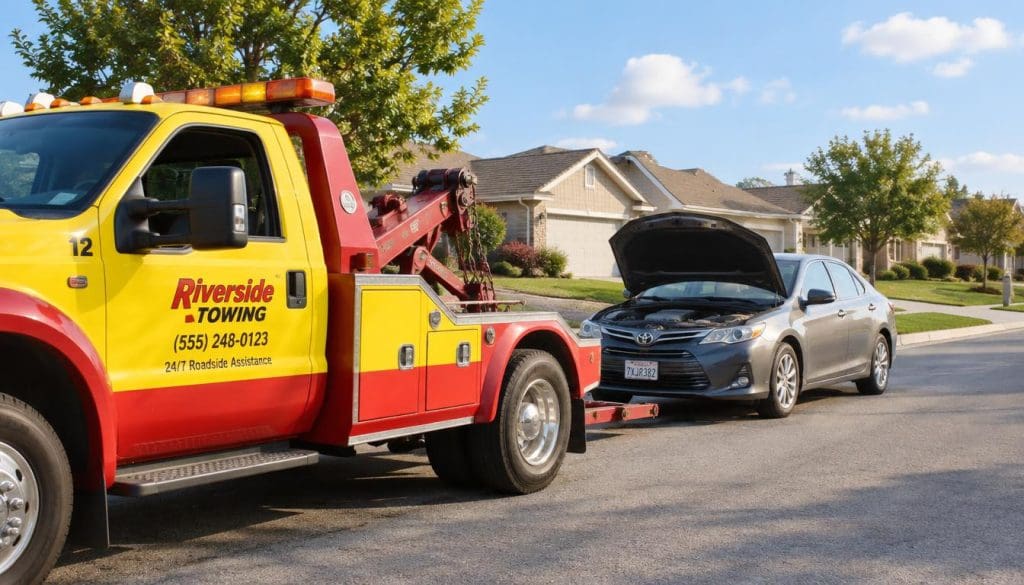
Mild, intermittent symptoms without a burning odor or loss of drive may allow a short, gentle trip directly to a shop. Stop and arrange a tow if slipping is severe or worsening, the vehicle loses drive, or you smell burning.
- For mild, intermittent slipping, drive gently and go straight to a repair shop.
- For severe or worsening slipping, stop in a safe place and arrange a tow.
- For lost drive or a burning smell, do not continue the trip.
A check engine light or transmission warning light can appear with transmission trouble. Do not ignore a warning just because the car seems to shift normally at that moment. A light cannot tell you how far the vehicle can safely travel.
Until a mechanic checks the problem, avoid towing, heavy loads, hard acceleration, and unnecessary driving. Each added trip gives a slipping transmission more time to worsen, and its condition can change without a clear warning.
If the vehicle loses drive or a burning smell accompanies severe slipping, do not try to drive it to the shop.
How a Mechanic Confirms the Problem
A mechanic checks more than the warning light because similar driving symptoms can come from different systems. A diagnosis combines your description with inspection, codes, and testing when safe. The sequence helps separate transmission trouble from other issues.
Tell the mechanic when the symptom occurs and what the car does. A car slipping out of gear can indicate that the transmission is not holding the selected gear, but a mechanic must confirm the cause.
The mechanic may inspect fluid and visible leaks, then scan the OBD-II system for stored diagnostic codes. A test drive may help reproduce the issue, but only when the vehicle can be driven safely.
An engine misfire can cause hesitation that feels like a transmission problem. A torque converter can also cause shudder, which may feel like vibration at steady speed. These differences matter because similar issues can call for different work.
Report whether the problem happens when the car is cold or warm, during acceleration or at steady speed, and which warning lights appear. A specific detail, such as a pause only after selecting Reverse, gives the technician a useful place to start.
Write down when the symptom happens so the technician can try to reproduce it safely.
What Repairs Can Fix Transmission Slipping?
The right fix follows diagnosis, since a fluid problem, an electrical fault, and internal wear need different work. There is no safe universal quick fix for transmission slipping. A repair should match the confirmed cause, not just a symptom.
A fluid and filter service may address slipping caused by low or degraded fluid. Faulty control parts can need targeted work, while worn internal parts may require a rebuild or replacement.
Fluid and Filter Service
A mechanic may recommend service when inspection and testing point to fluid condition or level as the issue. The work can include replacing the fluid and filter, as the vehicle design allows. This is not a cure for every slipping problem.
Topping off fluid is not a reliable quick fix if a leak remains or the fluid type and level are uncertain. A service also cannot restore clutches or bands that have worn out.
Targeted Electrical or Component Repair
A faulty solenoid, sensor, or related control part may call for a targeted repair. The mechanic should tie the proposed part to test results, rather than replacing parts based only on a rough shift or warning light.
Some repairs address a small part of the system while leaving other components in place. The scope depends on what testing finds and whether the fault is limited to that part.
Rebuild or Replace a Worn Transmission
A transmission with significant internal wear may need a rebuild or replacement. A rebuild involves opening the unit and replacing or repairing parts. Replacement means fitting another transmission, with the exact work depending on the vehicle and repair plan.
Ask what the mechanic found, which parts need work, and what the recommendation covers. A clear explanation helps you compare the proposed repair with the diagnosis instead of deciding from the symptom alone.
| Repair path | When it may be considered | What the work involves |
|---|---|---|
| Fluid and filter service | Fluid level or condition is the confirmed issue | Service fluid and filter as the vehicle allows |
| Targeted solenoid or electrical repair | Testing points to a control fault | Repair or replace the identified part |
| Rebuild or replacement for internal wear | Internal parts cannot hold gears properly | Repair internal parts or fit another transmission |
Do not approve a rebuild or replacement based on a symptom alone without asking what testing supports the recommendation.
What Determines Whether Repair or Replacement Makes Sense?
The estimate depends first on what failed and whether the work can stay limited to service or a targeted repair. The confirmed fault, vehicle, parts, labor, and repair scope shape the total. Work may range from fluid service to a rebuild or replacement.
Repairing a transmission or replacing the vehicle is a personal choice, not a rule with one right answer. Compare the written estimate with the car’s overall condition, future needs, and how long you plan to keep it.
Compare the Diagnosis With the Vehicle’s Overall Condition
Look at the transmission diagnosis alongside the rest of the car. A vehicle in good condition may fit your plans better than one facing several other problems. A repair estimate should state what failed and which work the mechanic recommends.
Ask whether the estimate covers all diagnosed work or only the first repair step. That distinction can help you understand what may still need attention after the current job.
Weigh the Repair Scope Against Your Plans for the Car
How much it costs to fix a slipping transmission depends on the confirmed failure, vehicle, parts, labor, and whether the work is service, targeted repair, rebuild, or replacement. No reliable remaining mileage or time can be promised once slipping starts.
Consider how long you plan to keep the car and what other repairs it may need. A lower repair scope may make sense for your plans, while a larger job may not fit them. Neither choice is always better.
Ask for a written diagnosis and estimate before deciding whether to repair the transmission or replace the vehicle.
How to Reduce Future Transmission Trouble
Your owner’s manual is the right starting point for fluid service because transmission schedules differ by vehicle. Some vehicles call for fluid changes around 30,000-60,000 miles, while others use a different interval. Do not apply one schedule to every car.
Using the right fluid and following the correct maintenance guidance can help reduce avoidable transmission wear. Towing and heavy loads can add strain, so follow the vehicle manufacturer’s guidance for those conditions.
- Follow the maintenance schedule in your owner’s manual.
- Use only the specified transmission fluid.
- Have leaks or new shifting changes checked promptly.
A schedule from another car may not suit yours, even if the vehicles look similar. Use the manual for your make and model to guide service timing and fluid choice.
Treat a new hesitation or shift change as a reason to arrange an inspection rather than waiting for it to become constant.
Conclusion
A transmission that slips deserves prompt attention before the problem becomes harder to manage. Early diagnosis can help identify the actual cause and guide the right repair for your vehicle.
For transmission service and repair, contact Heaven Automotive at 6645 Poss Rd. San Antonio, TX 78238. Call (210) 682-3898 to discuss your vehicle and arrange an inspection.
Hire Heaven Automotive to fix your vehicle at 6645 Poss Rd. San Antonio, TX 78238, or call (210) 682-3898.