

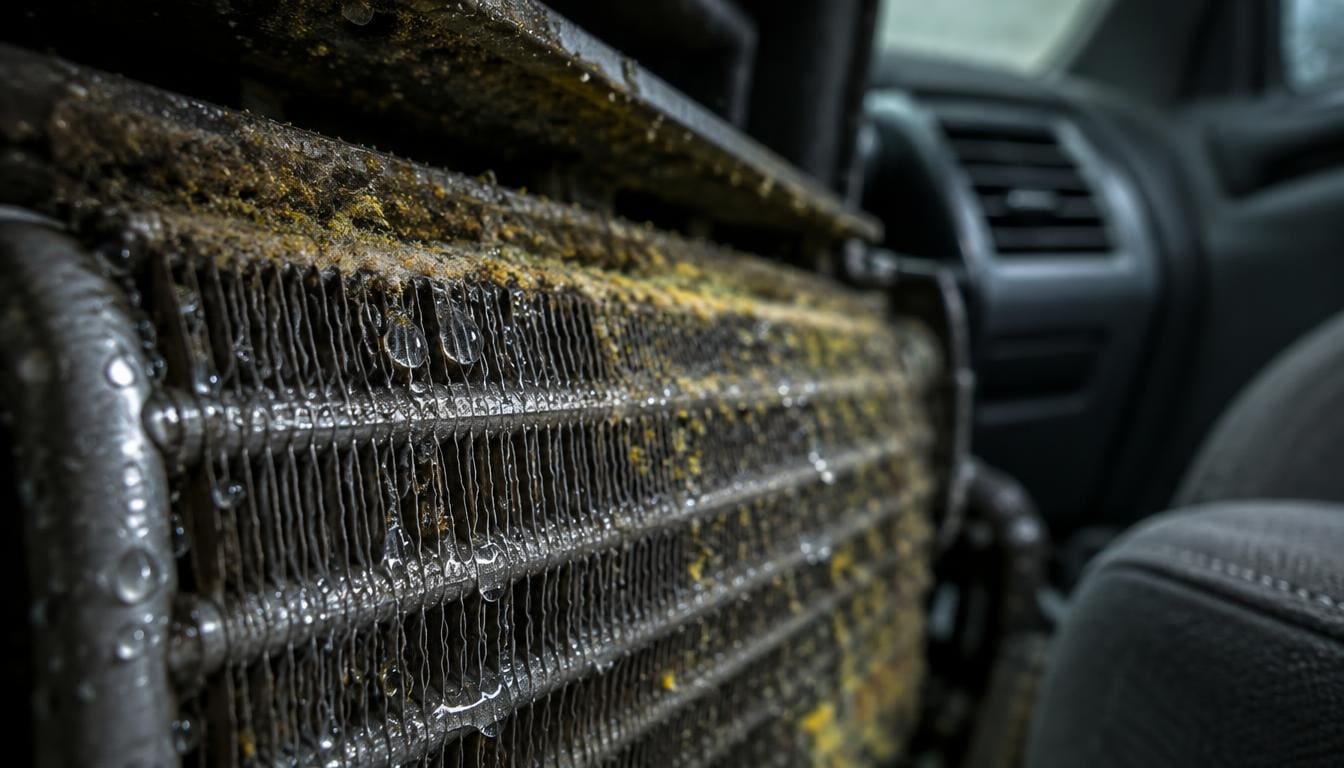
A musty odor at startup often points to moisture and buildup inside your vehicle’s A/C system. Dust and pollen can collect where damp air passes through, especially after the system has been used for a long time. A dirty cabin air filter or a blocked drain may add to the smell.
The evaporator is the cold A/C coil that removes heat and moisture from cabin air. A filter change may help when the filter holds odors, but a smell that returns may need inspection. The goal is to find the source rather than cover it with a fragrance.
The first useful clue is whether the odor appears only at startup or continues as the fan runs.
Key Takeaways
- A musty odor often points to moisture and buildup in the A/C system.
- A dirty or damp cabin air filter can trap odors and reduce airflow.
- A filter change may help, but a recurring smell may need inspection.
- Smoke, a burning odor, or an engine overheating needs urgent attention.
- Water inside the cabin can point to a blocked evaporator drain.
Why Your Car AC Smells Musty
The most common source is moisture left around the evaporator after the A/C has been running. A musty smell can rise with the first burst of air, then fade as the system runs. That startup odor can suggest buildup, but it cannot confirm the exact cause.
Moisture on the evaporator
The evaporator cools air, and water forms on its surface during normal use. Some moisture can remain in the housing after you turn off the system. Dust and pollen may settle there, where darkness and dampness support odor-causing bacteria, mold, and mildew.
When you ask why your car AC smells bad when first turned on, damp buildup near the evaporator is one possible answer. The first rush of air may carry trapped odors into the cabin. The smell may lessen as fresh air moves through the system.
A car AC smells musty when first turned on for several reasons, so scent alone is not a diagnosis. The odor can also come from a wet filter or a drain issue. Notice whether it clears quickly or stays while the fan runs.
Drain and cabin filter problems
The evaporator drain tube carries condensation out of the A/C housing. A clogged drain can hold water inside that space instead. Stagnant moisture may add to the odor and keep nearby surfaces damp.
A dirty or damp cabin air filter traps dust and odors before air reaches the passenger compartment. It can also restrict airflow, which may worsen moisture retention in the system. Check your owner’s manual for the filter’s location and service needs.
A short-lived startup odor still deserves attention if it grows stronger or returns every trip.
How Can Other AC Odors Help Identify a Problem?
A musty or vinegar-like smell often points back to damp buildup, while burning and sweet smells can signal different problems. The odor is a clue, not proof of a specific fault. Smoke or an engine temperature gauge rising toward red calls for urgent action.
Musty or vinegar-like odors
A musty or vinegar-like smell can come from moisture and microbial buildup around the A/C system. It may seem strongest at startup, then fade as air moves through the vents. A vinegar-like odor does not identify which part needs attention.
Burning, sweet, chemical, or fuel-like odors can have other sources. A chemical or fuel-like smell cannot be diagnosed by scent alone. If the smell persists, treat it as a sign to stop and seek help rather than guess.
Burning, sweet, chemical, or fuel-like odors
| Odor | Possible source | Clue | Response |
|---|---|---|---|
| Musty or vinegar-like | Damp buildup | Strongest at startup | Check filter and system |
| Burning | Wires, insulation, or short circuit | Electrical smell or smoke | Stop safely if smoke appears |
| Sweet or syrupy | Coolant leak or heater core | Greasy windshield film or wet passenger mat | Arrange prompt inspection |
| Fuel-like or chemical | Several possible sources | Scent alone cannot identify it | Stop safely if it persists |
An electrical burning odor can come from overheating wires, burning insulation, or a short circuit. Smoke from the dashboard or under the hood means you should pull over safely and turn off the engine. A burning odor without smoke still merits prompt attention.
A sweet, syrupy smell when the heater is on can mean coolant vapor is entering the cabin through a system leak. A leaking heater core may leave a greasy film inside the windshield or wet the passenger-side floor mat. Ethylene glycol in coolant is toxic, and a leak can lead to engine overheating.
If the temperature gauge climbs toward red, pull over safely and turn off the engine. Do not keep driving if the temperature gauge rises toward red.
How Do You Remove a Musty Smell From Car AC?
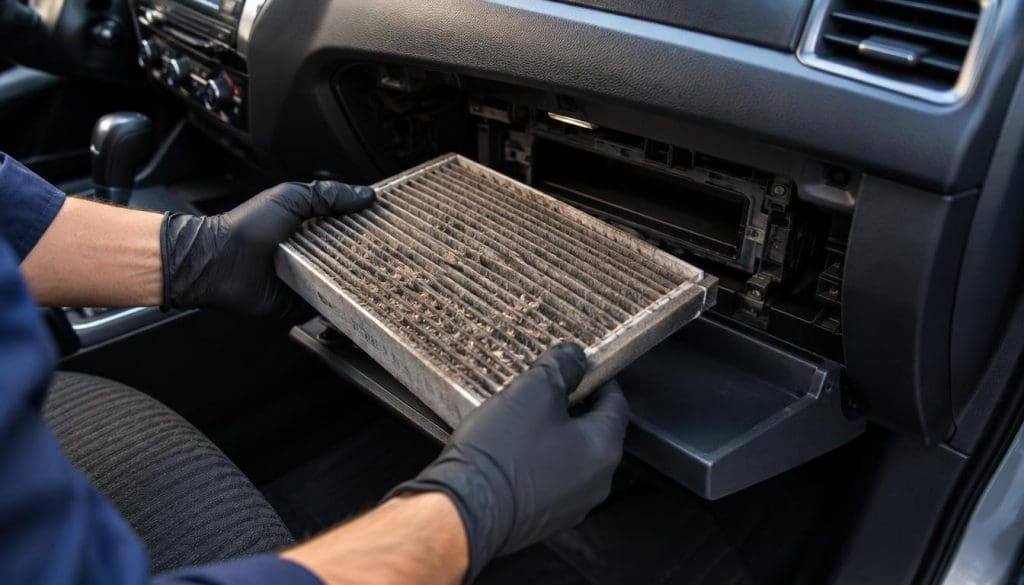
Check the cabin air filter first, since a dirty or damp filter can be a straightforward source of trapped odor. Start with the filter before trying to clean parts you cannot see. Use only an automotive HVAC cleaner as its label directs.
Start with the cabin air filter
The cabin air filter is often behind the glove compartment, though its location varies by vehicle. Your owner’s manual can show how to reach it and which filter fits. Do not force the glove compartment or nearby trim if access feels unclear.
- Inspect the cabin air filter for dirt, dampness, or damage.
- Replace it if dirty or damp, following your owner’s manual.
- Choose a cleaner made for automotive HVAC systems and follow its label.
- Seek professional application if access or procedure is uncertain.
Use an evaporator cleaner only as directed
Klima Cleaner Pro is a water-based automotive HVAC cleaner. Its maker describes it as free of caustic cleaners and designed to clean the A/C and heater evaporator, removing odors, pollen, and dust.
The maker’s instructions say to reach the evaporator by removing the blower fan and applying the cleaner with its supplied tube. Another stated method applies it through the evaporator drain tube beneath the vehicle. Klima Cleaner Pro’s instructions advise against applying it through the air vents and recommend professional application.
Those methods apply to that product, not to every cleaner or every vehicle. Access points and safe steps can differ, so follow the exact label and vehicle instructions. Do not spray a cleaner through the vents as a general shortcut.
A filter change cannot clear a blocked drain or clean a contaminated evaporator by itself.
How Can You Prevent Musty AC Odors From Returning?
A few minutes of fan operation on fresh-air mode after you switch off the A/C can help dry the evaporator. That brief run helps reduce lingering moisture in the system. Check your owner’s manual for the correct cabin air filter schedule.
As general guidance, replace the cabin air filter every 15,000 to 30,000 miles. In dusty or high-pollen areas, an annual change may make sense. Your vehicle’s manual takes priority because filter needs and service schedules differ by model.
A clean cabin air filter helps limit dust and pollen entering the cabin. It does not prevent every mildew odor, but regular changes reduce debris that can collect in the system. Check the filter sooner if airflow drops or it looks damp.
The maker of Klima Cleaner Pro recommends using that product every 3-6 months along with cabin air filter replacement. That is a product-specific recommendation, not a universal service schedule for every car or cleaner.
Keep the air intake area at the base of the windshield clear of leaves and debris.
When Should a Mechanic Inspect the AC System?
Water inside the cabin or no condensation visible under the vehicle after A/C use can indicate a blocked evaporator drain. Repeated moisture can also point to a deeper system issue. These signs suggest a problem but do not prove its cause.
Signs of a drain or moisture problem
Use this checklist when you decide whether to book an inspection:
- Water collects on the cabin floor or under a mat.
- No visible condensation drips beneath the vehicle after A/C use.
- The odor persists or returns after basic filter care.
A drain blockage may hold water inside the A/C housing, while a lasting odor can have another cause. A technician can inspect the drain and related parts to find the source. Avoid assuming that one symptom proves a specific fault.
What to check about paid refrigerant service
Paid work on a motor vehicle A/C system falls under EPA Section 609. Anyone who repairs or services the system for payment must receive training and certification through an EPA-approved program. Technicians must use refrigerant-handling equipment certified by the EPA or an independent standards-testing organization.
Section 609 generally prohibits intentionally venting refrigerant during maintenance, service, repair, or disposal. Recovered refrigerant must be recycled or reclaimed before reuse, even when it goes back into the same vehicle.
EPA Section 609 rules also require a new shop, or one servicing motor vehicle A/C systems for the first time, to certify to its EPA Regional Office that it acquired and properly uses approved equipment. Ask how the shop handles refrigerant before authorizing paid A/C work.
Do not authorize intentional refrigerant venting as a shortcut during service.
What Does Professional Diagnosis and Repair Cost?
A diagnostic inspection is estimated at $100-$250, while the repair total depends on what the inspection finds. The inspection sets the scope before parts are replaced. An evaporator replacement can cost $1,200-$3,000 or more.
| Service | Estimated cost | What affects the work |
|---|---|---|
| A/C diagnostic inspection | $100-$250 | Tests needed to identify the issue |
| Refrigerant leak repair and recharge | $200-$800 or more | Leak location and parts to repair or replace |
| Evaporator replacement | $1,200-$3,000 or more | Dashboard access and labor time |
A car A/C leak can be expensive to fix when the evaporator needs replacement. Leak location and the part that needs repair or replacement affect the total. An inspection helps establish the repair scope before you approve the work.
Replacing an evaporator can take substantial labor because the part may sit deep inside the dashboard. Access to it can make labor a large part of the bill. A leak at another component may need a different repair.
Ask whether the estimate includes testing, parts, labor, and refrigerant recharge. Estimated A/C repair ranges can help you compare the proposed work with the service type. Request details before approving added repairs.
Ask for an itemized estimate that separates inspection, repair, recharge, and any component replacement.
Conclusion
A lasting musty odor is a reason to find the source rather than mask the smell. A filter may be the simple fix, while an odor that keeps returning can need a closer look. Pay attention to water in the cabin and any change in engine temperature.
Heaven Automotive can inspect your vehicle and help address the cause. Visit at 6645 Poss Rd. San Antonio, TX 78238, or call (210) 682-3898 to arrange service.
Hire Heaven Automotive to fix your vehicle at 6645 Poss Rd. San Antonio, TX 78238, or call (210) 682-3898.