

If your vehicle makes a clicking sound and the engine won’t turn over, the most likely cause is a weak battery. You may hear a single click or rapid clicking, and each tells a different story about the electrical system.
A dead battery often fails to provide enough power to engage the starter motor and solenoid properly. Loose or corroded battery terminals and poor wiring connections can make the same noise and block power flow.
Sometimes the starter itself or the ignition switch is the culprit. A faulty starter or a bad alternator can mimic battery failure and leave you stranded.
Knowing the difference between a single click and rapid clicking helps you decide if you should try a jump or call an expert for service. Regular battery maintenance and clean connections reduce the chance of this frustrating issue.
Key Takeaways
- Single click often points to starter or solenoid trouble; rapid clicking usually means low battery power.
- Check battery terminals, cables, and wiring for corrosion or loose connections first.
- A dead battery, faulty starter, or bad alternator are common causes of this noise and no-start issue.
- Simple maintenance and testing of voltage and connections can prevent many problems.
- If basic checks fail, seek an expert to diagnose starter and ignition components safely.
Understanding Why Your Car Clicking When Starting Occurs
A weak battery often fails to supply the current needed to engage the starter solenoid and run the starter motor. That shortfall is a common reason the engine won’t crank despite an audible click or rapid sounds.
When you turn the key, the 12-volt battery completes the circuit and sends power to the solenoid. If wiring, terminals, or the battery itself are compromised, the starter may not receive enough energy to spin the engine.
The audible click usually means the solenoid tried to bridge the circuit but the battery could not provide full crank power. This helps you narrow the issue to the battery, solenoid, or starter rather than complex mechanical faults.
Regular electrical service and terminal cleaning reduce these problems. If basic checks fail, an expert can test the battery and alternator and confirm whether the starter needs replacement.
- Battery sends current to the starter solenoid and motor.
- Compromised system means the engine won’t turn over even if a click occurs.
- Professional testing distinguishes a worn battery from alternator or starter issues.
For more on common causes and next steps, see 5 common reasons your car won’t.
Distinguishing Between Single and Rapid Clicking Sounds
Different click patterns tell you a lot about whether the starter or the electrical system is at fault. Listen for timing and rhythm; that helps you narrow the likely cause quickly.
Single Click Indicators
A single click most often points to a starter motor or a failing solenoid. The solenoid may not fully engage the gear that turns the engine.
Corrosion or loose terminals can also cause one firm click by cutting power briefly. In some cases a very weak battery creates the same single-note response.
Rapid Clicking Patterns
Rapid tapping usually signals a low battery or a weak electrical system. The starter motor tries to spin but voltage falls too low to keep it turning.
- Rapid sound = insufficient power from the battery or alternator issue.
- Single click = possible mechanical starter or solenoid fault, or poor terminal contact.
- Cleaning terminals and testing voltage are quick first steps.
If you want a guided diagnostic, follow this short checklist and read our full guide: why your car clicks but won’t.
Common Mechanical and Electrical Culprits
Several mechanical and electrical parts can fail and produce a telltale click without allowing the engine to crank. Below are the usual suspects and quick signs to watch for.
Battery and Terminal Issues
A weak battery is the top cause. According to AAA, the average battery lasts about three years, and delaying replacement raises the risk of a rapid clicking noise and no-start issue.
Corroded battery terminals create high resistance that blocks adequate power to the starter solenoid. Inspect terminals for white powder and secure cable connections.
Starter Motor Failures
Most starters are built to exceed 100,000 miles, but heavy use and harsh weather shorten life. A faulty starter often gives a single click and no crank.
If the starter motor gear or solenoid fails, the ignition switch may send power but the motor won’t engage the engine.
Alternator and Wiring Problems
A bad alternator can let the battery drain and lead to repeated clicking when you try to start. Loose or damaged wiring and cables also interrupt the electrical system and stop the starter from receiving full voltage.
- Battery lifespan ~3 years (AAA).
- Starter units often last 100,000+ miles.
- Clean terminals and tight connections prevent most issues.
Essential Safety Precautions Before You Begin
Don gloves and safety glasses, then steady the vehicle before you probe the electrical system. Batteries hold sulfuric acid and can burn skin or eyes, so protection is not optional.
Park on level ground and set the parking brake. This prevents any unintended movement while you check terminals or wiring.
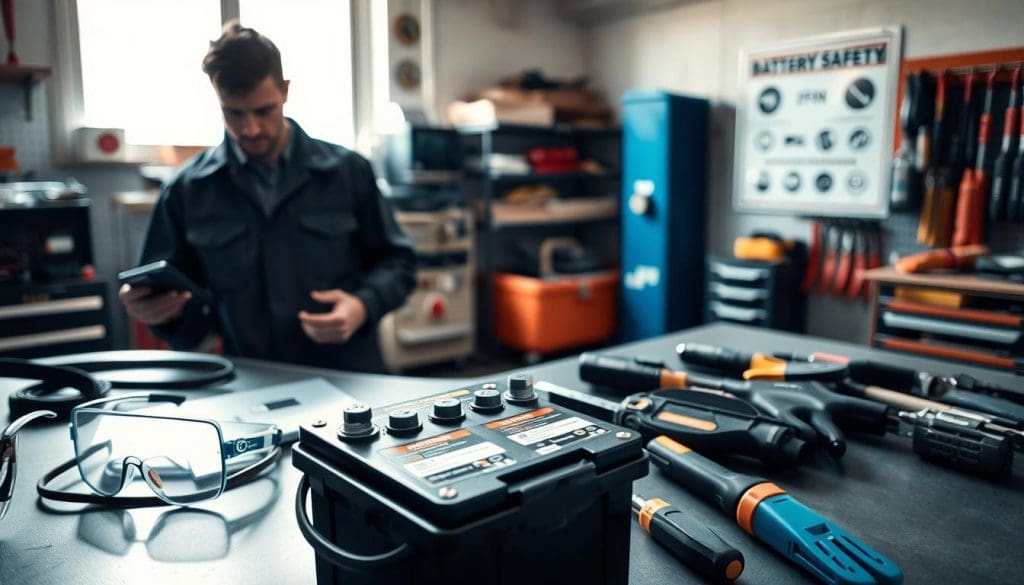
- Remove metallic jewelry and avoid loose clothing to reduce the risk of a short across the battery.
- If you find corrosion on battery terminals, clean the area with a baking soda and water paste, then rinse and dry.
- Never try to jump-start a cracked or leaking battery—this is dangerous and can worsen the damage.
Always disconnect the negative cable first to avoid sparks near the engine. Keep all connections tight and free of debris so the starter motor does not draw excessive power.
Safety is your top priority. Take your time, follow these steps, and call a professional if you see any damage or fluid leakage on the vehicle.
Troubleshooting Steps to Diagnose Your Starting Issue
First, make sure the vehicle is secure: place the transmission in Park and set the parking brake. Confirm the ignition is off before you touch any electrical parts.
Use a multimeter to check battery voltage. A reading below 12V often points to the battery as the main problem. Low voltage is a common cause of a rapid clicking noise and no crank.
Performing a Basic Jump Start
If you hear rapid sounds when you turn the key, try a jump start to add power briefly. Follow safe jump procedures and keep clear of moving parts.
- Attach positive cable to the dead battery terminal, then the donor battery. Connect negative cable to donor ground and a clean metal point on the vehicle with the dead battery.
- Start the donor vehicle and let it run for a few minutes to raise voltage. Then try to turn the key in your ignition.
- If the engine turns over, let it run. If the vehicle dies right after removing cables, the alternator may be failing.
- If you still hear a single click after a jump, suspect the starter or solenoid. Inspect battery terminals and cable connections for corrosion or loose fittings.
Also check the dashboard lights when you turn the key. Dimming or no lights can indicate low battery or wiring issues. If the simple tests fail, have a technician test the battery, starter, and alternator to pinpoint the issue.
When to Seek Professional Collision and Repair Services
Persistent no-start symptoms often point to damage that requires professional diagnostic equipment. If basic checks and a safe jump don’t restore power, you should get expert help to avoid further damage.
Miracle Body and Paint Collision Center offers full repair and diagnostic service for electrical and collision-related issues. Their team can test the starter motor and related wiring and decide if a starter or deeper repair is needed.
- If your car continues to make a clicking noise after basic repairs, consult an expert technician.
- Miracle Body and Paint provides professional repair at two San Antonio locations to serve your vehicle needs.
- North West San Antonio – Leon Valley: 6217 Grissom Rd, San Antonio, TX 78238. Call (210) 680-1987.
- North East San Antonio: 4650 Walzem Rd, San Antonio, TX 78218. Call (210) 858-3630.
- Whether you need a starter replacement or collision repair, trust their trained team and diagnostic tools to get you back on the road.
Do not delay if your car stays unresponsive after checking battery and starter. Professional equipment and certified technicians will find faults faster and protect your vehicle from further harm.
Conclusion
Hearing a short, repeating tap at the dash can signal low voltage or a failing starter motor.
A clicking noise or similar clicking sound often points to a weak battery, loose battery terminals, or faulty wiring. Check battery voltage and cable connections first to rule out simple issues and avoid extra time and expense.
If basic checks don’t fix the problem, seek expert service. Hire Miracle Body and Paint Collision Center to repair collision damage and electrical faults at one of their two San Antonio locations.
North West San Antonio – Leon Valley: 6217 Grissom Rd., San Antonio, TX 78238. Call (210) 680-1987.
North East San Antonio: 4650 Walzem Rd., San Antonio, TX 78218. Call (210) 858-3630.
Addressing these issues early keeps your vehicle safe and reliable for daily use.