


You notice a subtle shake as you reach cruising speed, and the steering wheel may start to tremble. This irritation often signals underlying faults that can affect your safety and daily driving. Early attention helps prevent further damage and keeps your vehicle reliable.
Small issues can grow fast when you drive faster, because minor imbalances and wear become amplified by higher speed. Many drivers ignore the first signs of shaking, yet these are common causes you should not dismiss.
In this guide, you will learn why a vibration shows up at higher speeds, what the steering wheel tells you, and when to seek professional inspection. Understanding the root causes lets you fix problems early and drive with greater confidence.
Key Takeaways
- Feeling the steering wheel tremble is often the first sign of a problem.
- Higher speed can turn small defects into noticeable shaking.
- Early checks protect your vehicle and improve safety.
- Common causes include wheel imbalance, worn parts, and alignment issues.
- Get a professional inspection if vibration increases or persists.
Understanding Why Your Car Vibrates at Highway Speeds
A growing shake as you accelerate often signals that a rotating assembly is out of balance or showing wear. Centrifugal force magnifies tiny flaws, so a minor wobble at low pace can become a serious shaking sensation once you push beyond 45 mph.
In many vehicles — from a 2005 Mitsubishi Endeavor to modern sedans — the physics are the same. Imbalanced wheels, worn suspension parts, or loose steering components create instability that you feel through the steering wheel and floor.
Addressing common causes early keeps daily driving safe and avoids larger repairs. Typical issues include wheel imbalance, tire wear, and failing bushings or ball joints.
- Rotating parts out of balance amplify problems at higher speed.
- Steering vibration usually points to suspension or wheel faults.
- Ignoring small shakes can lead to costly repairs and unsafe handling.
To learn diagnostic steps and when to see a technician, consult this diagnostic guide for practical checks and next steps.
The Role of Tire Balance and Wheel Alignment
Many shakes you feel at speed trace back to uneven tires or misaligned wheels rather than complex mechanical faults. Start with the basics: properly balanced wheels and correct alignment keep your tires meeting the road evenly. That improves handling and extends tire life.

Tire Balancing Issues
If tire balance is off, you will sense a repeating vibration in the seat or steering wheel while driving on the highway. Small wheel weights can fall off or a hit from a pothole can create an imbalance.
Left unaddressed, that vibration worsens and shortens tire and suspension life.
The Importance of Proper Alignment
Uneven tire wear often signals misaligned wheels and can make the vehicle pull to one side. A proper alignment sets all four wheels so the tires contact the road evenly and the vehicle tracks straight.
- Regular tire rotation and professional wheel balancing prevent early wear.
- Inspect wheels after a hard impact; damage can cause lasting balance issues.
- Tire balance is fundamental to stopping the annoying shake you feel at speed.
Investigating Suspension and Steering Component Wear
Loose or worn suspension parts often show up as a subtle wobble you can feel through the steering. That wobble can come from failing ball joints, torn bushings, or weak struts that let the wheel move slightly out of alignment.
Catch these problems early to avoid larger safety issues. Worn suspension components reduce control and cause uneven tire wear that worsens handling over time.
Identifying Worn Bushings and Ball Joints
- Your suspension is meant to absorb bumps, but worn parts like a ball joint can create a clear vibration felt in the steering wheel.
- Loose steering components reduce precision, making the vehicle unstable when you reach higher speeds on the highway.
- Technicians inspect bushings, struts, and other suspension components for play, cracking, or corrosion.
- Early identification protects tires and preserves proper alignment so the wheel stays planted during driving.
How Warped Brake Rotors Affect Your Ride
Warped brake rotors can turn a routine stop into a noticeable shake you feel through the steering wheel.
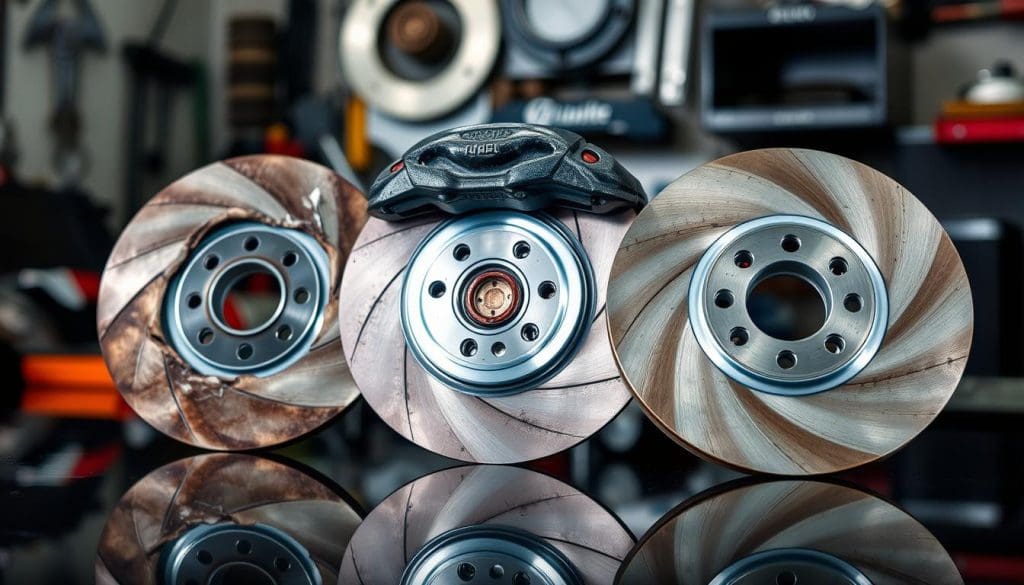
A rotor with uneven thickness causes the brake pads to clamp inconsistently. That irregular contact creates a pulsation in the pedal and a clear shaking sensation during braking.
If you notice the steering wheel shaking when you apply the brakes, you likely have warped brake rotors that need replacement. Over time, heat and wear can distort the disc surface and make braking feel pulsed.
- Technicians inspect rotors for uneven thickness, which is a common source of car shaking on the road.
- Ignoring warped brake rotors can damage pads, reduce stopping performance, and increase repair time and cost.
- When the brake pedal pulses or you hear rough stopping sounds, seek professional maintenance right away.
Our team ensures your brakes are restored for a smooth ride without vibration. A properly serviced braking system should operate quietly; any tremor is a sign that rotors require repair or replacement.
Drivetrain and Axle Concerns at Higher Speeds
Powertrain faults often reveal themselves as a steady shake that grows when you accelerate. If the CV joint, axle shaft, or driveshaft is worn or bent, you may notice a clear vibration that becomes worse with speed. This shake can travel through the wheel and into the seat, making the ride uncomfortable and unsafe.
When tires and brakes check out clean, focus next on the drivetrain. A bent axle or worn driveshaft often causes a consistent shake felt throughout the vehicle during acceleration. Identifying the exact cause prevents repeat repairs and keeps your car reliable.
- The drivetrain transmits power to the wheels; a damaged axle is a common cause of car shakes at high speeds.
- We inspect the driveshaft, CV joints, and axle shafts to find underlying issues that create shaking during acceleration.
- Our diagnostics pinpoint whether the vibration starts in the axle, transmission, or elsewhere so repairs fix the root problem.
Professional Diagnostic Methods for Vehicle Shaking
Skilled testing narrows down whether tires, suspension, or driveline parts cause the shake. A clear, stepwise inspection finds hidden faults so you spend time and money fixing the real problem.
Road Force Balancing
Road force balancing detects tire and wheel issues that standard spin balance misses. Technicians press each assembly against a roller to measure how it reacts under load. That reveals uneven stiffness, internal tire wear, and runout that produce vibration at speed.
Computerized Diagnostics
Modern scanners and sensors evaluate steering sensors, suspension control modules, and wheel speed data. This gives a fast picture of alignment faults, electronic faults, or sensor-driven problems.
- Check tire pressure and balance data
- Measure wheel alignment and camber values
- Scan suspension sensors for fault codes
Inspecting Driveline Components
We physically inspect axles, CV joints, driveshafts, and brake rotors. Worn ball joints or bent axle shafts often cause the same shaking you feel in the seat or steering wheel. Measuring rotor runout finds warped brake rotors that can pulse under braking.
Our approach pairs road force balancing, computerized testing, and hands-on checks. That combination finds the true cause so your vehicle returns to smooth, safe driving.
Conclusion and Expert Collision Repair Services
A steady shake that grows with speed is your vehicle asking for a trained inspection and precise repairs. Prompt attention protects your safety and prevents small faults from becoming costly problems.
Whether the issue stems from wheel balance, suspension wear, or brake damage, our team provides a clear, honest diagnosis and repair plan.
Hire Miracle Body and Paint Collision Center to fix collision repair damage and restore performance. Visit our North West San Antonio location in Leon Valley at 6217 Grissom Rd., San Antonio, TX 78238, or call (210) 680-1987 for expert assistance.
You can also reach our North East San Antonio shop at 4650 Walzem Rd., San Antonio, TX 78218, or call (210) 858-3630. With two locations to serve you, we are dedicated to high-quality repairs and reliable results.