

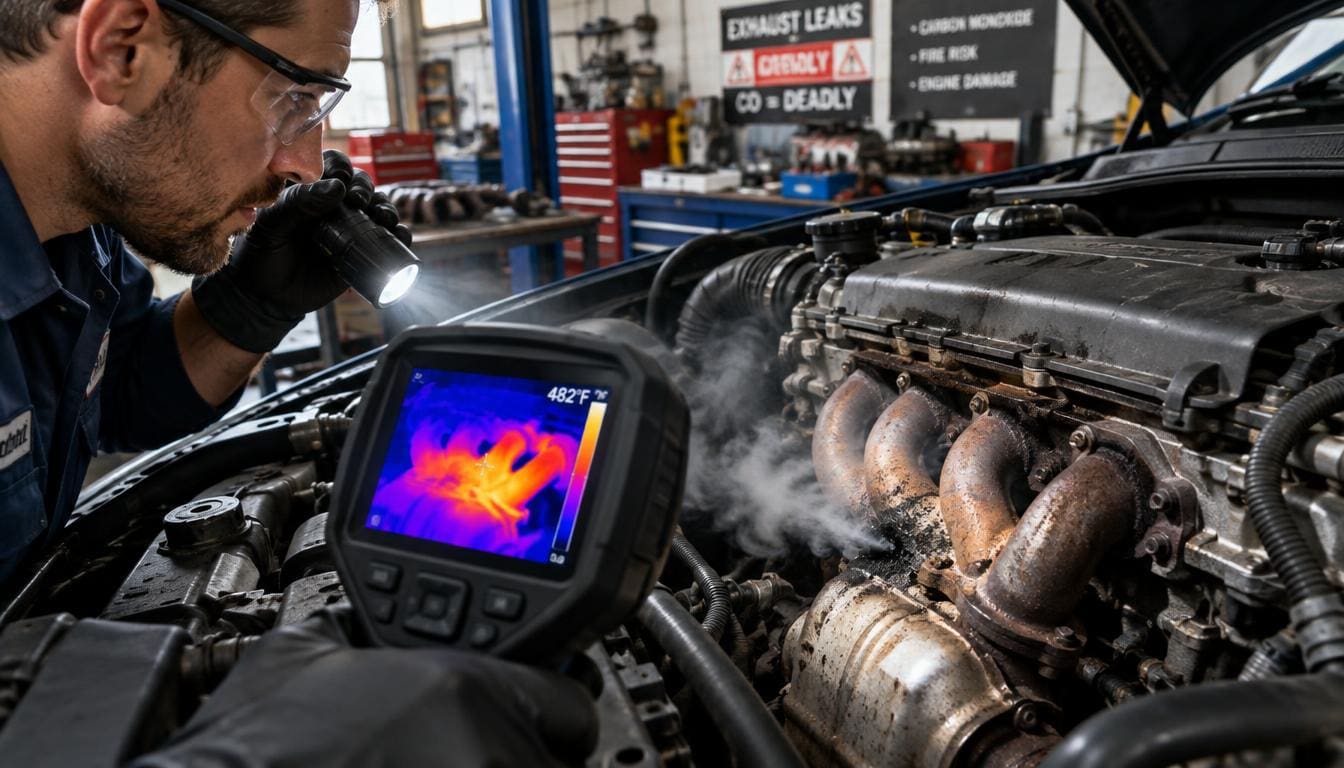
A new rumble, ticking sound, or exhaust odor can be your vehicle’s early warning that something is wrong. These exhaust leak symptoms may start softly, before your car changes how it runs. An exhaust manifold collects burned gases from the engine cylinders and directs them into the exhaust system. A leak can let those gases escape before they reach the tailpipe.
Pay attention to new sounds or odors, even when your vehicle seems normal. Escaping exhaust can affect nearby parts and expose passengers to harmful fumes. The change may be easy to miss at first, especially if the noise fades as the engine warms. Treat a new exhaust odor or unusual engine sound as a reason to pay attention, even if your car still seems to run normally.
Key Takeaways
- Unusual noises can signal an exhaust problem.
- Fumes inside the cabin need urgent attention.
- A check-engine light may appear with a leak.
- Prompt inspection can limit damage to nearby parts.
- Repair cost depends on the work your car needs.
Exhaust Leak Symptoms: What Should You Listen and Look For?
A rhythmic tick on a cold start or a hiss that sharpens under acceleration can point to an exhaust leak near the engine. Several signs together can make a leak more likely than one noise alone.
Bad exhaust leak symptoms can include noises, odors, warning lights, or changes in how your vehicle runs. Manifold leak symptoms can also include cylinder noise, poor performance, or a warning light.
Ticking, Hissing, and Rumble
A cold-start tick may come from the engine area and grow quieter as hot metal expands. That change does not mean the leak has healed. A hissing or chirping sound may sharpen under acceleration or when the engine works hard.
Rumbling beneath the vehicle can point to a leak farther along the exhaust system. Popping may also occur. An exhaust leak sound can change with engine speed, load, and the leak’s location.
| Sound | Typical clue | Where you may notice it |
|---|---|---|
| Ticking | Cold-start noise | Near the engine |
| Hissing | Louder under acceleration | Near the engine or underneath |
| Rumbling | Low, steady sound | Beneath the vehicle |
Smells, Warning Lights, and Driving Changes
A burning-plastic smell near the engine or an exhaust odor can signal trouble. A check-engine light may appear, and your vehicle may feel sluggish or use more fuel.
You may feel vibration through the steering wheel, pedals, or seats. Look for visible soot around exhaust joints. A professional smoke test can help find a stubborn leak.
The signs exhaust leak problems create are not limited to loud noises. If soot appears around an exhaust joint, arrange an inspection rather than treating the residue as a repair.
Why Can an Exhaust Leak Put You and Your Vehicle at Risk?

Exhaust fumes inside the cabin deserve immediate attention because carbon monoxide has no color or odor. If fumes enter the cabin, pull over safely, turn off the engine, and get into fresh air.
Headache, dizziness, fatigue, nausea, or confusion can warn of carbon monoxide exposure. Do not keep driving to see whether the odor clears.
Exhaust Fumes and Cabin Safety
Carbon monoxide can enter the cabin with exhaust fumes, even when you cannot smell it. That risk makes a suspected leak a safety issue, not just a noise problem.
Hot gases from a leaking manifold can also enter the engine compartment. They may damage nearby components and affect engine performance.
Sensor Readings, Engine Performance, and Diesel Back Pressure
A leak near oxygen sensors can distort their readings. Your vehicle may lose power, accelerate poorly, use more fuel, or run roughly.
Diesel exhaust leak symptoms can include reduced power or poor acceleration. An exhaust leak when accelerating may become more noticeable under load. In diesel engines, excessive back pressure raises pumping work and lowers intake-manifold boost pressure.
That back pressure can also raise fuel use, emissions, and exhaust temperature. Excessive diesel exhaust back pressure can affect several parts of engine operation.
Three conditions can contribute to exhaust leaks:
- Rough-road impacts
- Rust and corrosion
- Damaged or worn exhaust hangers or rubber isolators
Routine service can catch exhaust damage before it grows. If passengers feel unwell while exhaust fumes are present, get everyone into fresh air and seek urgent help.
What Does Exhaust Leak Repair Cost?
A manifold gasket replacement costs $100-$400, while professional manifold replacement typically costs $800-$1,600. A gasket-only job can cost less than replacing the full manifold.
In 2026, a replacement estimate lists parts at $150-$1,200, gaskets and hardware at $50-$150, and labor at $400-$1,200. The job takes 3-8 standard labor hours. Professional manifold replacement costs can reach more than $2,500 for some complex vehicles.
| Job | Typical professional cost | Condition |
|---|---|---|
| Simpler manifold replacement | About $600 | Simpler job |
| Typical manifold replacement | $800-$1,600 | Professional replacement |
| More complex manifold replacement | Over $2,500 | Some trucks, V6/V8 or luxury vehicles, or integrated catalytic converters |
Exhaust leak repair cost depends on whether the work covers a gasket, a manifold, or other exhaust parts. Manifold replacement estimates do not apply to every leak. Ask the repair shop to separate parts and labor in its estimate so you can see what the quoted work includes.
Conclusion
A prompt inspection can help you address an exhaust problem before it leads to more damage. Arrange service when you suspect a leak, even if your vehicle still runs. A technician can check the system and explain which repair fits your car.
Taking care of the problem today can help protect your vehicle and the people who ride in it. Heaven Automotive can inspect and fix your vehicle in San Antonio. Call (210) 682-3898 or visit 6645 Poss Rd. San Antonio, TX 78238 to arrange service.
Hire Heaven Automotive to fix your vehicle by calling (210) 682-3898 or visiting 6645 Poss Rd. San Antonio, TX 78238.