

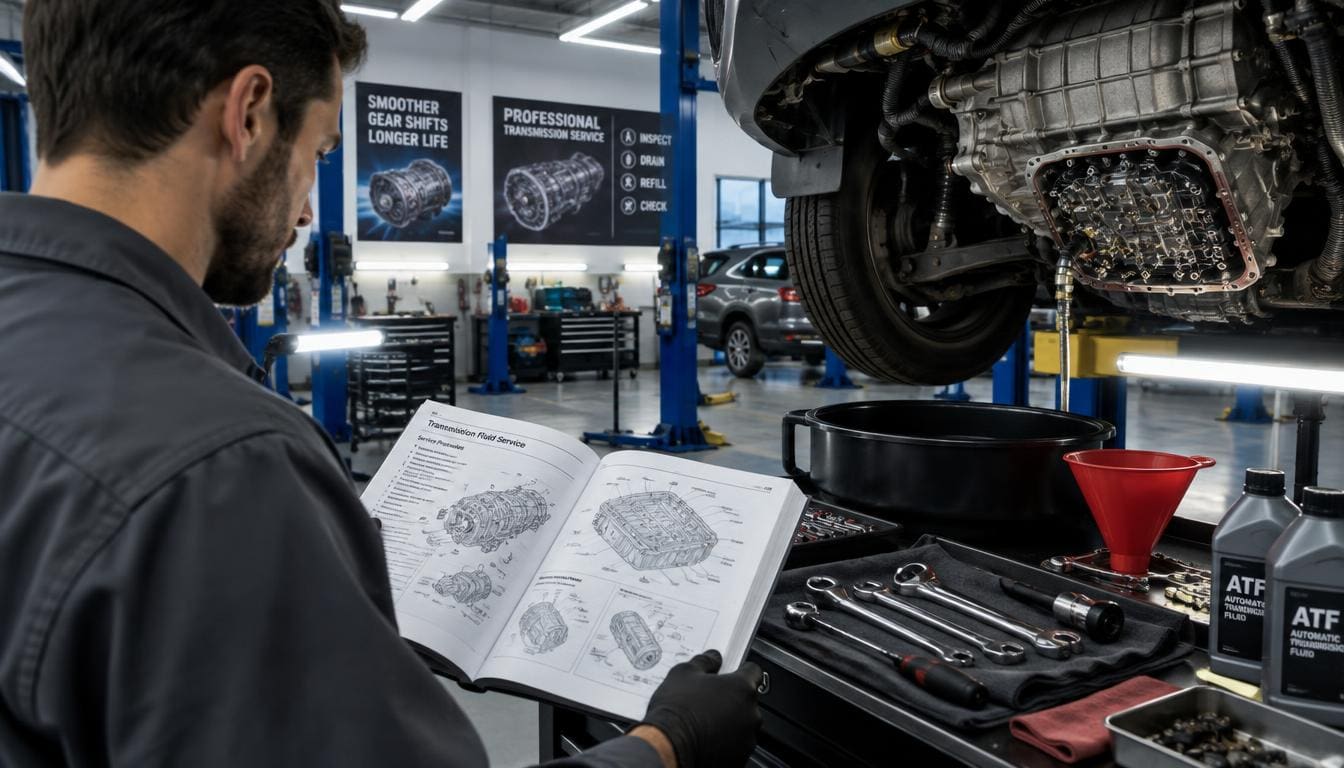
A drain and fill is often the sensible routine option, while a flush exchanges more of the fluid when the vehicle’s service history and specified procedure make it appropriate. The right choice depends on your owner manual, maintenance records, and current symptoms, not simply on replacing more fluid.
Automatic transmission fluid, or ATF, is the fluid that lubricates, cools, and cleans an automatic transmission’s internal components. A transmission fluid change can be part of routine vehicle care, but the correct method varies by model and service history. More fluid replaced does not always mean a better service for your car.
Knowing what work each service includes helps you compare recommendations and ask clear questions. You can use your vehicle’s manual and past records to discuss the right option with a repair shop. If shifting has changed or a warning light appears, that may call for diagnosis instead of routine maintenance.
The safest starting point is your vehicle’s service schedule and a clear account of its past maintenance.
Key Takeaways
- A drain and fill is often the practical choice for routine service.
- A flush replaces more fluid when the vehicle’s procedure supports it.
- Your owner manual and service history help guide the choice.
- New symptoms need inspection, not a guessed service method.
- Ask what the service includes before you approve the work.
Transmission Flush vs Drain and Fill: How Do They Differ?
A drain and fill replaces 30 to 40 percent of the fluid, while a transmission flush replaces nearly 100 percent. The main difference is how much old fluid leaves the system and whether the service includes pan and filter work. A flush replaces more fluid, while pan service can include filter replacement and inspection.
Both services are types of transmission fluid change, but the work is not identical. The table compares their usual process and approximate fluid replacement.
| Service | Process | Approximate fluid replaced |
|---|---|---|
| Drain and fill | Drain the pan and replace the filter | 30 to 40 percent |
| Transmission flush | Circulate special flush fluid | Nearly 100 percent |
What a drain and fill replaces
A drain and fill lowers and drains the transmission pan, then refills the system with fresh ATF. The shop may replace the filter if needed, reinstall the pan, and check the fluid level. Some old fluid remains in the torque converter and other passages, so the service does not replace every drop.
The pan service can give a technician a chance to inspect the pan and its contents. That matters because the service may reveal debris or signs of wear. A fluid change that includes a new filter and pan inspection offers a different benefit from fluid replacement alone.
How a transmission flush works
A flush circulates special flush fluid through the system to remove residue or contaminants and exchange nearly all the old fluid. Some services move fluid through cooler lines. Filter replacement depends on the service, and a flush does not automatically mean the transmission pan gets inspected.
Ask what the shop means by a transmission fluid flush, since service steps can differ. A machine may exchange fluid without opening the pan. Confirm whether the quote includes filter work and whether the flush follows your vehicle’s specified method.
Before approving either service, confirm whether the quoted work includes a filter change and pan inspection.
Which Service Fits Your Transmission’s History?
A well-documented service history gives you a clearer basis for following the vehicle’s specified fluid service. Regular records can show which fluid and method your automatic transmission has received. Use the owner manual and maintenance record together, not mileage alone.
When you know past service was routine, following the manufacturer’s stated method is usually the clearest path. Your records can help show whether the fluid change is due and what work the vehicle received before. A shop can then match the next service to that pattern.
When service has been routine
Keep the vehicle’s records with dates, mileage, fluid type, and work completed. That detail helps you spot gaps and gives a technician useful facts. It also prevents guesswork about whether the transmission has had a filter or pan service.
If your maintenance history is clear, avoid changing methods just because one service sounds more thorough. The recommended procedure for your model should guide the choice. A routine service that follows the manual is easier to assess than a change based only on preference.
When mileage is high or records are missing
High mileage alone does not mean you should never change transmission fluid. At 100,000 miles, the service record, current symptoms, and manufacturer guidance still matter. A missing record is a reason to inspect before choosing a method, not proof that a flush is right.
For a high-mileage transmission with uncertain history, one option is a conservative pan service. A technician can drain the pan, inspect and clean it, replace the filter, and refill without trying to drain the torque converter. This approach usually replaces about half of the used fluid.
That approach does not mean every vehicle with missing records needs the same service. A technician should consider the vehicle’s condition and its specific instructions. For Toyota vehicles, consult the owner manual for the exact model year, since service needs can differ across vehicles.
If the service record is uncertain, ask for the pan and filter to be inspected before choosing a fluid-exchange method.
What Symptoms Call for Transmission Service?
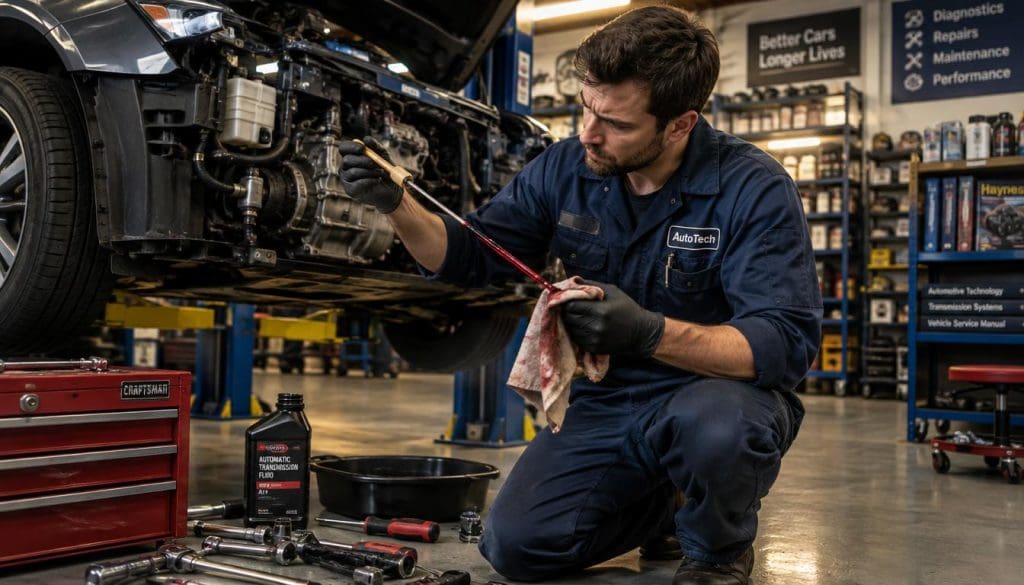
Slipping, delayed engagement, or a burning smell are reasons to have the transmission inspected. These changes may point to a fluid issue or a mechanical problem. Symptoms call for diagnosis, not an automatic assumption that a flush will fix the transmission.
Watch for warning signs that appear while driving or when you check the vehicle after parking. One sign may have more than one cause, so report what you notice and when it happens.
Shifting and driving symptoms
- Slipping gears or delayed engagement
- Grinding or other strange noises
- A burning smell
- Leaking fluid beneath the vehicle
- Excessive vibration or an illuminated check-engine light
Delayed shifting, grinding, or vibration can affect how the vehicle responds on the road. A leak may lower the fluid level, while unusual noise can point to wear or damage. Do not treat any single symptom as proof that the fluid alone is at fault.
Heat, fluid condition, and possible damage
An automatic transmission typically runs at 175°F to 200°F. Temperatures above that range can add internal wear and may lead to failure. Low or degraded fluid can weaken lubrication and cooling, raising the risk of overheating.
Heavy towing, excess weight, stop-and-go traffic, hills, and hot weather can add heat. Cooling-system problems can also raise transmission temperature. When heat breaks down fluid, contaminants, sludge, or metal from wear may affect how parts work.
A technician can check for leaks, fluid condition, and mechanical faults before recommending a service. A flush cannot undo damage that has already occurred. If a warning light appears alongside a change in shifting, arrange an inspection rather than treating fluid service as a diagnosis.
How Often Should You Change Transmission Fluid?
Your vehicle’s owner manual is the first place to check the recommended transmission-fluid interval. Follow that schedule for the correct fluid type and service timing. Severe driving conditions can call for a shorter interval than normal use.
Start with the vehicle’s service schedule
Use the manual for your vehicle, not a general mileage rule from another model. It lists the required fluid and the service guidance for your transmission. Toyota advises owners to follow their vehicle’s manual for fluid service intervals.
Some newer Toyota vehicles describe their transmission fluid as “lifetime” fluid and need less-frequent changes unless a transmission problem arises. That wording does not cancel the vehicle’s schedule or the need to respond to a problem. Read the full service guidance for your model.
Keep the manual’s maintenance schedule with your service records. If the manual lists different schedules for normal and severe use, match the right one to your driving. This can prevent you from treating all miles as equal.
Adjust for severe operating conditions
Severe service can include driving in temperatures at 90°F or hotter, or below 30°F. It can also include speeds above 60 mph, dusty roads, snow or ice, towing, stop-and-go trips, or a fully loaded vehicle.
Some severe-service schedules cut the normal transmission interval in half. For example, 100,000 miles can become 50,000 miles, while 60,000 miles can become 30,000 miles. Your own manual sets the interval for your vehicle.
Towing or hauling and stop-and-go traffic may warrant a shorter service interval, as can severe weather or transmission symptoms. If these conditions are part of your usual drive, use the severe-service schedule when your manual provides one. Match the schedule to how you actually drive, especially if towing or stop-and-go traffic is routine.
What Affects the Cost of Each Service?
A transmission flush typically costs more than a drain and fill because it requires special equipment and additional labor. The estimate also depends on your vehicle’s ATF specification, fluid quantity, filter work, and access to the transmission pan. A clear quote should name the fluid and each included task.
Transmission drain and fill cost depends on how much fluid the vehicle needs and whether the service includes pan or filter work. A transmission flush versus drain and fill may have a wider price gap when specialized equipment and added labor are involved. Vehicle access can also change the work time.
| Cost factor | Drain and fill | Transmission flush |
|---|---|---|
| Equipment | Standard drain-and-refill tools | Specialized exchange equipment |
| Fluid work | Partial replacement | Near-total replacement |
| Labor scope | Pan/filter access and service | Equipment setup and exchange |
Fluid type and quantity affect either quote because vehicles use different ATF needs. Filter or pan work adds tasks to a drain and fill. A flush uses exchange equipment, and the shop may charge for setup and labor.
When comparing a transmission flush cost with another estimate, check that both quotes describe the same service. A lower quote may not include filter replacement or pan inspection. An itemized estimate makes those differences easier to see.
Ask for an itemized estimate that names the fluid specification and the exact work included.
What Should You Confirm Before Booking?
Before booking, confirm that the shop can follow your vehicle’s fluid specification and service procedure. Vehicle-specific work matters because the wrong ATF or service method may not fit your transmission. A sealed design can limit how easily a shop checks fluid level or offers service options.
Some vehicles have sealed transmissions, which can make checking fluid level less straightforward. Your owner manual gives the required fluid and service guidance. Use it to compare what local providers plan to do.
When looking for a transmission drain and fill near me or a transmission flush near me, compare providers by the exact steps and specified fluid, not distance alone. Call with your vehicle details so the shop can discuss the right option.
- Verify the shop will use the vehicle-specified ATF.
- Ask whether the service includes pan inspection and filter replacement.
- Confirm that a flush follows the vehicle’s specified procedure.
- Check whether a sealed design changes the available service options.
Ask how the shop handles a sealed transmission before you book. Some designs require a specific method to check fluid level, and not every service option fits every vehicle. Have the vehicle’s year, make, model, and current mileage ready when you call.
Conclusion
Choose the service that fits your vehicle’s maintenance history and manufacturer guidance. A drain and fill often suits routine service, while a flush fits only when the vehicle’s procedure and records support it.
Symptoms deserve an inspection, not a service chosen by guesswork. Heaven Automotive can help you assess the right repair for your car and explain the work before it begins.
Contact Heaven Automotive to have your vehicle checked and fixed at 6645 Poss Rd. San Antonio, TX 78238, or call (210) 682-3898.