

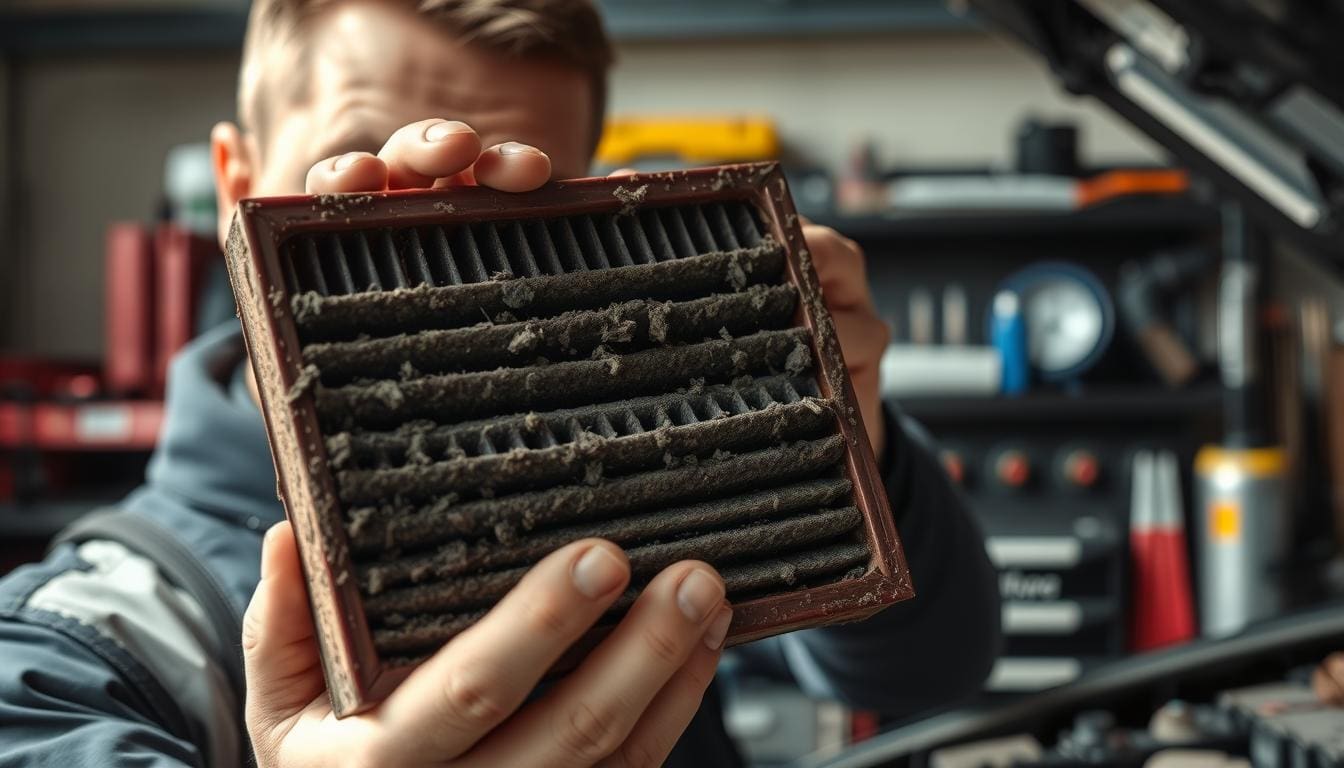
Knowing when to check your vehicle’s intake parts can save you time and money. Start by consulting your owner manual to learn the recommended schedule for engine air filter replacement and related maintenance.
Many modern components sit under the hood and hide behind a complex filter housing. Richard Martinez, a AAA Auto Repair service manager, notes that clips and a housing cover often secure old parts in place.
If you work on this yourself, pick the correct tool. Using a standard Phillips screwdriver on some Honda models can strip screws; a JIS screwdriver avoids that risk. Visit a local parts store to confirm the right new part and tools for your car.
If you lack time or confidence, professional service is safer. A trained technician can inspect both cabin air and engine systems during routine checks to help prevent costly repairs later.
Key Takeaways
- Check your owner manual first to find the service interval.
- Inspect the filter housing and remove the housing cover carefully.
- Use the correct screwdriver to avoid stripped screws on some models.
- Buy the right new part and tools at a reputable parts store.
- Consider professional service if you are unsure or short on time.
Understanding the Role of Your Engine Air Filter
What your car breathes directly shapes how it performs on the road. Clean intake keeps sensors accurate so the onboard computer can set the right mix of fuel and oxygen for efficient combustion.
Protection is the first job. A quality filter blocks dirt and grit from reaching pistons and cylinder walls. That prevents costly wear and helps preserve long-term performance.
How Filters Protect Engine Components
By stopping debris at the housing, a good barrier reduces abrasion inside moving parts. This lowers repair risk and keeps your vehicle running smoothly.
Impact on Fuel Efficiency
When the intake stays clean, fuel use falls and power delivery improves. Regular maintenance preserves that balance and boosts overall efficiency.
- Primary barrier: stops dust and particles from entering the system.
- Better performance: clean flow supports peak power and smoother drives.
- Fuel savings: a well-kept system optimizes fuel economy over time.
Follow the schedule in your owner manual and consider cabin care resources like cabin air maintenance to keep both systems working together.
Signs You Need an Engine Air Filter Replacement
Small drops in throttle response or rough idling are often the first clues that your intake is restricted. If your car lags when you press the gas or the check engine light comes on, inspect the housing and the element. These symptoms point to reduced airflow and can hurt performance and fuel efficiency.
Check intervals matter. Most manufacturers recommend changing the engine air filter every 12,000 to 15,000 miles. In dusty conditions, you should do this more often. Also inspect both engine air and cabin air at every oil change, typically every 5,000 to 7,500 miles.
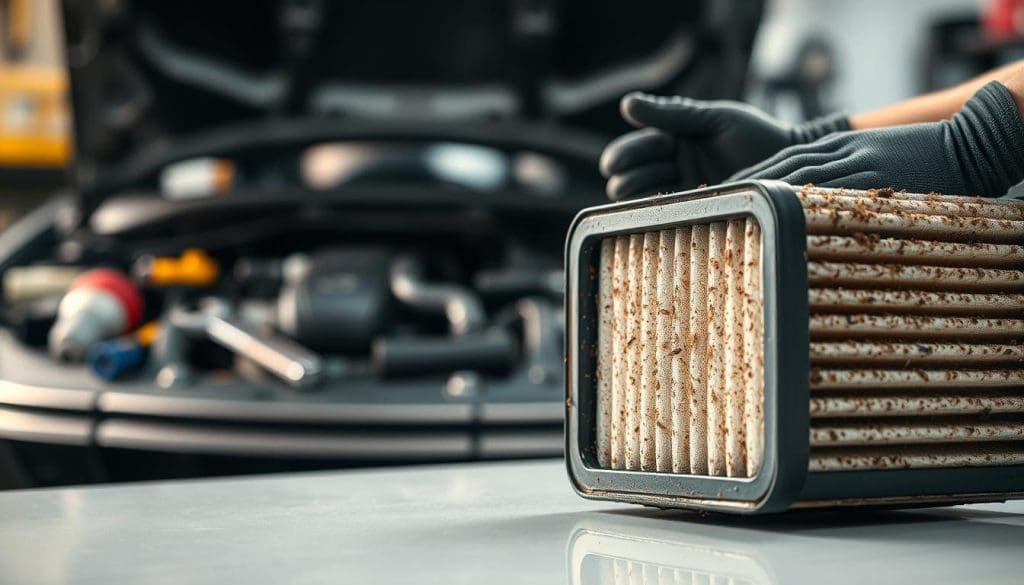
- If fuel economy drops or acceleration feels sluggish, you likely need new parts to restore performance.
- A clogged element lets debris build up and can cause major damage if left too long.
- Follow your owner manual and take this simple step during routine maintenance to keep your vehicle reliable.
Best Practices for Maintenance and Inspection
Regular checks help you spot buildup before it harms vehicle performance. Inspect under the hood at least once a year and more often if you drive on dusty roads.
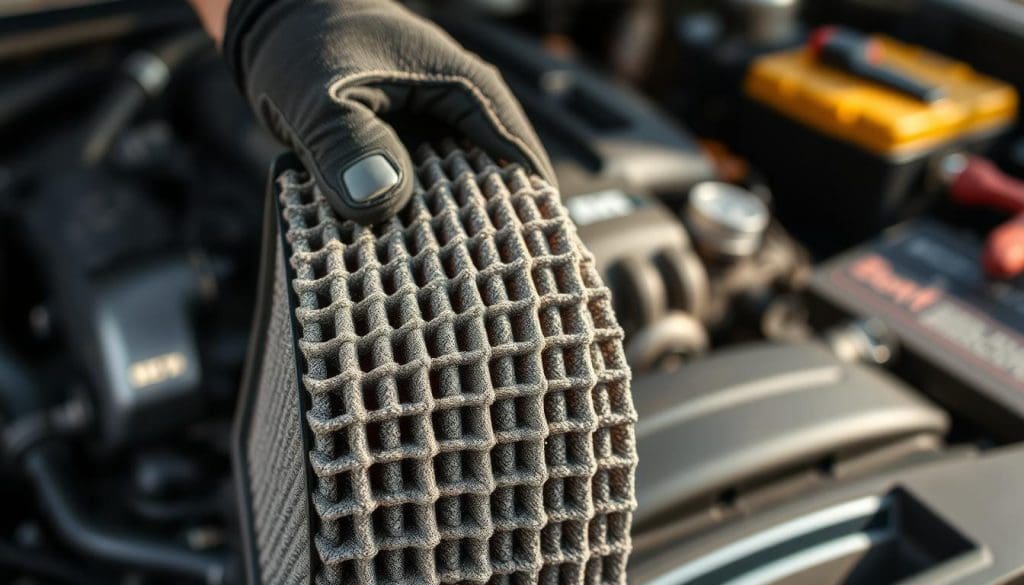
Environmental conditions matter. Richard Martinez points out that dusty or off-road use shortens service life compared with highway miles. Adjust your schedule when you see heavy debris after long trips.
Environmental Factors Affecting Filter Life
High-performance media need special care. Some reusable types require cleaning, specific cleaners, and re-oiling. Disposable paper designs simply get swapped out at the recommended interval.
- Seal the housing cover: make sure the filter housing closes tightly so debris cannot bypass a new unit.
- Replace when clogged: if the old element is heavily soiled, buy a new part at a local parts store to protect fuel efficiency.
- Use the right tool: a proper screwdriver prevents damage to plastic clips and the housing.
- Check yearly: examine cabin and engine components at least once per year and follow the owner manual for 12,000–15,000 mile guidance.
Following these steps helps you avoid costly service later. Keep simple notes in your maintenance log so you know the last time you inspected and when to act again.
Conclusion
Keep routine checks simple. A short inspection helps you protect your vehicle, preserve fuel efficiency, and avoid costly repairs.
Follow your owner manual for service intervals. Check the filter housing and housing cover during every oil change and consider cabin upkeep at the same time.
If the element looks clogged or the housing is damaged, have a professional install a new filter and confirm proper sealing. Timely care is the easiest step toward reliable performance.
Need collision repair or installation help? Hire Miracle Body and Paint Collision Center. We serve San Antonio at two locations:
North West San Antonio – Leon Valley: 6217 Grissom Rd., San Antonio, TX 78238. Call (210) 680-1987.
North East San Antonio: 4650 Walzem Rd., San Antonio, TX 78218. Call (210) 858-3630 to schedule service today.