

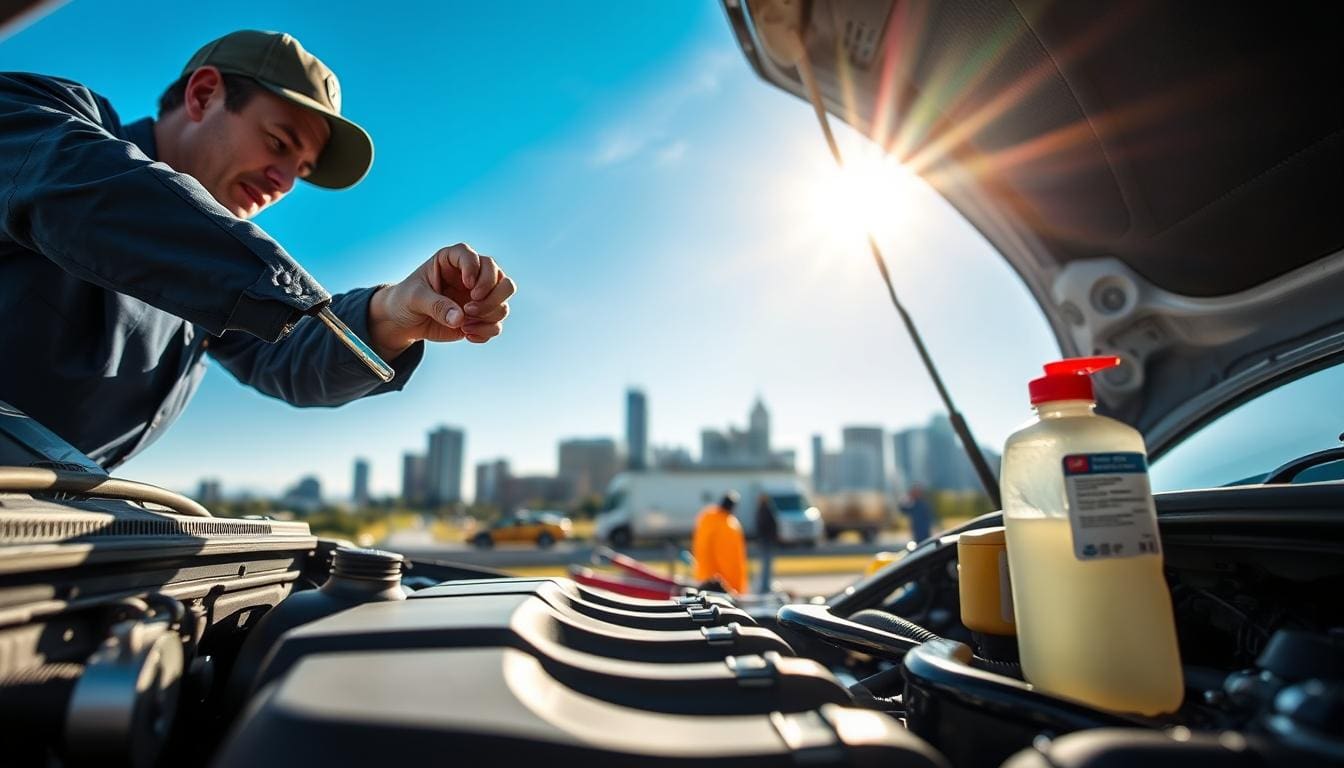
Summer heat in San Antonio can push your engine hard. Hot days and stop-and-go traffic strain the cooling system and raise the risk of serious engine damage.
Watch for steam under the hood — it is a clear sign that your vehicle needs attention. The temperature gauge on your dashboard gives an early warning so you can act before repairs get costly.
Check coolant levels regularly and scan the gauge when traffic is heavy or temperatures climb. If you see steam or the gauge hits a high mark, pull over safely and let the engine rest.
Keeping hoses, the radiator, and the fan in good shape helps your engine run cooler. Small checks now save you time and money later while you navigate busy San Antonio roads.
Key Takeaways
- Monitor the temperature gauge to spot trouble early.
- Check coolant levels on a regular schedule.
- Steam from under the hood means stop and cool the engine.
- Maintain hoses, radiator, and fan to reduce risks.
- Acting fast can prevent major engine overheating damage.
Understanding Why Your Engine Overheats
High temperatures and idling in traffic put extra strain on the cooling system. You need to know what can fail so you spot issues early.
Common Cooling System Failures
Water pump failures stop coolant circulation. Without flow, the engine temperature rises fast and can cause severe engine damage.
Leaks and low coolant levels often show as puddles or a sweet smell. Cracked hoses and a leaking radiator let fluid escape and reduce cooling power.
Faulty thermostat stuck closed blocks coolant from reaching the radiator. That prevents heat exchange and leads to rapid engine overheat.
The Impact of Extreme Heat
Summer temperatures and heavy traffic increase load on the engine. Running the air conditioning adds stress and raises operating temperature.
Act quickly on any leaks, worn hoses, or pump issues to avoid major repair. Understanding how the system manages temperature helps you spot trouble before it becomes costly.
- Your engine relies on a complex cooling system to manage heat.
- Water pump or radiator problems create immediate temperature issues.
- Address leaks and thermostat faults promptly to limit engine damage.
Essential Tips to Prevent Car Overheating in San Antonio
Simple, routine checks keep your cooling system ready for long San Antonio drives. Start with a 50/50 mix of antifreeze and water; Chase R. Nacol of AAA recommends this for optimal cooling performance.
Keep an eye on coolant levels and check them before long trips. Low fluid reduces the system’s ability to move heat away from the engine.
Inspect the radiator and hoses often. Cracks or soft spots signal leaks that can lead to engine overheating.
Have the thermostat checked during regular service. A faulty thermostat prevents proper flow and raises temperature quickly.
- Maintain a 50/50 antifreeze/water mix for summer cooling.
- Scan hoses and the radiator for leaks or wear.
- Monitor coolant levels and the temperature gauge in traffic.
Regular care of your cooling system is the most effective way to avoid engine issues on San Antonio roads.
Monitoring Your Vehicle Temperature Gauge
Watch the dashboard temperature gauge on every drive. It gives a clear, early warning if the cooling system or engine begins to overwork. A steady mid or lower reading shows normal operation.
Interpreting Dashboard Warnings
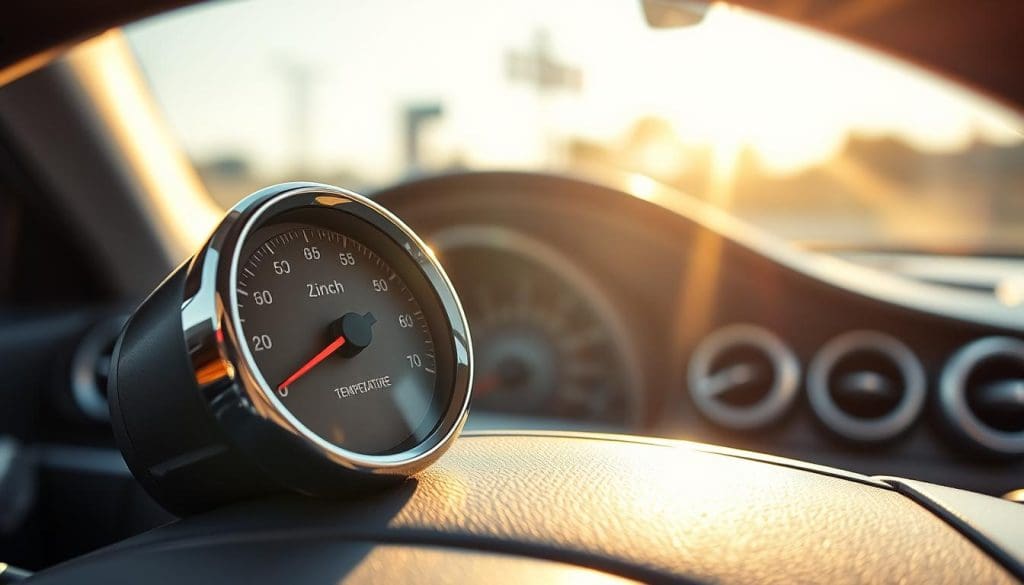
Chase R. Nacol notes the temperature gauge should sit near the middle during normal use. If it climbs to three-quarters or higher, your vehicle is likely overheating and needs attention.
Never ignore a high reading or a warning light. A rising temperature often means the radiator, water flow, or coolant level has an issue.
- Keep an eye on the gauge and scan the dash in traffic.
- The gauge is your primary warning system for cooling system failures.
- When the needle moves toward the red zone, act quickly to protect the engine.
- A healthy radiator and cooling system will keep the gauge steady even in heat.
For more detail on causes and fixes, read what causes a car to overheat and how to fix.
Recognizing the Warning Signs of Engine Trouble
Noticing small changes in sound, smell, or gauge readings can save you from major engine damage.
Steam rising from under the hood is one of the clearest signs that the cooling system is failing. If you see steam, stop driving and let the engine cool to avoid further harm.
A sweet or burning smell often signals that coolant is leaking onto hot parts. Check for puddles or damp spots under the vehicle and have the leak repaired promptly.
Listen for knocking or a sudden drop in power. Those symptoms point to heat-related damage inside the engine and need immediate attention.
Your temperature gauge will usually give the first warning that something is wrong. A rising needle or a warning light means the temperature levels are not normal and the system is under strain.
- Steam from the hood is an urgent sign.
- Sweet smells mean possible coolant leaks.
- Knocking or low power indicates internal engine damage.
- Use the gauge as your first line of warning.
Immediate Steps to Take When Your Car Overheats
If the temperature needle moves into the high zone, find a safe place to pull off and shut the engine down. Quick, calm action reduces the chance of serious engine damage while you wait for help.
Pulling Over Safely
Signal and steer to a shoulder or parking area away from traffic. Turn off the engine once stopped to stop further stress on the cooling system.
Chase R. Nacol advises you should wait at least 20 minutes before touching the hood or radiator cap. Steam or pressure can cause severe burns.
Managing the Air Conditioning
If the vehicle overheats in heavy traffic, immediately switch off the air conditioning and turn the heat on full. That redirects heat away from the engine bay and lowers temperature slightly while you move to safety.
Once stopped, you can switch the key to the accessory position to let the cooling fans run and help the system shed heat.
Waiting for the Engine to Cool
Do not open the hood until the engine cools. After the recommended 20 minutes, check coolant levels only if you see no steam and feel safe to inspect.
- Stop driving at the first warning on the gauge or visible steam.
- Keep fans running in accessory mode while you wait for roadside help.
- Have a professional inspect any leaks in hoses or the radiator that led to the issue.
Professional Maintenance for Long-Term Engine Health
Your engine stays healthier when a technician checks the cooling circuit before summer hits.
Routine coolant flushes and thermostat testing keep your cooling system reliable. These services remove old antifreeze and restore proper flow so your engine runs cooler under load.
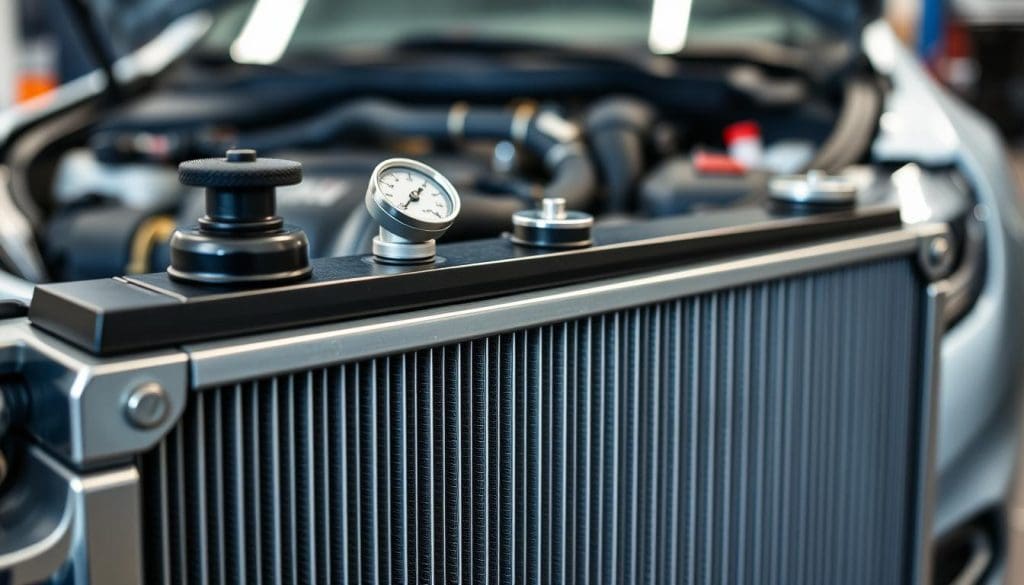
A trained technician will inspect the radiator, test the water pump, and verify thermostat operation. Early diagnosis of pump or radiator faults reduces the chance of major engine damage.
- Schedule regular maintenance that includes a check coolant service and fluid levels.
- Have professionals test the water pump and thermostat to catch issues early.
- Use the correct antifreeze and perform a coolant flush as recommended.
If you notice fluctuating temperature readings or other signs of trouble, seek professional repair right away. For detailed advice on common cooling system issues, read cooling system issues.
Conclusion: Trust Miracle Body and Paint Collision Center
When collision damage or cooling issues sideline your vehicle, expert service gets you moving again.
You can trust Miracle Body and Paint Collision Center for reliable collision repair and routine service. Our technicians restore paint, structure, and mechanical systems so your car returns to safe use.
Two locations in San Antonio to serve you:
North West — Leon Valley: 6217 Grissom Rd., San Antonio, TX 78238 • (210) 680-1987.
North East: 4650 Walzem Rd., San Antonio, TX 78218 • (210) 858-3630.
Whether you need a full collision repair or a quick antifreeze check, hire Miracle Body and Paint Collision Center to keep your car reliable on every road.