

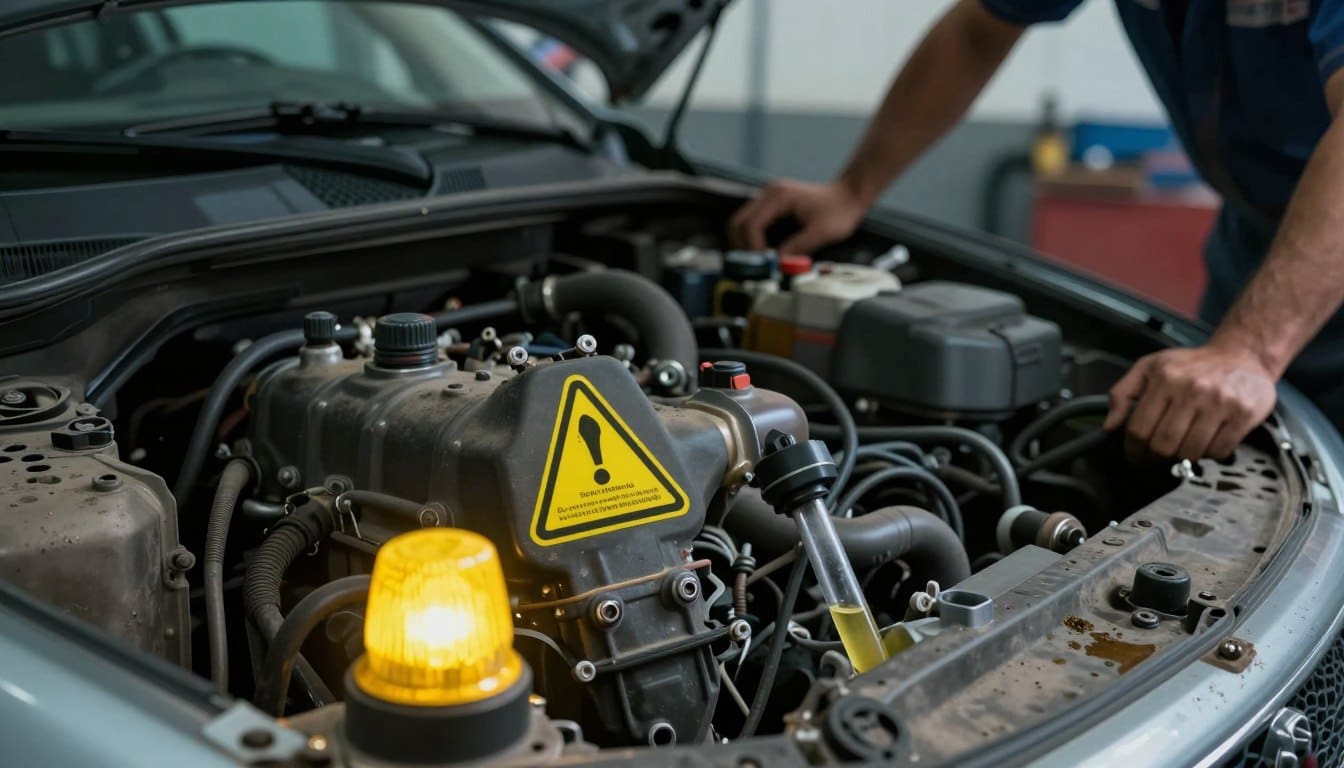
Every driver has experienced strange noises or odd shifts. You might ignore a minor hiccup, hoping it will go away. But, small mechanical issues often signal bigger problems ahead.
It’s important to spot transmission problem signs early. This helps save your wallet from big repair bills. By catching these signs early, you avoid costly rebuilds or losing your vehicle. Taking care of your car keeps it reliable and safe for every journey.
Your car tells you how it’s doing through small changes. Noticing these transmission problem signs lets you fix things before they get worse. Acting now keeps your engine and drivetrain running smoothly for years.
Key Takeaways
- Minor vehicle issues often escalate into expensive mechanical failures if ignored.
- Early detection of warning indicators saves you significant repair costs.
- Proactive maintenance is essential for long-term vehicle reliability.
- Paying attention to performance changes helps prevent total system loss.
- Addressing small repairs immediately keeps your car safe on the road.
The Anatomy of Early Transmission Failure
Under your car’s hood, a complex system of gears and valves works together. This system helps move your car forward by transferring power to the wheels. If this system gets out of sync, driving becomes a different experience.
Understanding the Complexity of Modern Gearboxes
Today’s transmissions are much more advanced than older models. They use precise fluid pressure to switch gears and manage heat. This hydraulic system must stay clean and pressurized for smooth gear changes.
Engineers build these parts to work within very small margins. Even a tiny bit of dirt or a slight change in fluid can cause internal friction. This friction wears down clutch packs and seals, which are key for the gearbox’s strength.
Why Minor Symptoms Often Go Unnoticed
Many drivers miss early signs of transmission trouble because the problems grow slowly. You might get used to a slight delay in shifting or a minor vibration over time. These changes happen so slowly that your brain often adjusts without you noticing.
Also, modern cars have advanced computers that hide small mechanical issues. These systems can adjust engine timing or shift points to cover up a slipping gear. By the time you really notice a big problem, the damage is often severe.
It’s important to watch how your car acts during daily drives. Even if it seems fine, subtle changes in how it performs can signal a need for a mechanic. Ignoring these signs can lead to more costly repairs later on.
Identifying Common Transmission Problem Signs
Your vehicle often sends out signals before a big problem happens. By paying attention to how your car acts, you can spot transmission problem signs early. This helps avoid costly repairs and keeps your investment safe.
Recognizing Subtle Changes in Vehicle Performance
Erratic shifting is a common sign. Your car might struggle or take too long to switch gears. You might also hear strange noises like whining, clunking, or grinding.
These sounds mean something inside your car is wearing out. Hesitation when you try to speed up is another warning sign. If your engine revs high but your car doesn’t go faster, your transmission might be slipping.
The Importance of Early Detection for Long-Term Reliability
Spotting problems early is key to avoiding big breakdowns. Fixing small issues quickly stops bigger problems from happening. This makes your car last longer.
Finding transmission problem signs early also saves money. Small fixes or fluid services are cheaper than a new gearbox. Regular checks keep your car safe and reliable for years.
The Mechanics Behind a Slipping Transmission
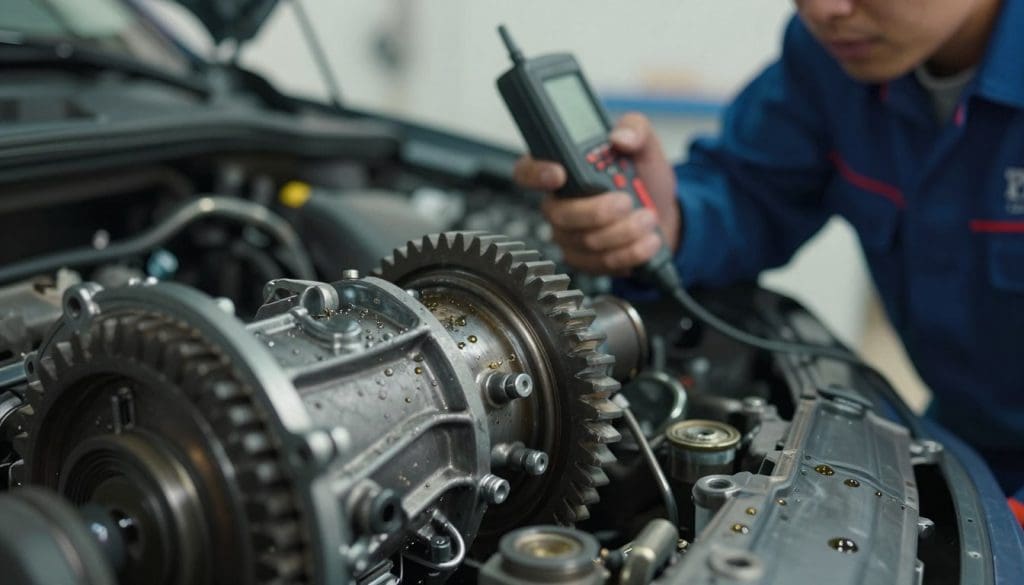
Ever noticed your engine revving high but you’re not moving faster? That’s a sign of a slipping transmission. It happens when your gearbox’s parts can’t stay connected. This means your engine’s power doesn’t reach the wheels.
What Happens When Gears Fail to Engage
Your transmission has clutch packs and bands that shift gears smoothly. When they wear out, they can’t grip the shafts well. This causes the gears to disengage briefly, leading to a power loss.
If you ignore these signs, your clutch plates will wear faster. You might feel your car hesitate or “hunt” for the right gear. This is a clear sign your slipping transmission needs a mechanic’s help.
Common Causes of Internal Pressure Loss
Hydraulic pressure is key for your automatic gearbox. Low fluid or poor quality fluid can’t keep the clutch packs engaged. Contaminated fluid can clog valves, making it harder for fluid to flow.
Seals and gaskets that wear out also cause pressure drops. When they fail, fluid leaks, stopping the transmission from locking into gear. Keeping your fluid clean and high-quality is vital to avoid these problems.
| Symptom | Primary Cause | Mechanical Impact |
|---|---|---|
| Delayed Engagement | Low Fluid Pressure | Slow clutch activation |
| High RPM Revving | Worn Clutch Packs | Loss of power transfer |
| Erratic Shifting | Valve Body Obstruction | Unstable gear selection |
| Burning Odor | Overheated Fluid | Component degradation |
Decoding Hard Shifting and Jerky Movements
A sudden, jarring movement during gear changes is often the first sign of a deeper mechanical issue. When you experience hard shifting, it feels as though the vehicle is struggling to transition smoothly from one gear to the next. This sensation can range from a minor bump to a violent jolt that impacts your overall driving comfort.
Why Your Vehicle Might Be Hesitating Between Gears
Hesitation occurs when the transmission fails to engage the next gear at the precise moment required. This delay often stems from internal pressure loss or worn-out clutch packs that cannot maintain a firm grip. Mechanical wear is a common culprit, but software glitches can also prevent the system from executing a clean shift.
If your car pauses before slamming into gear, it is likely trying to compensate for a lack of hydraulic force. Ignoring these symptoms often leads to further damage within the valve body. Addressing the root cause early helps you avoid more expensive repairs down the road.
The Role of Electronic Control Units in Shift Quality
Modern vehicles utilize an Electronic Control Unit (ECU) to manage every aspect of your transmission’s performance. The ECU constantly monitors engine speed, throttle position, and vehicle velocity to determine the optimal shift point. When these sensors send inaccurate data, the transmission may struggle to maintain consistent shift quality.
Software bugs or faulty wiring can disrupt the communication signals between the engine and the transmission. If the ECU receives conflicting information, it may trigger erratic gear changes or prolonged hesitation. Regular diagnostic scans are vital to ensure that your vehicle’s computer is interpreting these signals correctly.
| Symptom | Primary Cause | System Impact |
|---|---|---|
| Hard Shifting | Low Fluid Pressure | High |
| Hesitation | Sensor Malfunction | Moderate |
| Jerky Movement | Software Glitch | Moderate |
| Delayed Engagement | Worn Clutch Packs | Critical |
The Critical Role of Transmission Fluid
Your vehicle’s transmission fluid is vital for your car’s drivetrain. It acts as a lubricant, coolant, and hydraulic medium. Without it, gears and clutches would wear out quickly.
How Fluid Degradation Impacts Internal Components
As time goes by, your transmission fluid breaks down due to heat and pressure. It loses its ability to cushion moving parts. This causes more friction and heat in the transmission.
Worn-down parts also release metal shavings and clutch material. If the fluid isn’t changed, these particles damage seals, valves, and gears. This can lead to a catastrophic failure if not fixed.
Signs of Contamination and Overheating
Check your transmission fluid by looking and smelling it. Healthy fluid is bright red and clear. Dark brown or black fluid means it’s been too hot.
A burning smell from the transmission is another warning. If the fluid feels gritty, it’s contaminated. Always check your fluid levels and condition to keep your car running well.
The Dangers of Ignoring Gear Slip
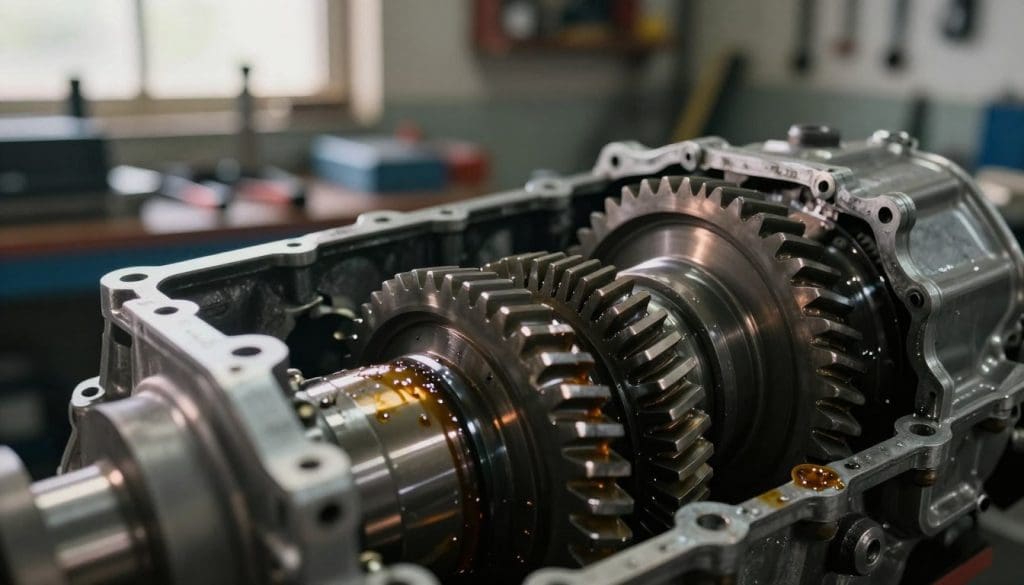
When your car shows signs of a gear slip, it’s a warning sign for your transmission. Many think a brief hesitation is just a minor issue. Unfortunately, this is rarely the case.
Ignoring these signs can turn a simple fix into a big problem. Your car needs precise pressure to shift gears smoothly. Any problem with this means something is seriously wrong.
How Minor Slips Lead to Catastrophic Mechanical Failure
A slipping transmission happens when parts don’t connect properly. This causes friction and heat in the transmission.
As heat increases, the transmission fluid breaks down. This harms clutches, bands, and gears, leading to a complete failure.
When damage gets too far, the transmission can’t move power to the wheels. At this point, you might need a new transmission.
The Financial Impact of Delayed Repairs
Waiting too long for repairs can be very costly. A simple check-up might cost a few hundred dollars. But a new transmission can cost thousands.
Here’s a look at the costs of ignoring a gear slip:
- Early Detection: Fluid flush, seal replacement, or sensor adjustment.
- Intermediate Neglect: Valve body repair or clutch pack replacement.
- Total Failure: Complete transmission rebuild or unit replacement.
Fixing a slipping transmission early saves money. Proactive care is always the most cost-effective strategy for long-term vehicle reliability.
Transmission Repair San Antonio: Local Trends and Data
The Texas heat and heavy traffic in San Antonio can really wear down your car’s transmission. When it’s hot, your car works harder to stay in top shape. It’s key to find good transmission repair San Antonio services to keep your car running.
Common Issues Faced by Drivers in the Texas Climate
High temperatures can make transmission fluid break down fast. When this happens, it can’t lubricate gears or cool them down well. This thermal stress often causes seals to burn and clutch packs to get damaged.
If your car has trouble shifting in the heat, it might need a check-up. At Heaven Automotive, at 6645 Poss Rd. San Antonio, TX 78238, we fix these problems. Our team knows what local cars need and offers top transmission repair San Antonio services.
Why Regional Driving Conditions Affect Transmission Longevity
San Antonio’s city layout means lots of stop-and-go driving. This constant stopping and starting wears down the transmission. If not fixed, it can fail early.
Driving habits like short trips or idling a lot also age your car faster. Regular maintenance can help your car last longer. Choosing a local expert for transmission repair San Antonio ensures your car gets the right care for our roads.
Diagnostic Procedures for Modern Vehicles
When your car starts acting strange, experts use the latest tech to find the real problem. Today’s transmissions are more than just gears; they’re complex systems with smart software. Guesswork can lead to costly and unnecessary repairs.
How Professional Technicians Pinpoint Hidden Faults
Certified mechanics use specialized diagnostic equipment to talk to your car’s computer. They get specific error codes that show where the problem is. This helps them tell if it’s a simple sensor issue or something bigger.
They also do hands-on checks to see if what the computer says is true. They look for signs of overheating, loose wires, or leaks. This meticulous approach makes sure they find the real cause, not just the symptoms.
The Value of Computerized Scanning and Fluid Analysis
Scanning your car’s computer gives a quick look at its health. It checks shift timing, solenoid performance, and fluid pressure while driving. This info is key for finding problems that only show up under certain conditions.
Fluid analysis is another important check. By looking at the fluid’s color, smell, and texture, they can spot tiny metal shavings or burnt bits. This proactive testing often finds wear and tear before it’s too late.
| Diagnostic Method | Primary Benefit | What It Detects |
|---|---|---|
| Computerized Scanning | Speed and Accuracy | Electronic and Sensor Faults |
| Fluid Analysis | Internal Health Check | Mechanical Wear and Overheating |
| Road Testing | Real-world Behavior | Shift Quality and Hesitation |
Preventative Maintenance Strategies for Vehicle Owners
Regular care for your transmission is key to keeping your car running well. By taking care of it early, you save money and keep your car reliable. Small steps today can prevent big problems later.
Establishing a Routine Inspection Schedule
Make sure to check your transmission during oil changes. The transmission fluid is vital for your car’s gears. If it’s dark or smells burnt, it’s time for a pro to look at it.
Keeping track of when you check your fluid is important. A simple log can remind you when it’s time for a change or filter swap.
Best Practices for Extending the Life of Your Transmission
How you drive affects your transmission’s life. Avoid sudden starts and heavy loads if your car isn’t made for it. This heat can damage your transmission fluid faster.
Also, make sure your car’s cooling system works well. Overheating can cause your transmission to fail early. A good external cooler helps in traffic or hot weather. Always get major work done by certified techs.
| Maintenance Task | Recommended Frequency | Primary Benefit |
|---|---|---|
| Fluid Level Check | Every 5,000 Miles | Prevents internal friction |
| Fluid Flush/Change | Every 30,000 Miles | Removes harmful debris |
| Filter Replacement | Every 30,000 Miles | Maintains proper pressure |
| System Inspection | Annually | Detects early leaks |
The Evolution of Transmission Technology
Modern driving needs more from your transmission than ever. This has led to quick changes in how cars work. Knowing these changes is essential for every vehicle owner who wants their car to last long.
Comparing Automatic, Manual, and CVT Systems
Each transmission type has its own design to handle gear ratios. Manual transmissions give you direct control. Automatic systems shift gears smoothly with complex parts. CVTs use a belt and pulley for an endless range of ratios.
| System Type | Primary Mechanism | Driving Experience | Maintenance Needs |
|---|---|---|---|
| Manual | Clutch and Gearbox | High Engagement | Clutch Replacement |
| Automatic | Torque Converter | Smooth Comfort | Fluid and Filter |
| CVT | Belt and Pulley | Seamless Efficiency | Specialized Fluid |
How Modern Engineering Changes Repair Requirements
High-tech drivetrains mean old repair methods don’t work anymore. Today’s transmissions use electronic control units and sensors. So, a simple fix is not enough to fix modern problems.
Make sure your technician knows specialized knowledge for your car’s tech. Trying to fix a modern CVT or complex automatic without the right tools can cause more harm. Always choose professional care that meets your car’s unique engineering standards.
When to Seek Professional Intervention
Transmission problems can get worse fast. It’s important to decide when to fix it. Knowing when to step back and get help is key to keeping your car running well.
Evaluating the Severity of Your Transmission Symptoms
Watch how your car acts every day. A burning smell, slipping gears, or a steady check engine light mean trouble. These signs usually mean something serious is wrong.
If you’re near San Antonio, get help from transmission repair San Antonio experts. They can find the real problem. This way, you won’t replace parts that are fine.
The Risks of DIY Repairs on Complex Drivetrains
Today’s cars have advanced systems for shifting and fluid control. Trying to fix these without the right tools can cause big problems. You might mess up the electrical system or damage parts inside.
Modern gearboxes are very complex. A small mistake can cost a lot to fix. It’s safer to let experts handle it. For top-notch transmission repair San Antonio, call Heaven Automotive at (210) 682-3898.
The Impact of Driving Habits on Transmission Health
Keeping your transmission in good shape starts with knowing how your daily habits affect it. While many focus on engine oil, the transmission also needs attention. Your choices while driving can make your car reliable or lead to early breakdowns.
How Towing and Stop-and-Go Traffic Accelerate Wear
Towing heavy loads is hard on your transmission. It makes it work harder and gets hotter. This heat breaks down the transmission fluid, making it lose its lubricating power. This can cause gear slip.
Stop-and-go traffic also wears out your transmission. It makes the gears shift a lot, causing friction and wear. This can make your car feel jerky or hard to control.
Adjusting Your Driving Style to Protect Your Investment
Changing your driving style can help your transmission last longer. Smooth acceleration is key. Avoid sudden starts, as they can damage the gears.
Also, don’t idle for too long. If you’re going to wait, shift into neutral. This reduces the load on the torque converter. Keeping a steady speed and warming up your car before driving helps keep your transmission in top shape.
| Driving Habit | Impact on Transmission | Risk Level |
|---|---|---|
| Aggressive Acceleration | High Heat/Clutch Wear | High |
| Heavy Towing | Fluid Degradation | High |
| Smooth Braking | Reduced Stress | Low |
| Excessive Idling | Increased Internal Load | Moderate |
Conclusion
Your car has many parts working together to keep you safe on the road. Even small changes in how your car shifts can mean trouble ahead. It’s important to get expert help before things get worse.
By taking care of your car early, you can avoid big problems later. A quick check-up can prevent a major breakdown. This saves you from a lot of stress and keeps you moving.
Heaven Automotive has the skills to fix your car right. Their team knows how to handle modern gearboxes. They’ll make sure your car runs like new again.
Don’t wait to book an appointment with Heaven Automotive. Their expert care will keep your car running smoothly for years to come. You’ll have peace of mind knowing your car is in good hands.